
Regina’s art history is rooted in its prairie landscape, which has inspired creators since time immemorial. Early settlers shaped the land into a city of British civility, where women’s groups helped establish key institutions such as the Women’s Art Association of Saskatchewan. In the mid-twentieth century, the city became an epicentre for avant-garde art, led by the Regina Five and the Regina Clay Movement. Within this scene, Indigenous artists such as Bob Boyer and Edward Poitras reimagined traditional forms through a modern lens. Today, the city retains its many tensions and harmonies—its avant-garde ambitions, grassroots resilience, and respect for the land.
The People of the Saskatchewan Prairie
Founded in 1882 on a treeless patch of prairie grassland, Regina is situated within the traditional territories of many First Nations. Land acknowledgements today speak of the nêhiyawak (Plains Cree), Anihšināpēk (Saulteaux), Dakota (Sioux), Lakota (Sioux), Nakota (Assiniboine), and the Métis as custodians of the region. These Indigenous Peoples and their ancestors have inhabited the often inhospitable prairie territory that we now call Saskatchewan for approximately eleven thousand years. Indigenous life on the prairies during the pre-contact period is reflected in numerous petroglyphs and pictographs located throughout the province, as well as in pottery and decorated ceremonial and utilitarian objects, such as the saddle bag of Plains Cree Chief Pitikwahanapiwiyin (Poundmaker) (c.1842–1886). Indigenous art has responded to the land—to its physical and material features, as well as to the stories and relations embedded within it.
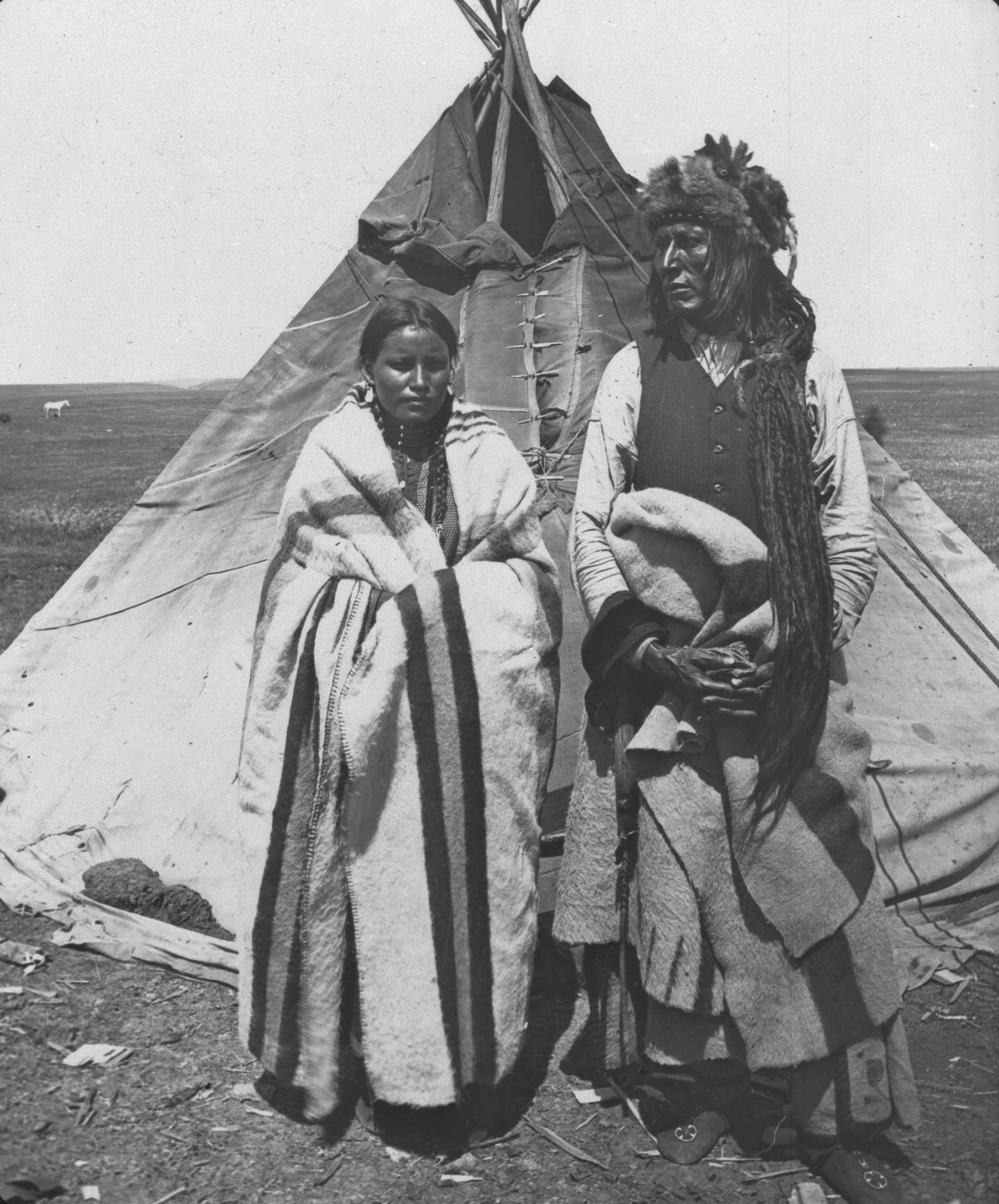
The earliest Europeans to visit the prairie needed the assistance and co-operation of the people who lived there and knew its ways. English explorer and fur trader Henry Kelsey was the first European to explore the interior of the northern plains. Hoping to expand trade in the region, Kelsey travelled to the area in 1691 and 1692 for the Hudson’s Bay Company, the fur trading conglomerate that in 1670 had been granted title to the vast area then known as Rupert’s Land by King Charles II. Cree and Assiniboine guides led Kelsey into what is now Saskatchewan. He wrote in his journal that much of the southern territory was occupied by the Atsina (Gros Ventres), the Assiniboine, and the Hidatsa to the east and the Shoshone to the west. The Blackfoot lived between the North and South Saskatchewan Rivers, while the Chipewyan, a branch of the Dene, occupied the northern boreal forest.
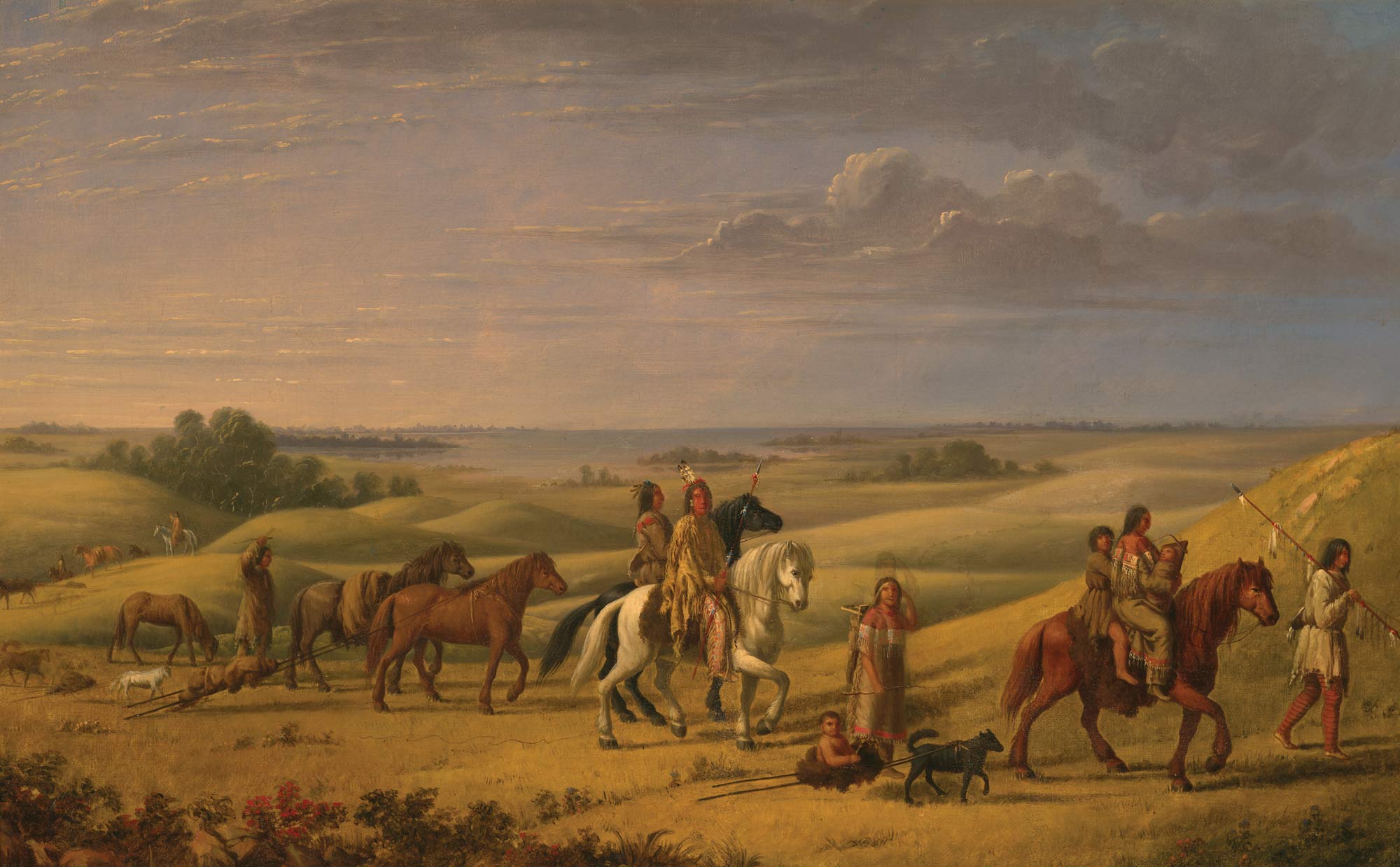
The coming of the fur trade brought dramatic changes to the movements of these peoples across the territory, as First Nations living in Rupert’s Land began competing for fur resources. By the 1730s, the Plains Cree had emerged as a distinct entity, having moved from the forested Canadian Shield between Hudson Bay and Lake Winnipeg to the northern plains as they became increasingly dependent on the bison hunt. Their presence on the prairies was captured in a series of drawings and paintings by Paul Kane (1810–1871), an artist who travelled through the area with fur trading parties in 1846. Although scenes such as “Cree Indians Travelling,” Plains Cree, 1849–56, are often romanticized according to Victorian conventions, Kane’s work is an important record of Cree life and customs on the prairies prior to colonial settlement. In many of his paintings, Kane depicted Cree material culture with great attention to detail.
By the time they arrived on the plains, the Cree had developed a tradition of decorative arts that was continuously evolving through the adoption of new materials. Indigenous makers on the prairies long created aesthetic objects from bone, hide, fur, feathers, bark, wood, sinew, and porcupine quills. Glass beads, thread, and fabrics such as wool and velvet became increasingly plentiful through trade during the seventeenth and eighteenth centuries.
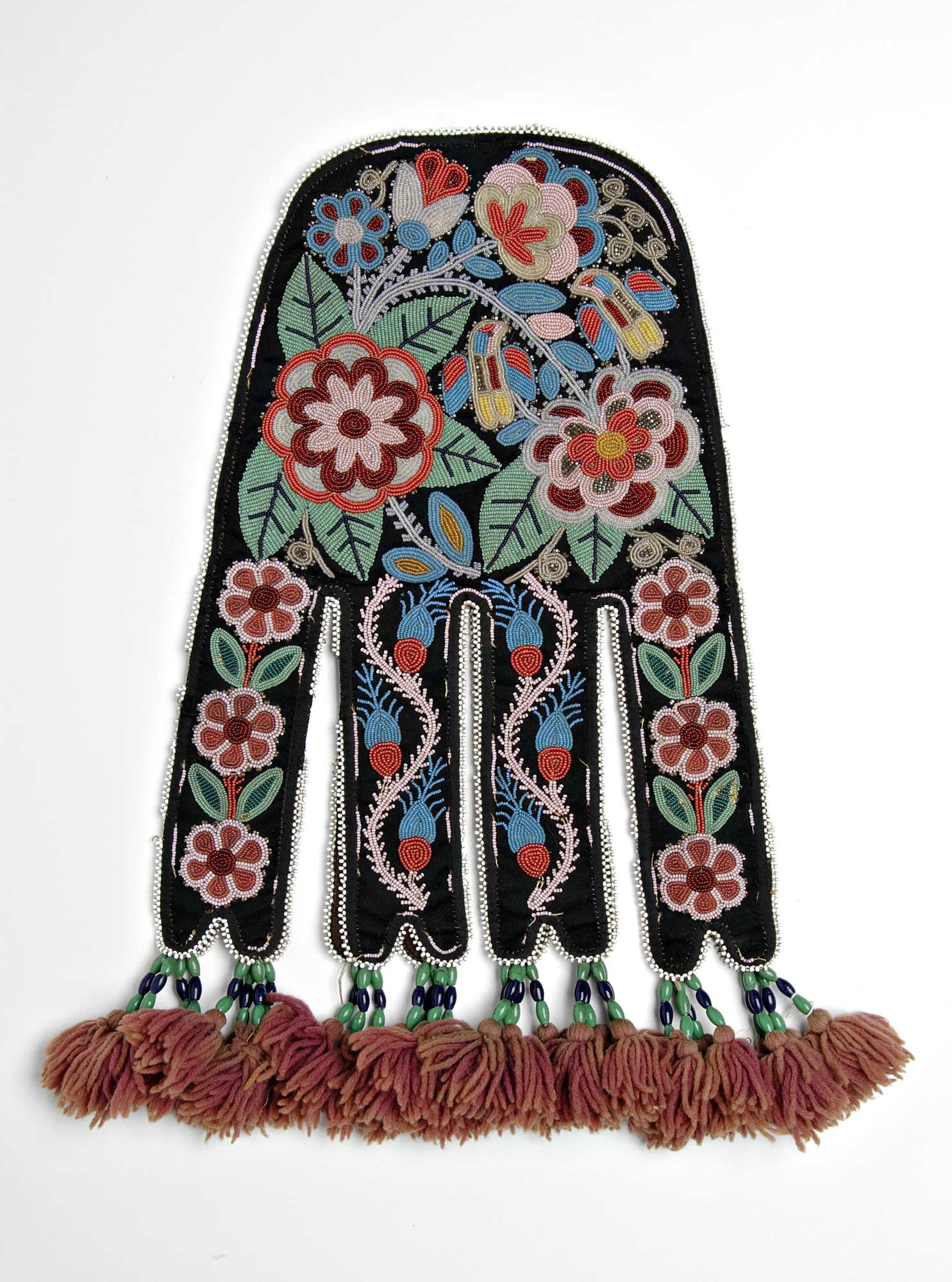
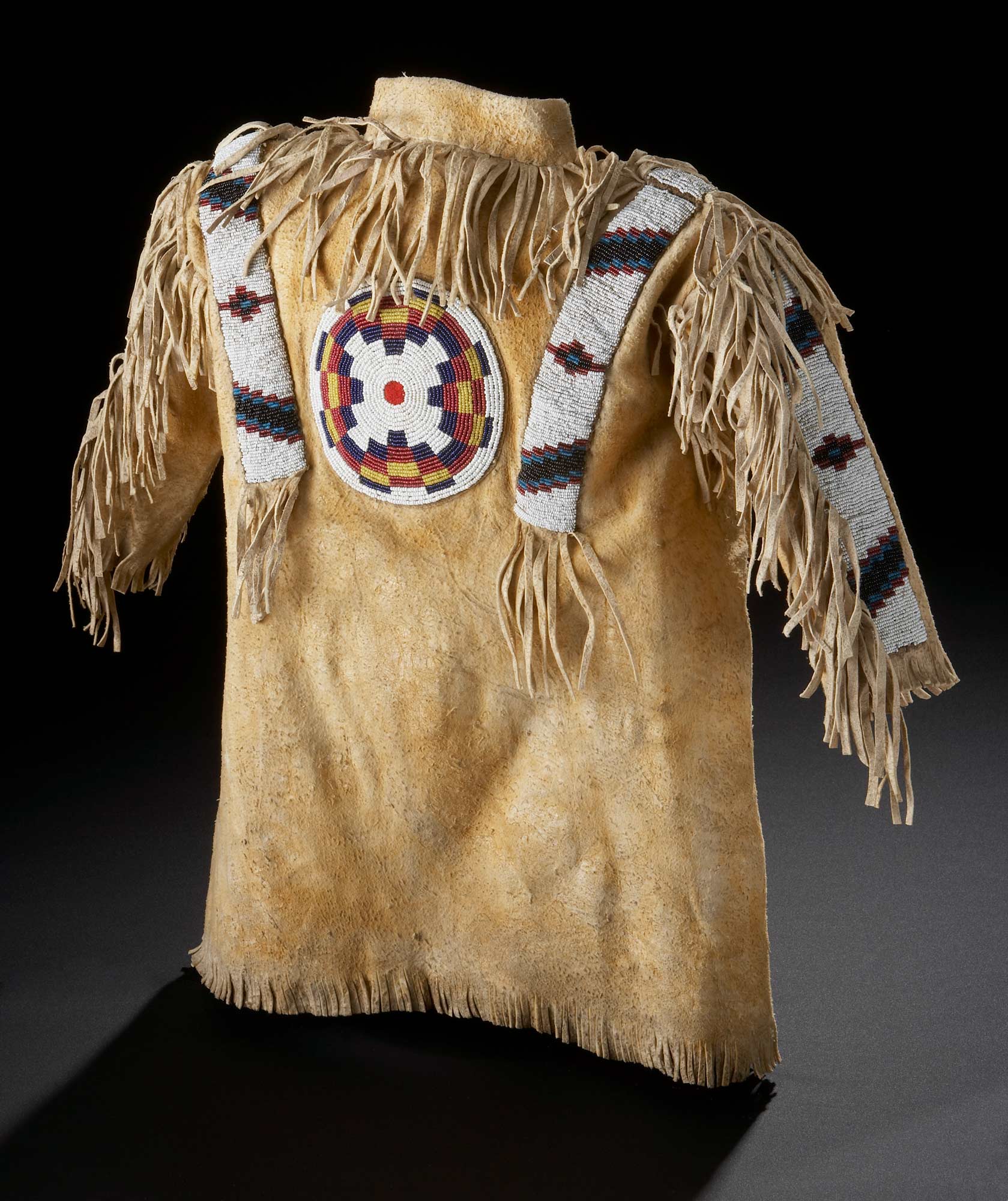
As traditional media diversified, so too did the imagery that appeared on designed objects. The Métis were—and continue to be—highly regarded for their intricate beadwork, producing vibrant floral motifs such as the design of an octopus bag, c.1840–60. Geometric motifs such as hourglasses, triangles, and checkered patterns are also found on numerous objects made for personal use, such as a child’s jacket from the late nineteenth or early twentieth century, adorned with a design of four sets of three trapezoids. These art forms reflect, as Sherry Farrell Racette (b.1952) writes, “the innovative and flexible nature of ‘tradition’” and the notion that Indigenous art forms are living practices.
1870–1885: Resistance and Suppression of the First Peoples
In 1870, the new Dominion of Canada purchased Rupert’s Land from the Hudson’s Bay Company. The area now comprising the three Prairie provinces—Manitoba, Saskatchewan, and Alberta—was named the North-West Territories. The first treaties were established with the First Nations living in this area soon afterward, sparking the process of colonial expansion and settler encroachment on the land, including the establishment of a transcontinental railway. Treaty 4 ceded 195,000 square kilometres of territory, ranging from the southeast corner of present-day Alberta through most of southern Saskatchewan, including the land Regina now occupies, through to west-central Manitoba. It was signed at Fort Qu’Appelle, then an outpost of the Hudson’s Bay Company, on September 15, 1874, by Cree, Assiniboine, and Saulteaux leaders and representatives of the British Crown.
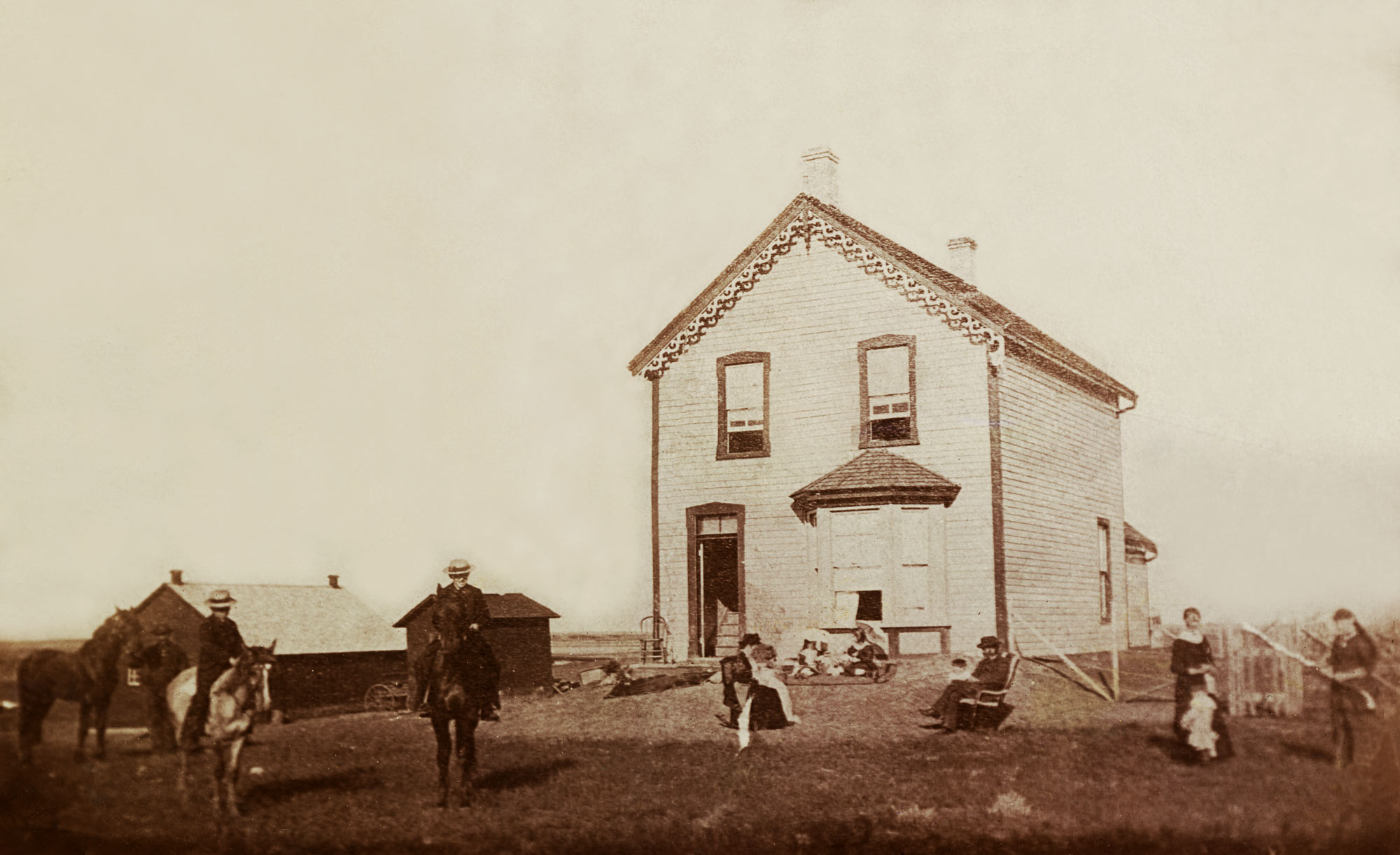
The Métis were long established in the Red River region in what is now the province of Manitoba. The sale of Rupert’s Land severely impacted the Métis, who believed that they and their Cree, Saulteaux, and Assiniboine relatives had an inherent right to the stewardship of the land as descendants of its original inhabitants. Fearing an increase in European settlement, they resisted Canadian authorities. The dispute was the basis for an armed conflict known as the Red River Resistance and the eventual proclamation of a provisional government under the leadership of Louis Riel. Their actions led to the creation of the Manitoba Act, 1870, which established the new province of Manitoba and laid out a broad range of commitments to protect the Métis’s rights to the land.
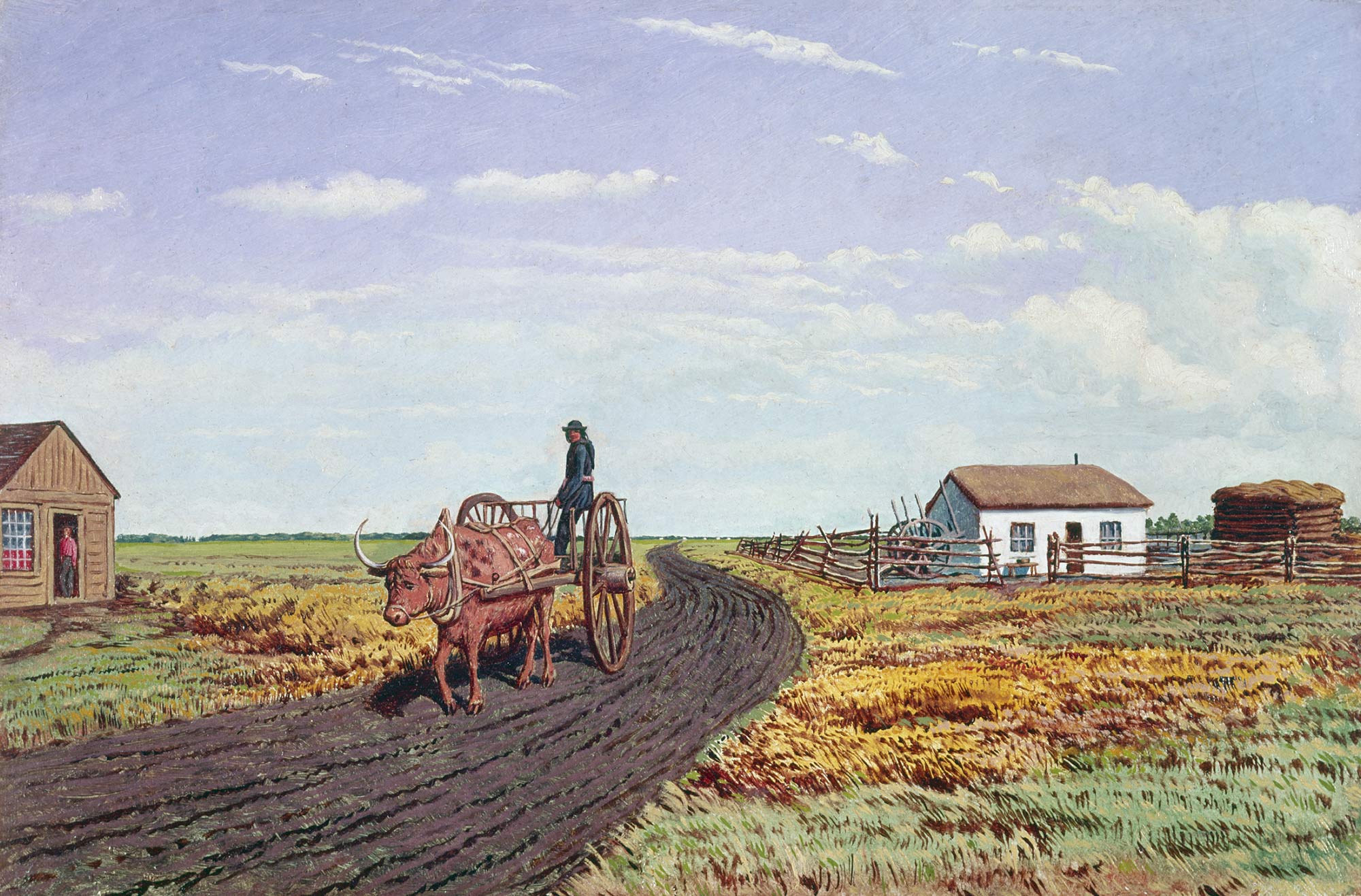
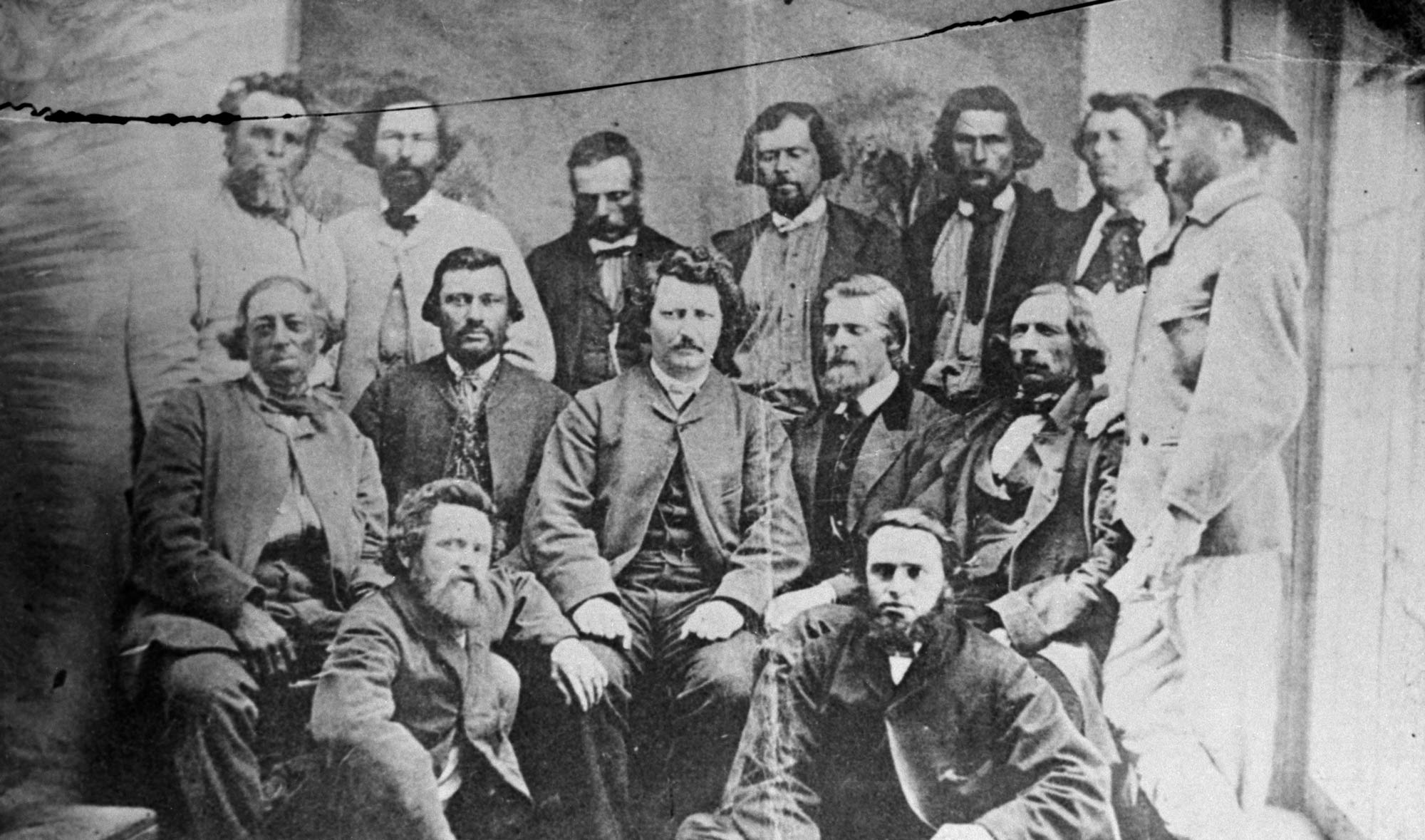
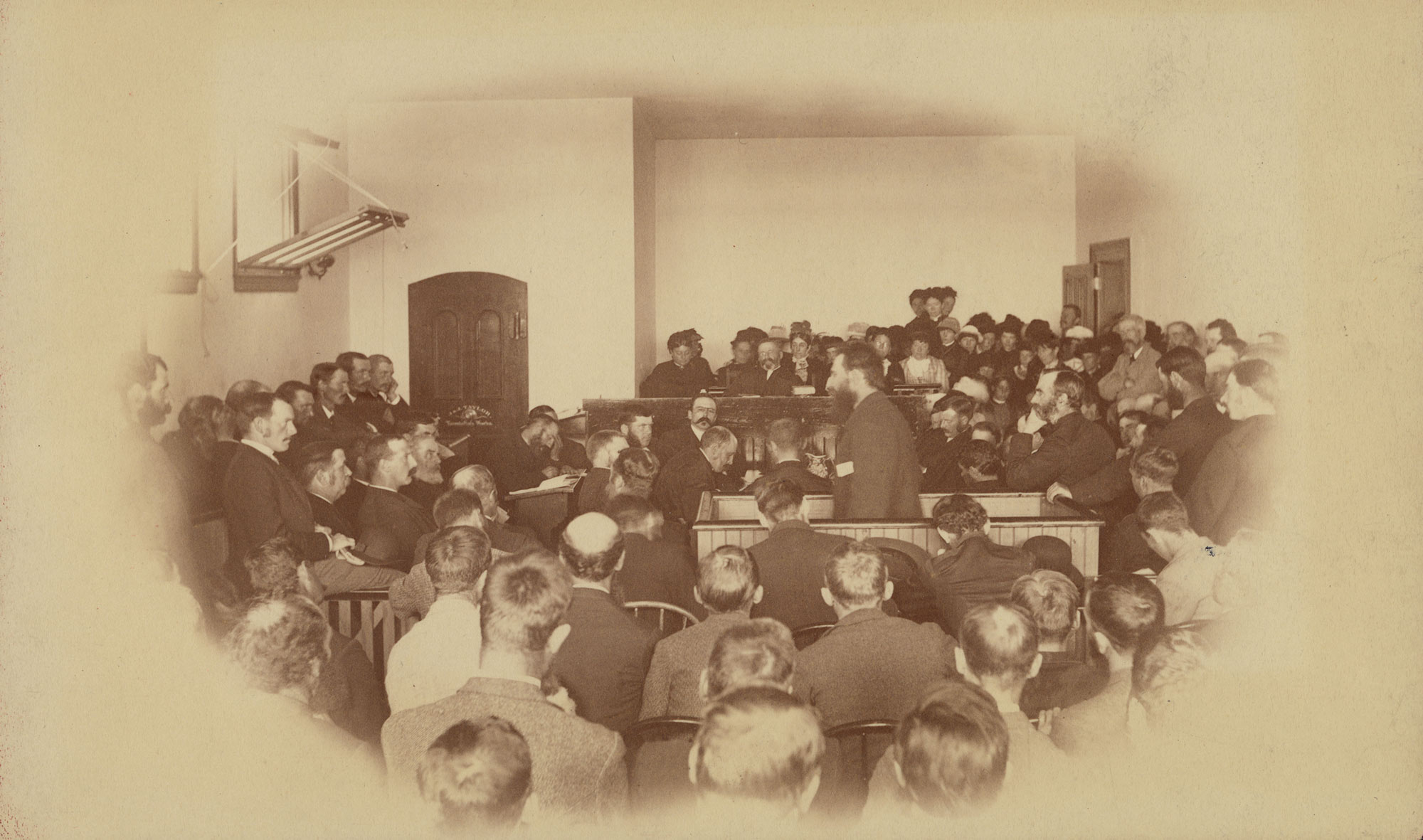
Nevertheless, the Canadian government’s neglectful implementation of land provisions prompted widespread discontent among the Métis, who grew wary as prairie lands were made available to an influx of new settlers. Settlement of the West, coupled with the disappearance of bison herds and the continued disenfranchisement of the Métis and First Nations, precipitated a second armed conflict referred to as the North-West Resistance, an insurgency led once again by Riel. In May of 1885, after five months of defence against the North-West Mounted Police (NWMP) and troops dispatched by Ottawa, Riel surrendered and was tried in Regina on six counts of high treason, a crime that carried a mandatory death sentence. Riel was found guilty by a jury of six English-speaking Protestants and was sentenced to hang. After two unsuccessful appeals, the sentence was carried out at the NWMP barracks in Regina on November 16, 1885.
Several key moments in the North-West Resistance, including Riel’s trial, were captured in a series of photographs taken by Oliver B. Buell (1844–1910), a travelling photographer who earned a living presenting what he called “magic lantern entertainments” using a stereopticon slide projector. In June 1885, while Riel was awaiting trial, Buell presented contemporary images of the Métis resistance to an audience at Regina’s Knox Presbyterian Church. He showed his photographs of Riel’s trial on a return visit to Regina in 1905.
The Métis defeat marked the beginning of the permanent enforcement of Canadian law in the West and a new era of systematic discrimination against the Métis and other Indigenous Peoples in Saskatchewan. Their suppression, along with the collapse of the buffalo hunt and the introduction of European tools, also impacted the production of Indigenous art, which had been directly tied to the creation of utilitarian and ceremonial objects for millennia. For much of the next century, aesthetic objects by Indigenous makers would occupy a diminished position within a Western-centric history of art in Canada—relegated to tourist art or exotic collectibles. A new language of art criticism based on Indigenous ways of knowing would emerge toward the end of the twentieth century in response to the rich creative output of artists working both in the past and the present.
1882–1905: A Railway Town Comes into Its Own
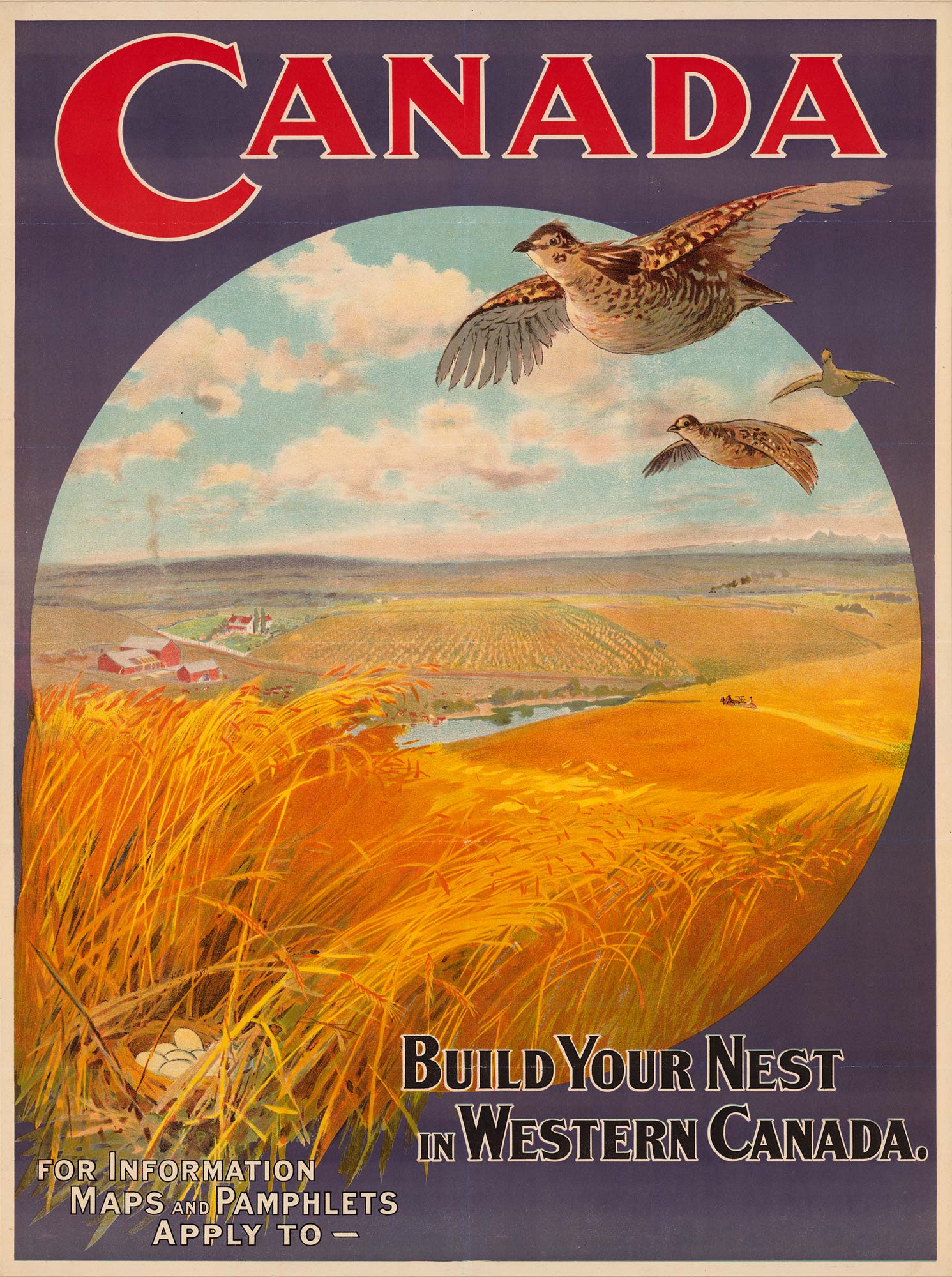
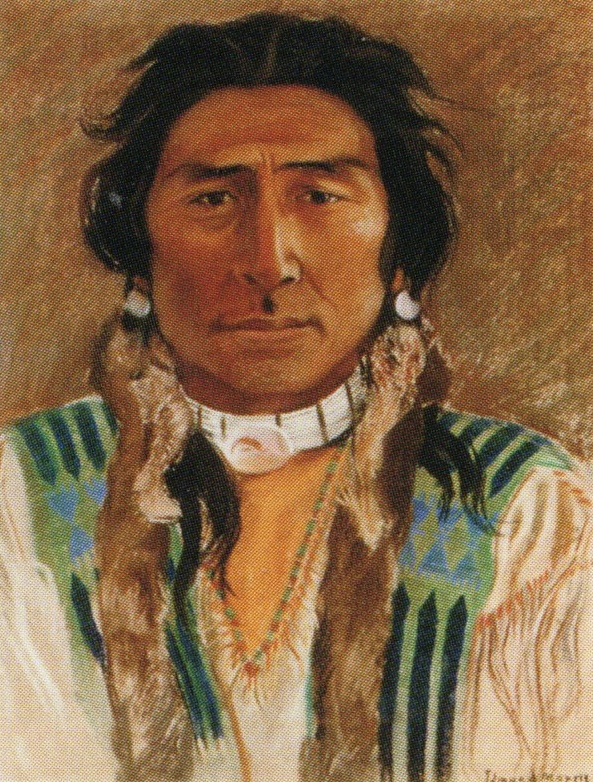
With the transfer of Rupert’s Land to the Canadian government, the removal of Indigenous Peoples from their territories on the Prairies, and the completion of the transcontinental railway, the Canadian government effectively opened the West to settlement. Newcomers were welcomed with the encouragement of government-commissioned advertisements, often in the form of highly idealized posters and pamphlets, that depicted the open prairie as a new promised land. Posters depicting an endless sky against vast wheat fields, such as Build Your Nest in Western Canada, 1907–8, were some of the first creative depictions of this geography and would set the tone for future artistic renderings—some idealistic—of the prairie landscape. These invariably showed the land as empty of its original inhabitants, marking a turn from artistic approaches that romanticized the cultures of Indigenous Peoples of the prairies, as seen in works by Paul Kane, Edmund Montague Morris (1871–1913), and James Henderson (1871–1951).
In 1873, the government of Sir John A. Macdonald set in motion its plan for a transcontinental railway to connect the eastern provinces to British Columbia. The city of Regina owes its existence to this ambitious plan—in particular, to the decision of the Canadian Pacific Railway (CPR) to construct a southerly route across the Prairies, from Fort Garry in Manitoba to Kicking Horse Pass near Banff, Alberta. The CPR chose for its new outpost a site near a creek that the Cree called oskana kâ-asastêki (“where the bones are piled”) and English speakers called Wascana Creek. A tributary of the Qu’Appelle River, the creek had long been used by Indigenous Peoples to dry buffalo meat and stretch hides, gathering the bones into mounds for eventual sale. The CPR laid out the first street plan and built a dam across Wascana Creek, creating a reservoir to replenish the steam engines of its locomotives and a source of water for the town’s residents.
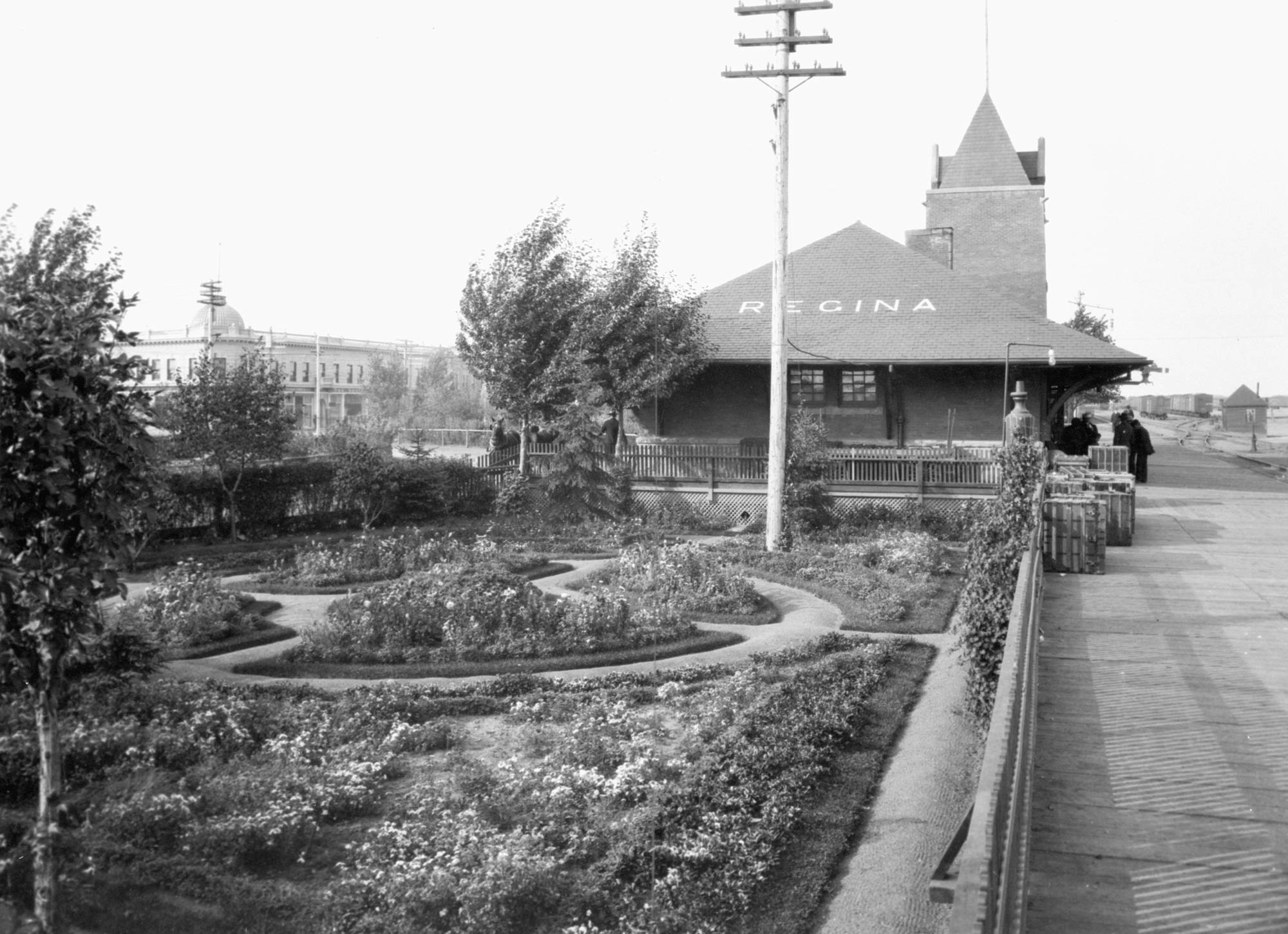
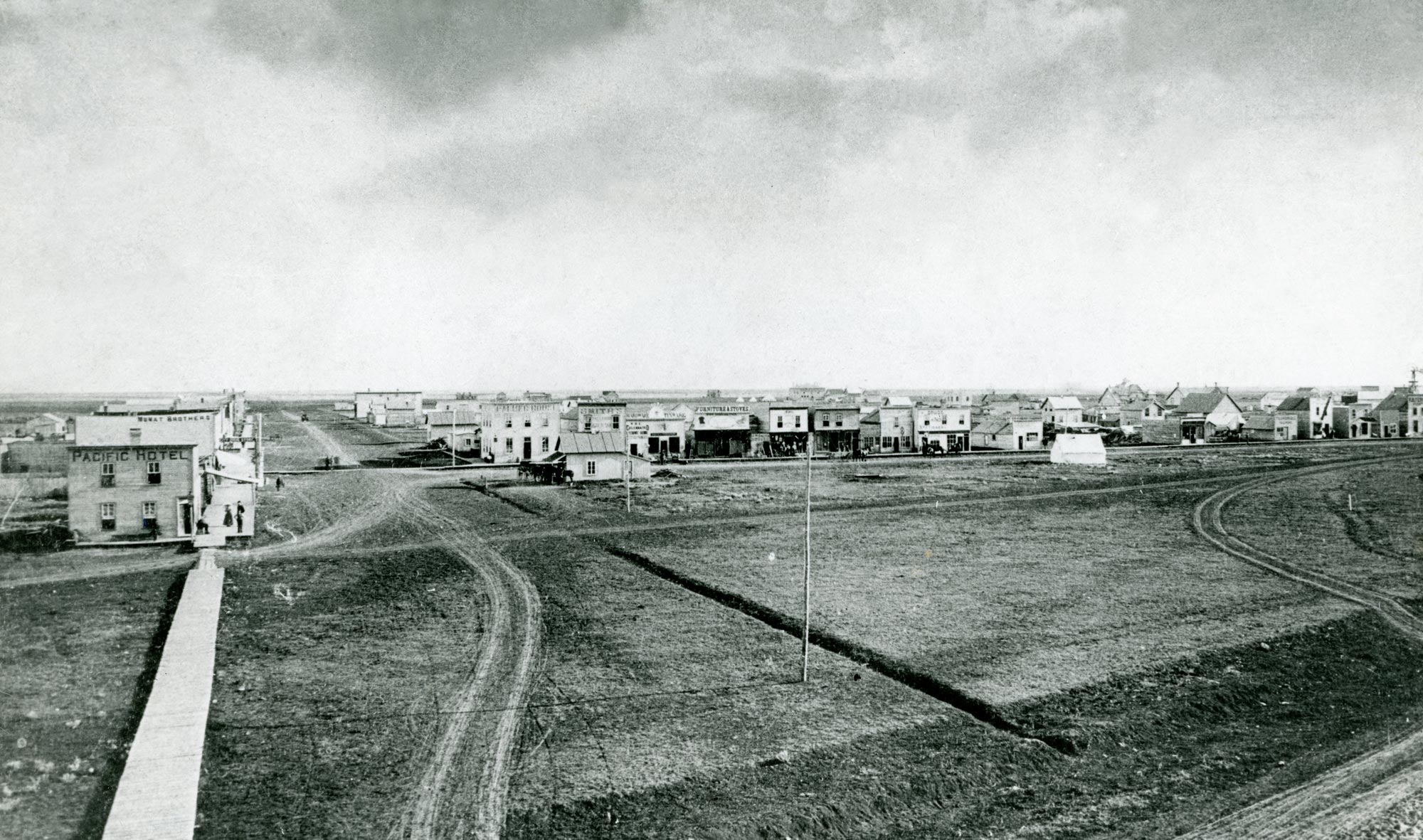
Named in honour of Queen Victoria, Regina (“queen” in Latin) was made the capital of the North-West Territories in 1883, two years after its founding. Still mostly a collection of hastily built small houses and tents, Regina’s earliest residents faced the constant threat of heat and tornadoes in the summer and extreme cold in the winter. Yet, the railway soon brought the town a steady stream of settlers. Between 1896 and 1914, more than two million people from Europe and the United States arrived on the Prairies, the greatest wave of immigrants in Canadian history.
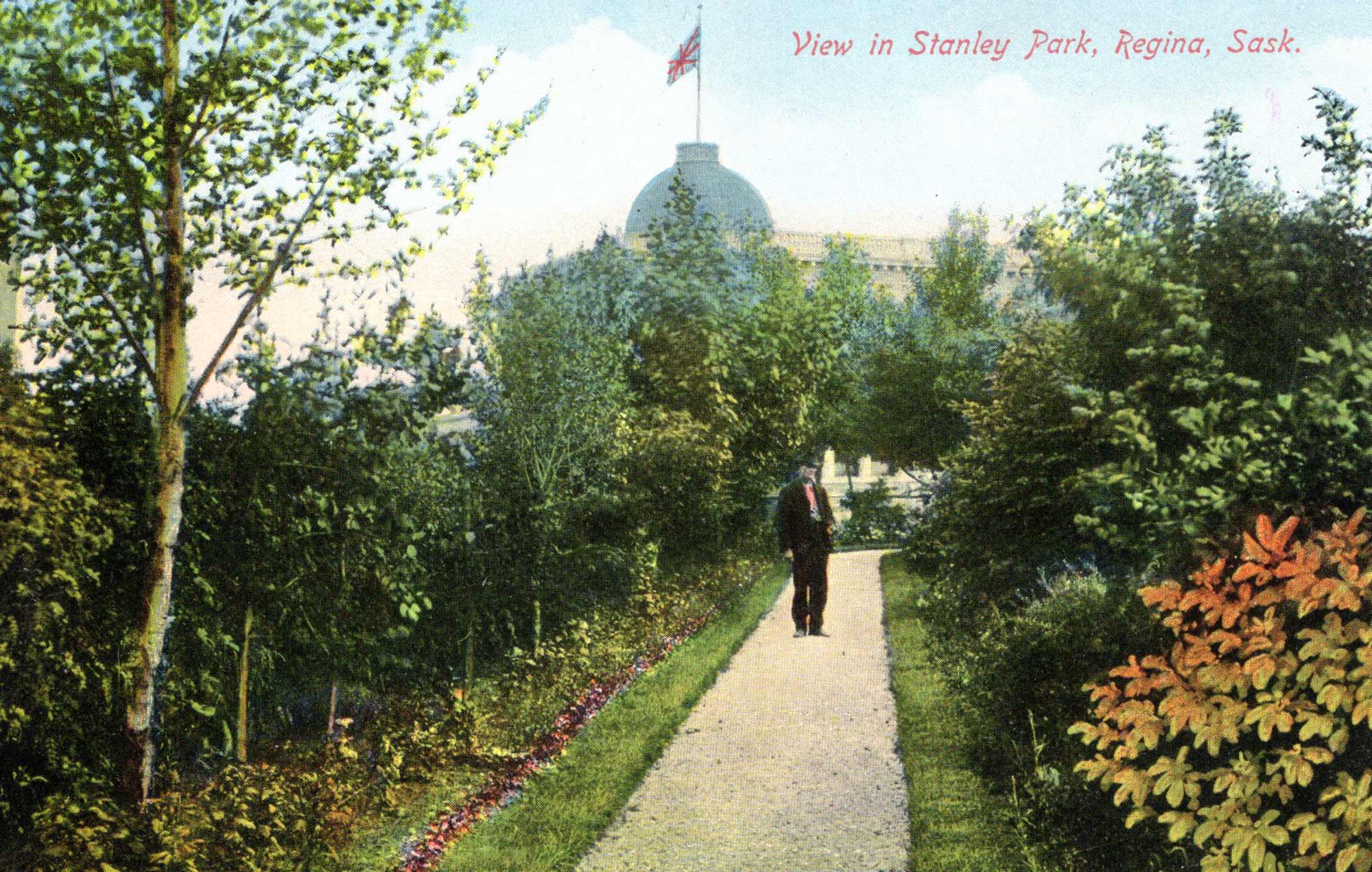
Regina’s first phase of development saw the rapid growth of amenities and infrastructure, including Anglican, Catholic, and Methodist churches, banks, schools, a town hall, and a volunteer fire brigade. Transforming the region’s geography became an important objective of the city’s early residents. The premiere attempt to beautify the city focused on an area near the CPR station, where Stanley Park—a green space with trees, shrubs, and flowers—was developed in the late 1880s. One of the main purposes of the project was to convey to residents and newcomers that it was possible to tame the inhospitable prairie grassland. The initiative looked forward to the more ambitious undertaking of creating an extensive park surrounding the Saskatchewan Legislative Building a few decades later.
As most of Regina’s first residents arrived from Ontario and the United States, they brought with them their former communities’ customs and values, including a belief in the importance of art and education. During Regina’s early years, residents were able to view art at the annual Regina Agricultural Fair. These exhibitions were also attended by First Nations living in the area, who performed dances in traditional costume and displayed cultural objects for farmers and tourists.
Regina’s art history is inextricably linked to the founding of its educational system. As public schools began to add art instruction to their curriculum, the Provincial Normal School—Regina’s first teacher’s college, which opened in 1893—started to instruct aspiring teachers to meet the demand. In October 1900 and again in December 1902, the school hosted artist Frederic Marlett Bell-Smith (1846–1923), director of fine arts at Alma Ladies’ College, a private school in St. Thomas, Ontario. As a painter, Bell-Smith’s aesthetic was firmly lodged in the nineteenth-century academic tradition. The Leader reported on the artist’s 1902 visit, during which he addressed students and members of the public, presenting “a few fundamental truths or rules for the guidance of those who are taking, and expect to give, instructions in drawing” and showing “a generous collection of his watercolour and oil paintings.” Bell-Smith was returning to Toronto following a sketching trip through the Canadian Rockies, and it is likely that some of the works he presented depicted mountain scenery.
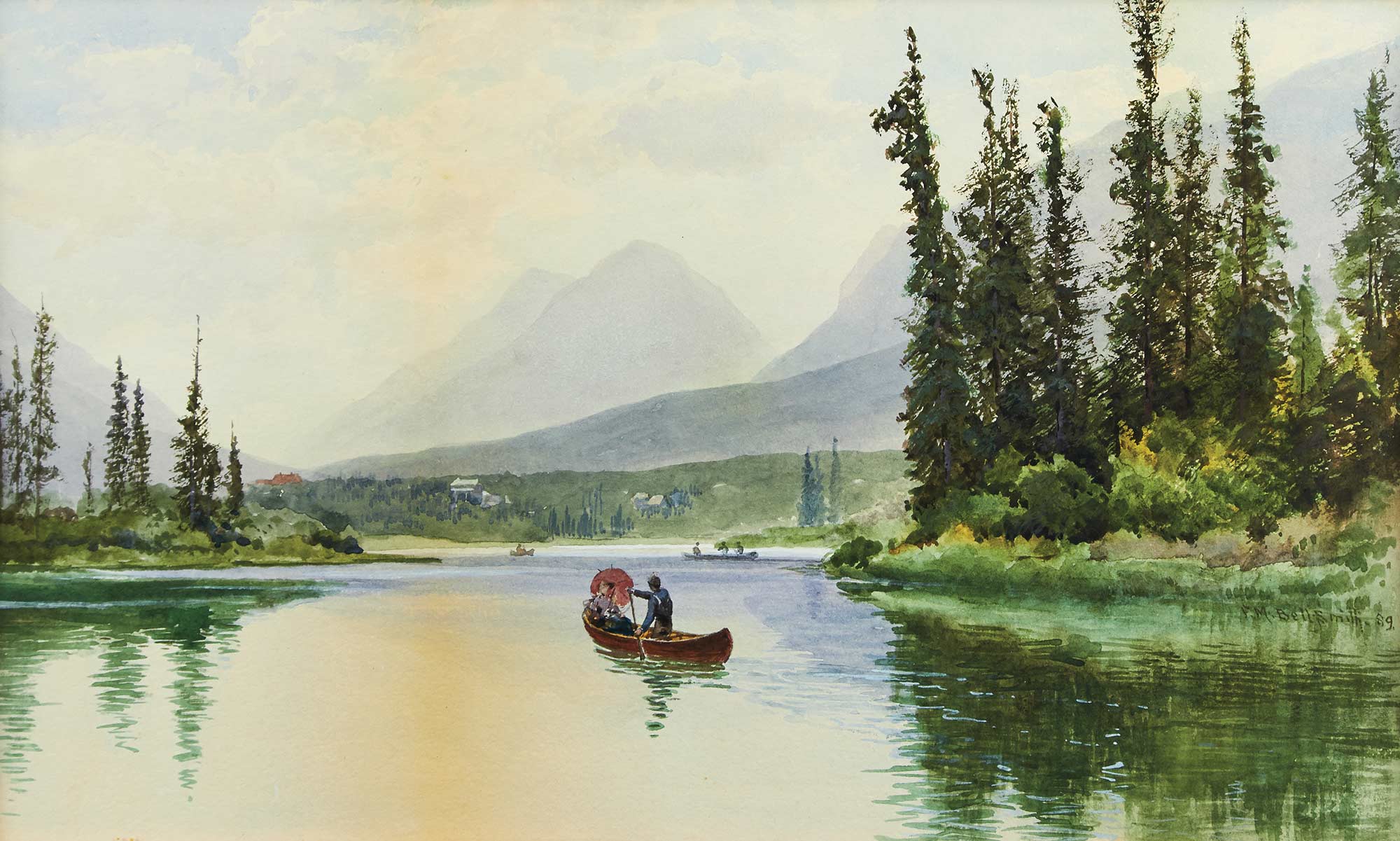
Bell-Smith’s presence in Regina had an impact. In 1903, less than a year after his second visit, the Normal School began offering specialized classes in art and music under the direction of painter Elizabeth Rankin (1872–1960), who had studied art in Winnipeg and New York. With her addition to the staff, Rankin became the first professional art instructor in the province of Saskatchewan.
Women contributed to Regina’s civic and artistic development through groups like the Local Council of Women (LCW). Founded in 1895, the LCW was dedicated to improving social conditions in the community, and especially those of women and children. The LCW’s inaugural project was to raise funds to build the city’s first hospital. For the LCW, the arts were connected to its larger vision of improving society. Over the course of several decades, this vision led it to form standing committees, including the Fine and Applied Arts Committee, established in 1920 with the purpose of raising the profile of the visual arts by presenting exhibitions, hosting lectures, and building a collection through the acquisition of works by local artists, including Sybil Henley Jacobson (1881–1953), Harriette Keating (1898–1975), and David H. Payne (1890–1950).
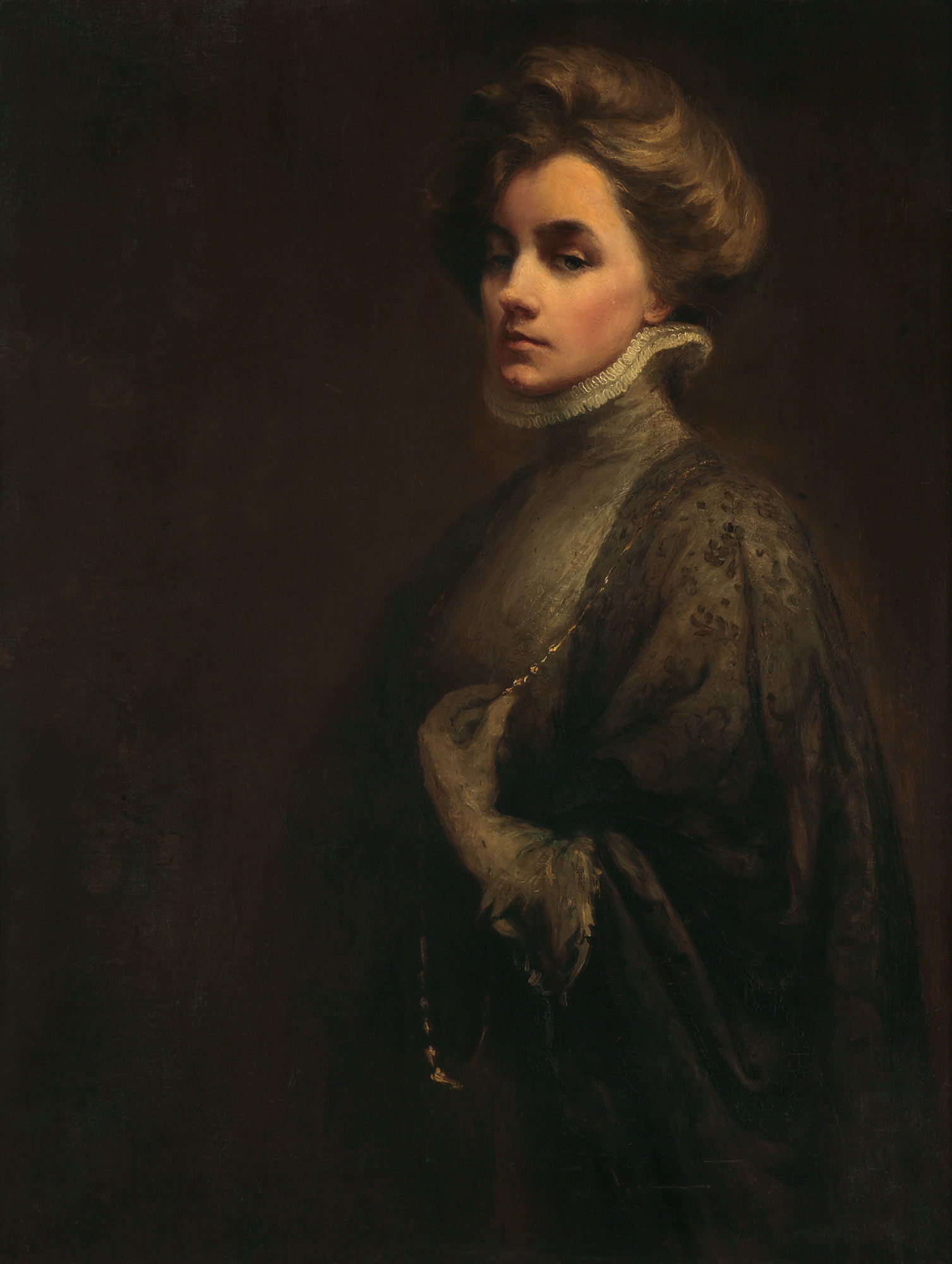
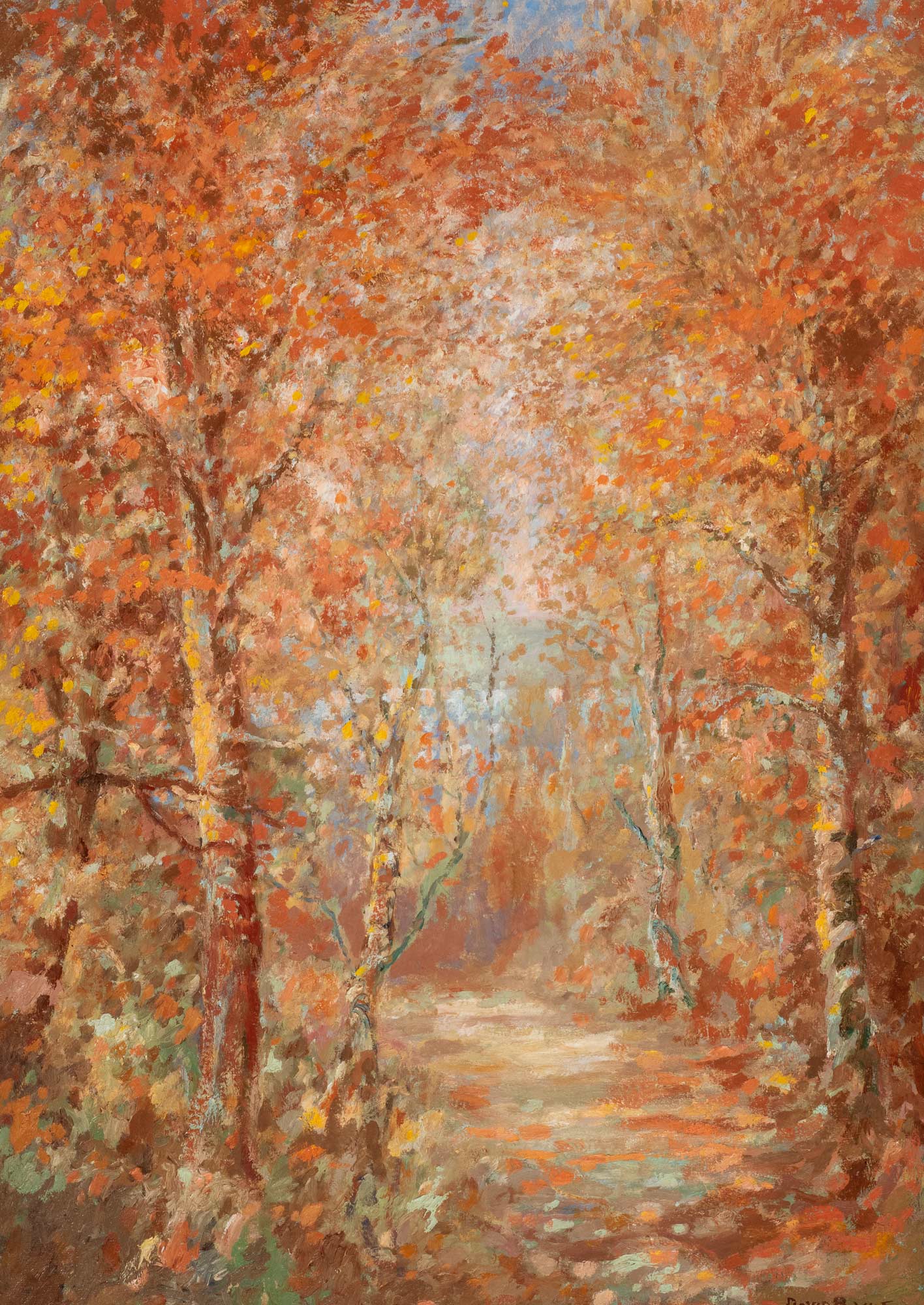
The work that the LCW and other women’s organizations put into realizing their ideals of personal cultivation, social amelioration, and civic improvement was essential to Regina’s development as a city and, eventually, as a centre for the arts. By the mid-twentieth century, the social democratic government in Saskatchewan would build on these women’s accomplishments while at the same time changing the social and economic conditions of Regina’s artists, consigning the volunteer-based committees and organizations founded and led by women to the margins.
1905–1913: The Young City Acquires a British Cultural Stamp
Saskatchewan became a province, along with Alberta, upon the passing of the Dominion Act on July 18, 1905. The federal cabinet named Thomas Walter Scott the first premier of the province, and the following year, largely through his determined efforts, Regina was chosen over North Battleford and Saskatoon as the provincial capital. Soon after, Scott shifted his focus to what would be his most enduring accomplishment: the design and construction of the Saskatchewan Legislative Building—arguably the city’s greatest architectural achievement.
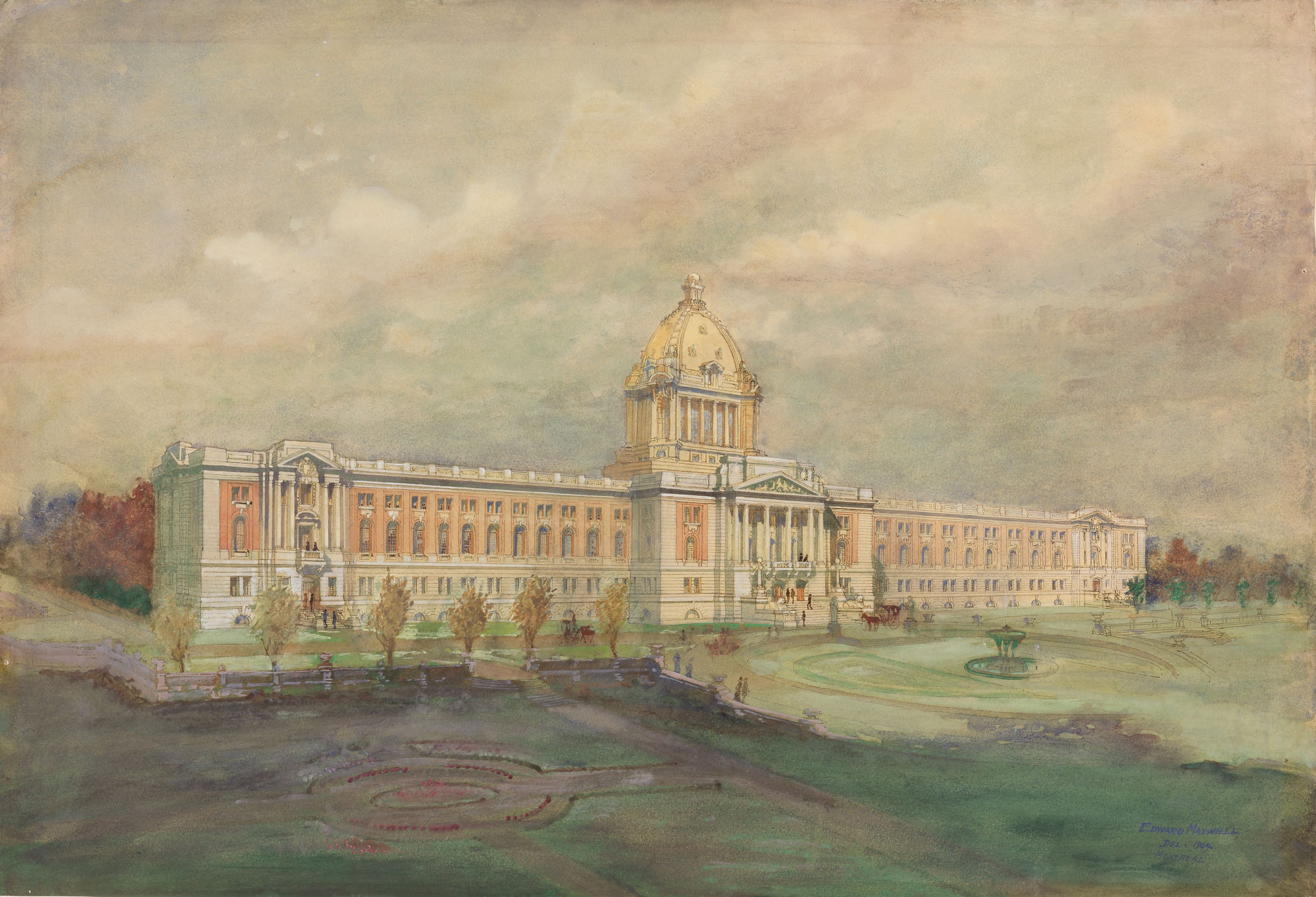
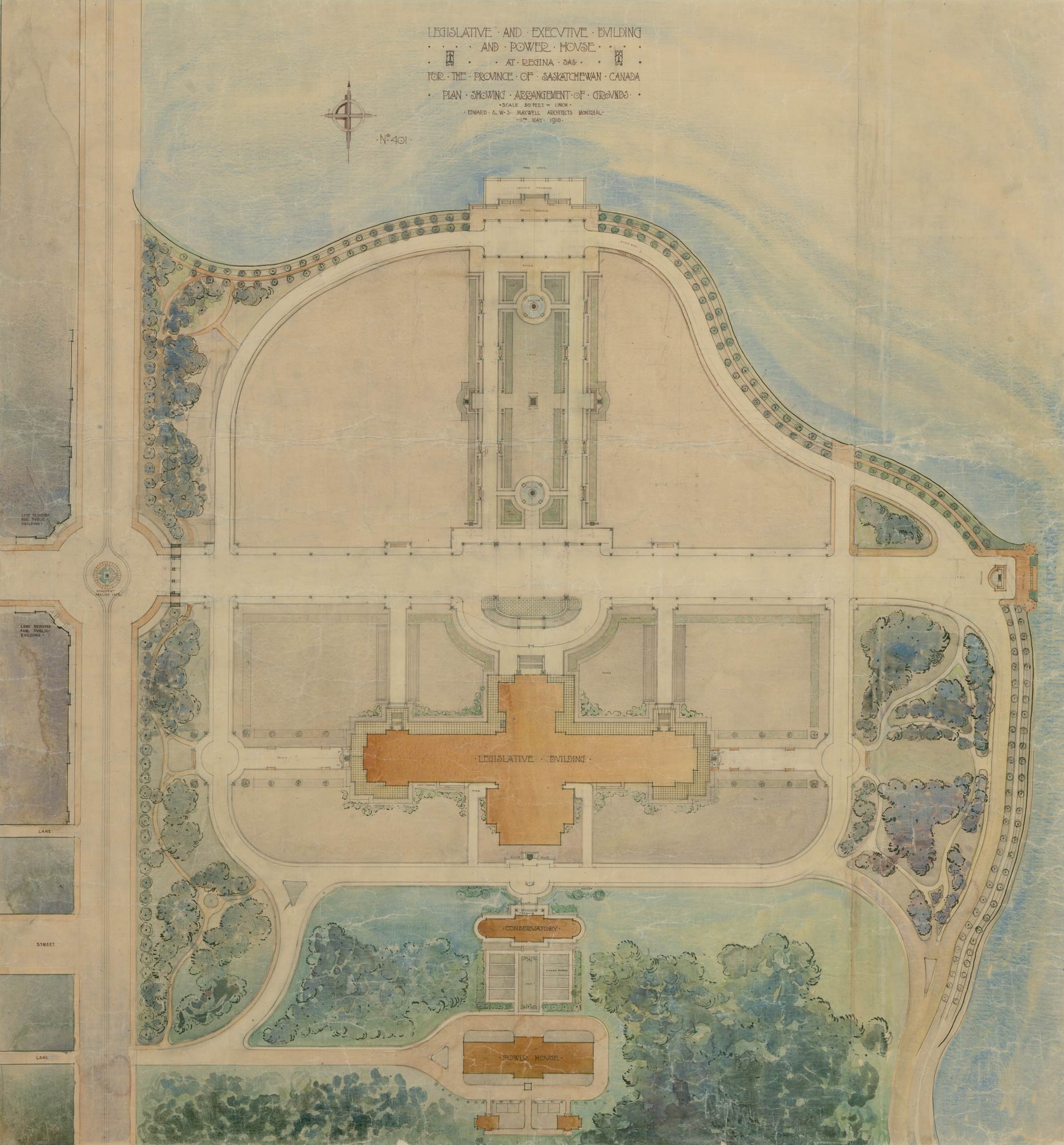
Regina residents saw Scott’s ambitious project as a beacon pointing to a prosperous future. In line with this enthusiasm, Scott ensured that leading architects would be involved in the building’s construction. The province’s purchase of sixty-six hectares of land on the south side of Wascana Creek led to the hire of Frederick Todd (1876–1948), the landscape architect tasked with designing the site plan. Todd’s vision for the park surrounding the Legislative Building was made a reality by George Watt, who oversaw the planting of more than 100,000 trees and shrubs supplied by nurseries in Europe and North America. Meanwhile, an international competition was launched to commission the design of the Legislative Building. Montreal architects Edward Maxwell (1867–1923) and W.S. Maxwell (1874–1952) were selected due to their plans for an impressive domed building in a Beaux-Arts style. Construction began in 1908, and the building was officially opened on October 11, 1912.
Regina’s status as the centre of government and its growing population brought an unprecedented level of prosperity, providing opportunities for the city’s first professional artists. Among them were John Thomas Richardson (1860–1942), Inglis Sheldon-Williams (1870–1940), and James Henderson, immigrants from Great Britain who had been trained in the British Romantic tradition popularized by John Constable (1776–1837) and J.M.W. Turner (1775–1851). The Saskatchewan landscape—its dramatic weather patterns and seasonal changes—presented endless opportunities to artists trained in the Romantic tradition, as seen in Sheldon-Williams’s After the Storm, c.1914.
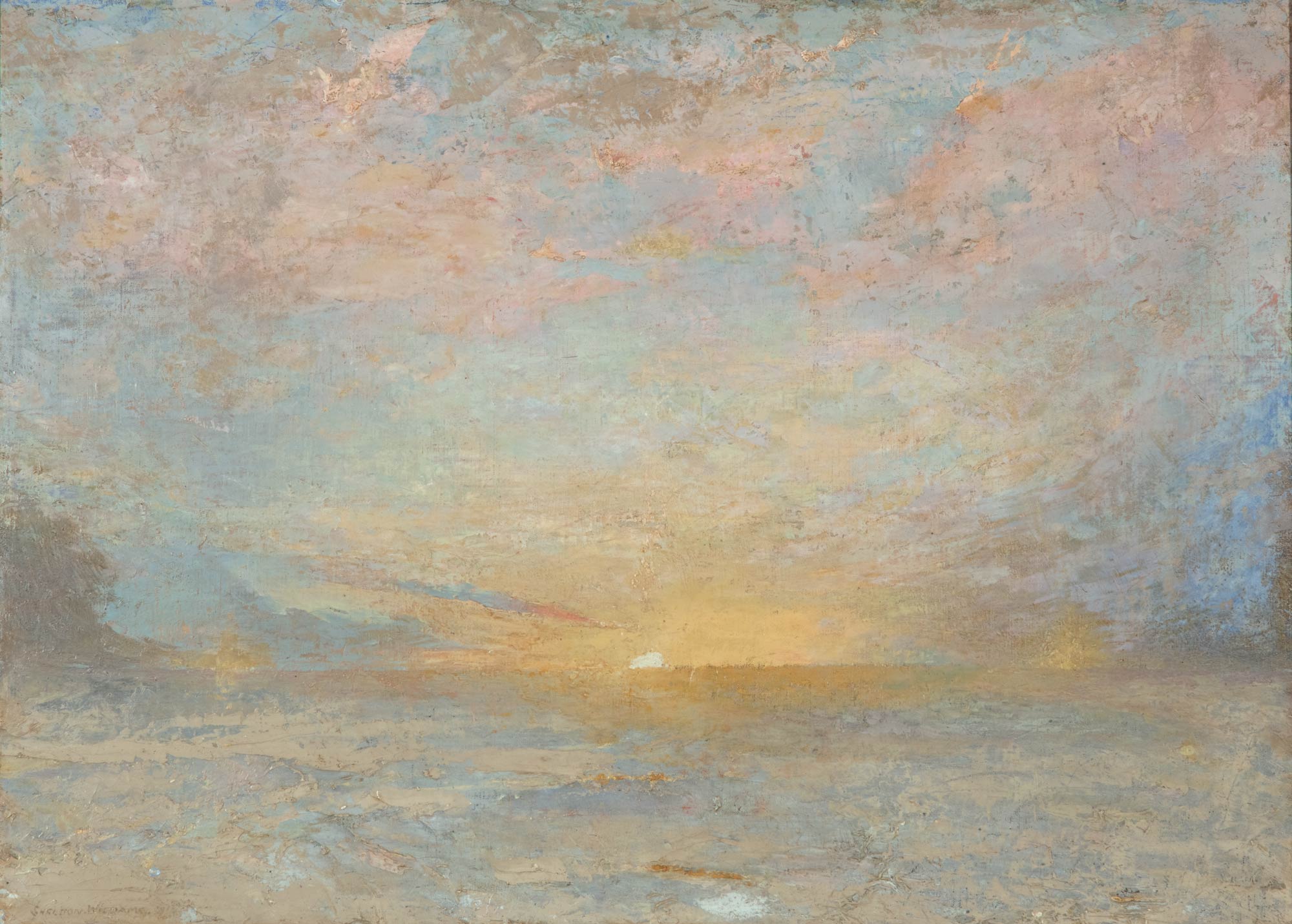
The first of the three to exhibit in Regina was Richardson, who had studied at the South Kensington School of Art in London. After arriving in Canada in 1885, he homesteaded with his father and brother near Edenwold, a small community to the northeast of Regina. Solo exhibitions of Richardson’s work, which consisted mostly of paintings depicting the English countryside according to the eighteenth- and nineteenth-century landscape conventions he had absorbed in London, were held in Regina’s City Hall, first in 1905 and again the following year.
Henderson and Sheldon-Williams arrived in 1912 and 1913, respectively, establishing their reputations as portrait painters of prominent government officials. Henderson’s portrait sitters from that period include Hugh Richardson, the judge who had presided over the trial of Louis Riel in 1885, and Justice James Thomas Brown, a member of the Supreme Court of Saskatchewan. Sheldon-Williams produced portraits of Sir Frederick W.A.G. Haultain, the leader of the Opposition in Saskatchewan’s first two legislative assemblies, and Edward Ludlow Wetmore, the province’s first chief justice.
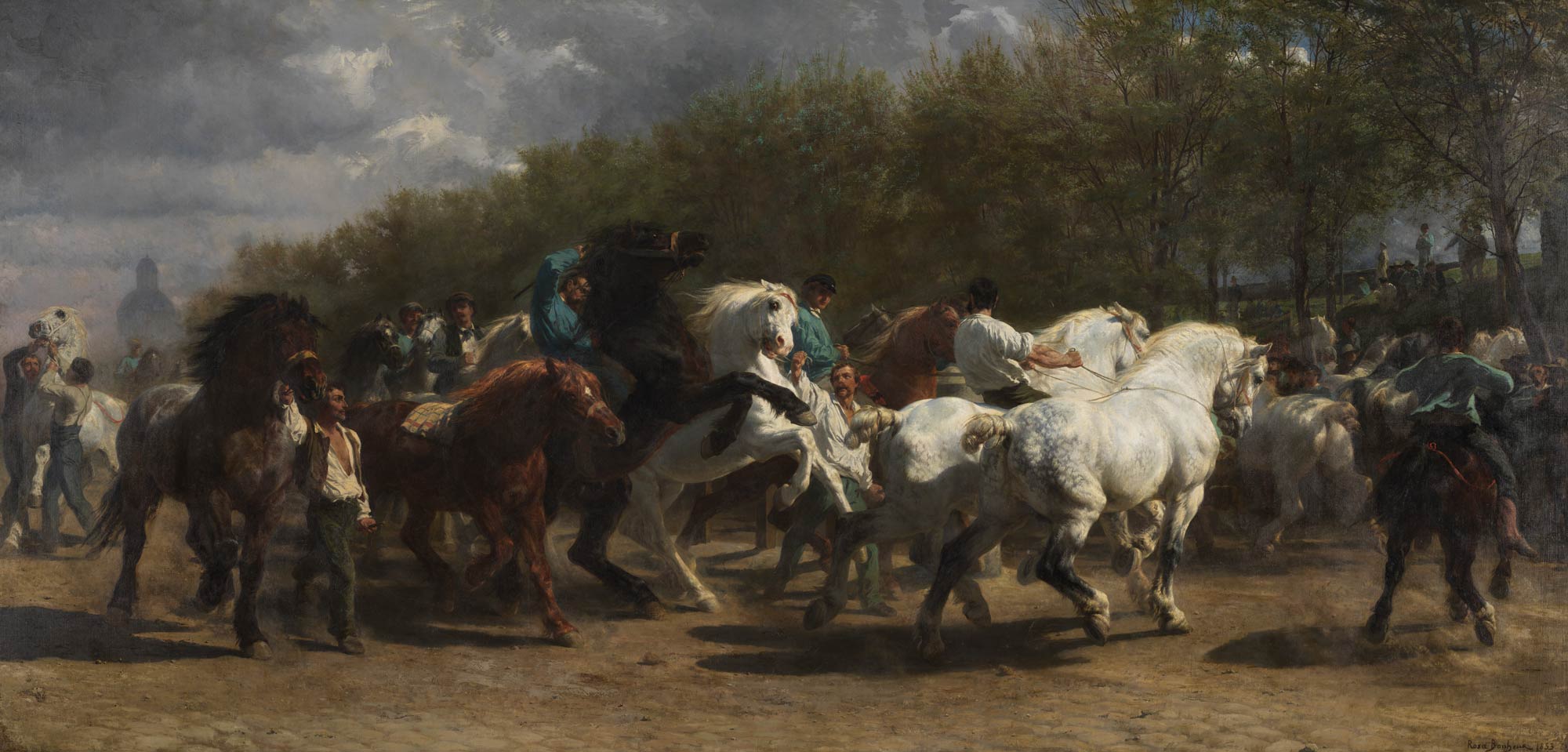
Established by the city’s educated elite as the first amateur group to include art as part of its mandate, the Regina Society for the Advancement of Art, Literature and Science held its first annual art exhibition in October 1910. The exhibit featured paintings and engravings from private collections, “the most valuable pictures in the city,” according to the local press, which included works by Rosa Bonheur (1822–1899), Arnold Böcklin (1827–1901), Camille Corot (1796–1875), and Paolo Veronese (1528–1588). Although the group dissolved at the start of the First World War in 1914, it played a vital role in galvanizing support for the arts in the city and providing a model for groups focused on visual art, including the Fine and Applied Arts Committee of the Local Council of Women (LCW) and the Women’s Educational Club (WEC).
Increasing wealth from the grain trade led to new building projects, including a new City Hall designed by Calgary-based architects William M. Dodd (1872–1948) and E.C. Hopkins (1857–1941) and a three-storey Canadian Pacific Railway train station constructed in 1911 in a late Beaux-Arts style. Landscape architect Frederick Todd was retained by the city in 1907 to plan a new civic park, Victoria Square, on an area covering two city blocks. Todd’s design, based on City Beautiful principles, featured a spoke-like arrangement of paths converging on a circular focal point, which was first occupied by a fountain dedicated to Nicholas Flood Davin, the founder of Regina’s The Leader.
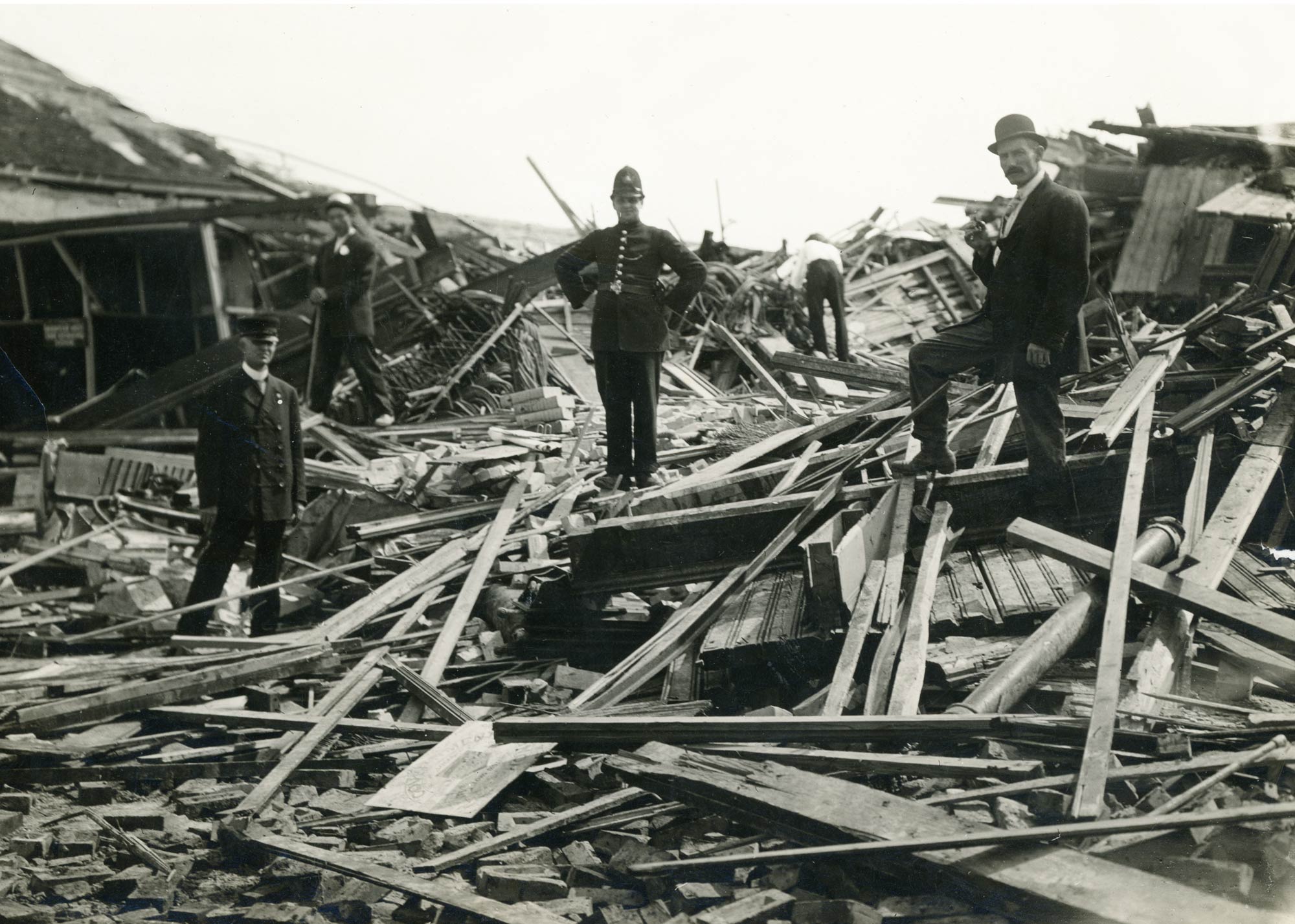
Community leaders were warming to the idea that a free public library was a necessary ingredient of an enlightened and prosperous city. In 1908, responding to a petition signed by Premier Scott and 155 Regina residents, the city agreed to situate a public library on the second floor of the new City Hall. Opened on the first day of 1909, the initiative was an immediate success and encouraged the city to construct a purpose-built library, funded in part by American philanthropist Andrew Carnegie. On June 30, 1912, only weeks after the library’s opening, the deadliest tornado in Canadian history swept through the city’s downtown core, leaving twenty-eight people dead and 2,500 homeless. Through generous contributions to the relief fund from the government and other sources, and the resourcefulness of Regina’s residents, the city was able to rebuild relatively quickly. Damage to the library was mainly confined to the roof, and the building was reopened to the public in September.
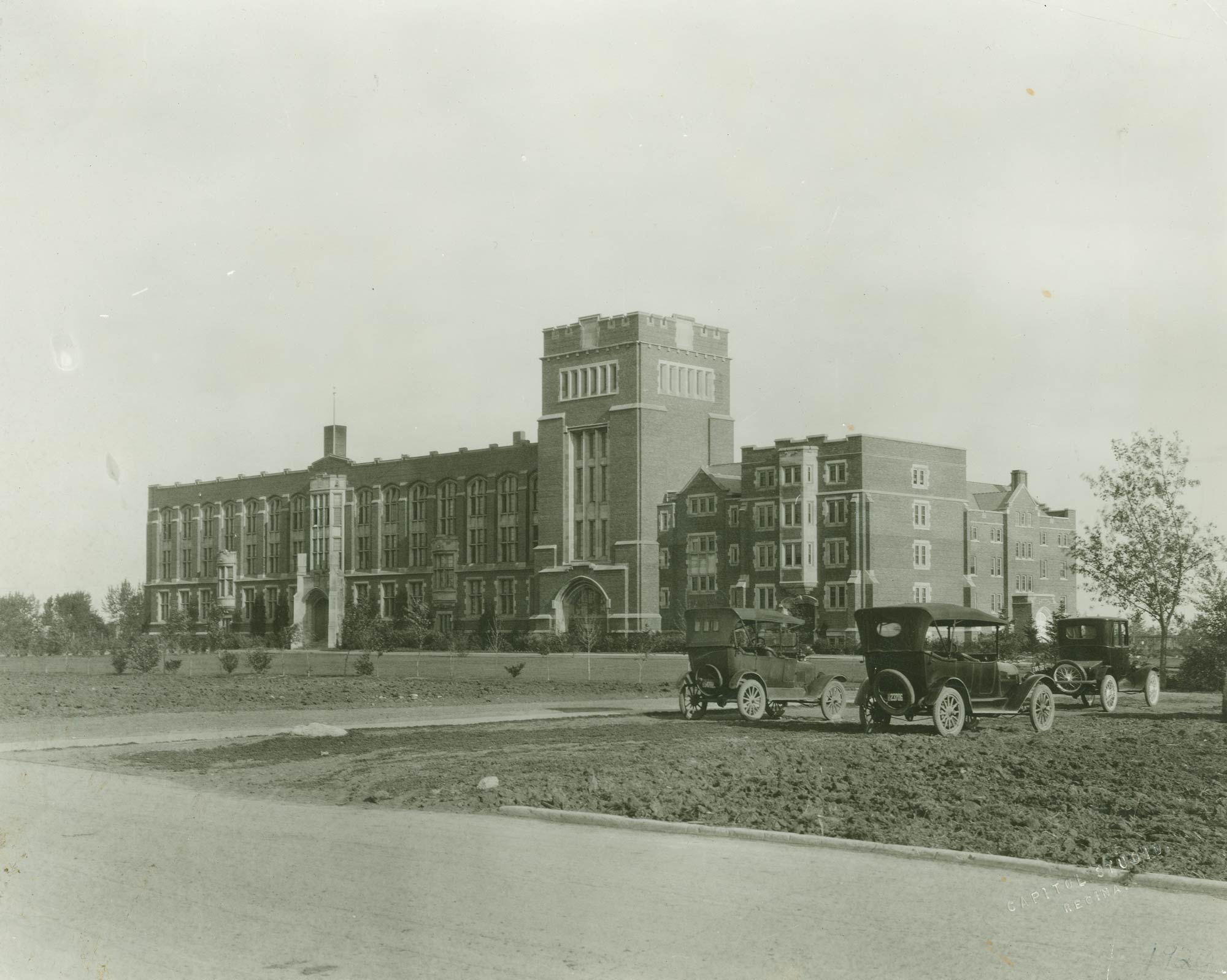
The establishment of Regina College in 1911 was another important milestone in the city’s cultural and artistic development. The college offered its first painting and drawing courses in 1916. In contrast to the Provincial Normal School, whose objective was to instruct soon-to-be teachers in the fundamentals of teaching art, the art program at Regina College was intended to train aspiring artists and included courses in portrait, still-life, and landscape painting, as well as elements of drawing and the principles of design. It was directed by Sheldon-Williams, who also frequently gave public lectures on subjects ranging from artistic techniques to the role of art in daily life. After he left in 1918 to serve as an official war artist, his position at the college was held at various times by Mildred Valley Thornton (1890–1967), Harriette Keating, Joseph Henry Lee-Grayson (1875–1953), and Hilda Stewart (1892–1978).
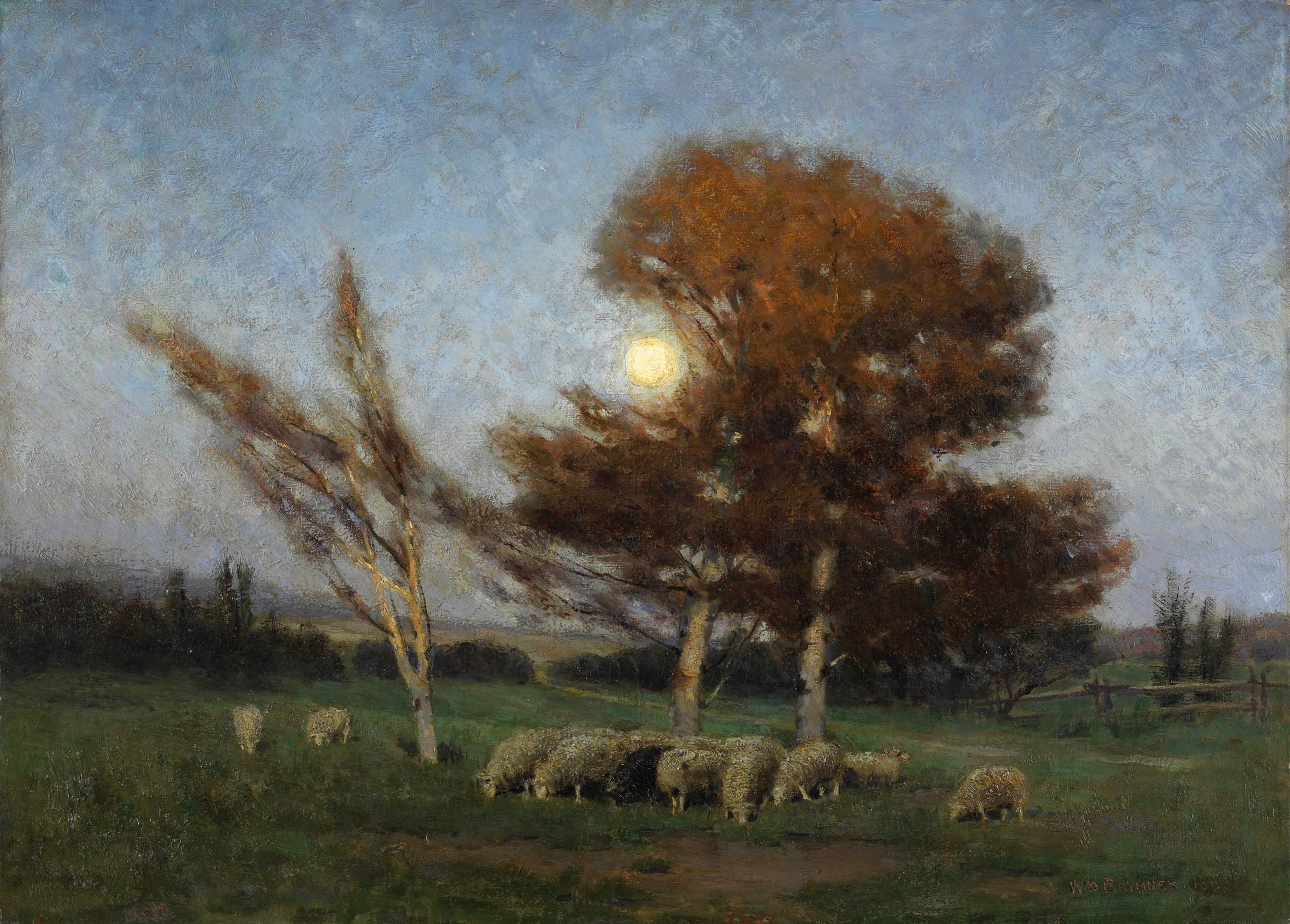
Regina College hosted numerous exhibitions and other events organized by the WEC and the LCW’s Fine and Applied Arts Committee. Starting in 1918, the school also exhibited artworks from the National Gallery of Canada. The first loan, consisting of more than twenty paintings, included notable pieces by Franklin Brownell (1857–1946), William Brymner (1855–1925), Arthur Lismer (1885–1969), Laura Muntz Lyall (1860–1930), and Mary E. Wrinch (1877–1969). After 1920, students and visitors were also able to enjoy the WEC’s growing art collection, which was on permanent display at Regina College and later at the Darke Hall of Music and Art.
1914–1918: The Upheaval of the First World War
A recession in 1914 ended the city’s decades-long economic expansion, and hopes of a quick recovery faded with the outbreak of the First World War. With Canada’s entry into the conflict in August 1914, Regina’s residents shifted their focus to supporting the war effort, and the city’s cultural development stalled. Among the Regina artists to enlist were landscapist David H. Payne, who joined the Canadian Expeditionary Force in 1915, and painter Joseph Henry Lee-Grayson, who served as a warrant officer in the 16th Light Horse C Squadron before losing sight in one eye from an injury suffered during the Battle of the Somme in 1916.
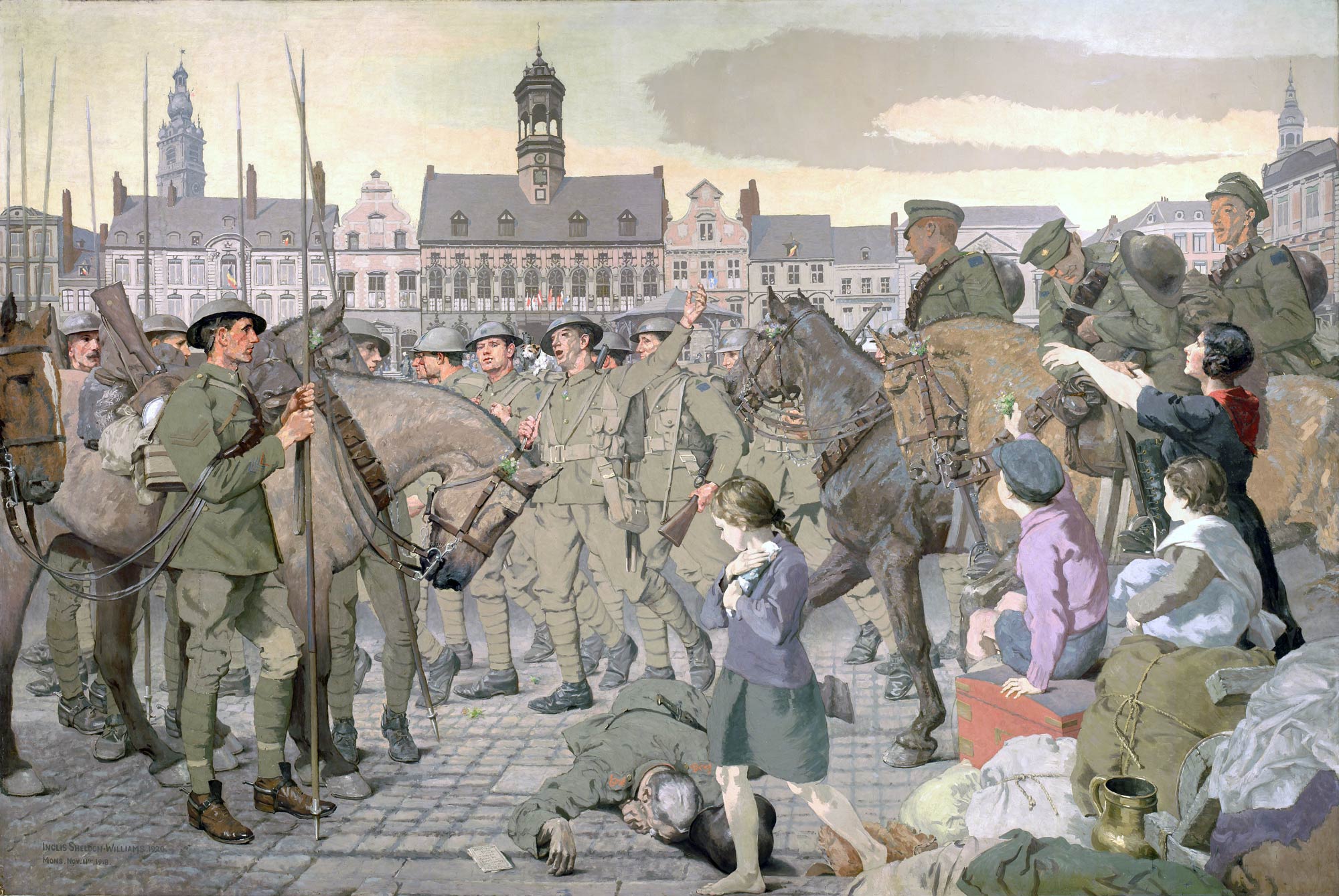
Toward the end of the war, Inglis Sheldon-Williams, one of Regina’s best-known painters and an instructor at Regina College, left to serve as a war artist in Europe, where he produced a substantial body of work that included the large canvases Canadians Arriving on the Rhine, 1918–19, and The Return to Mons, 1920. These two works—and in particular The Return to Mons, with its frieze-like flattening of the masses—show that Sheldon-Williams’s experiences of the war left him open to new approaches to his art, as it did with a number of other painters and sculptors. The departure of Sheldon-Williams left Regina College’s art department in a precarious position for the next several years.
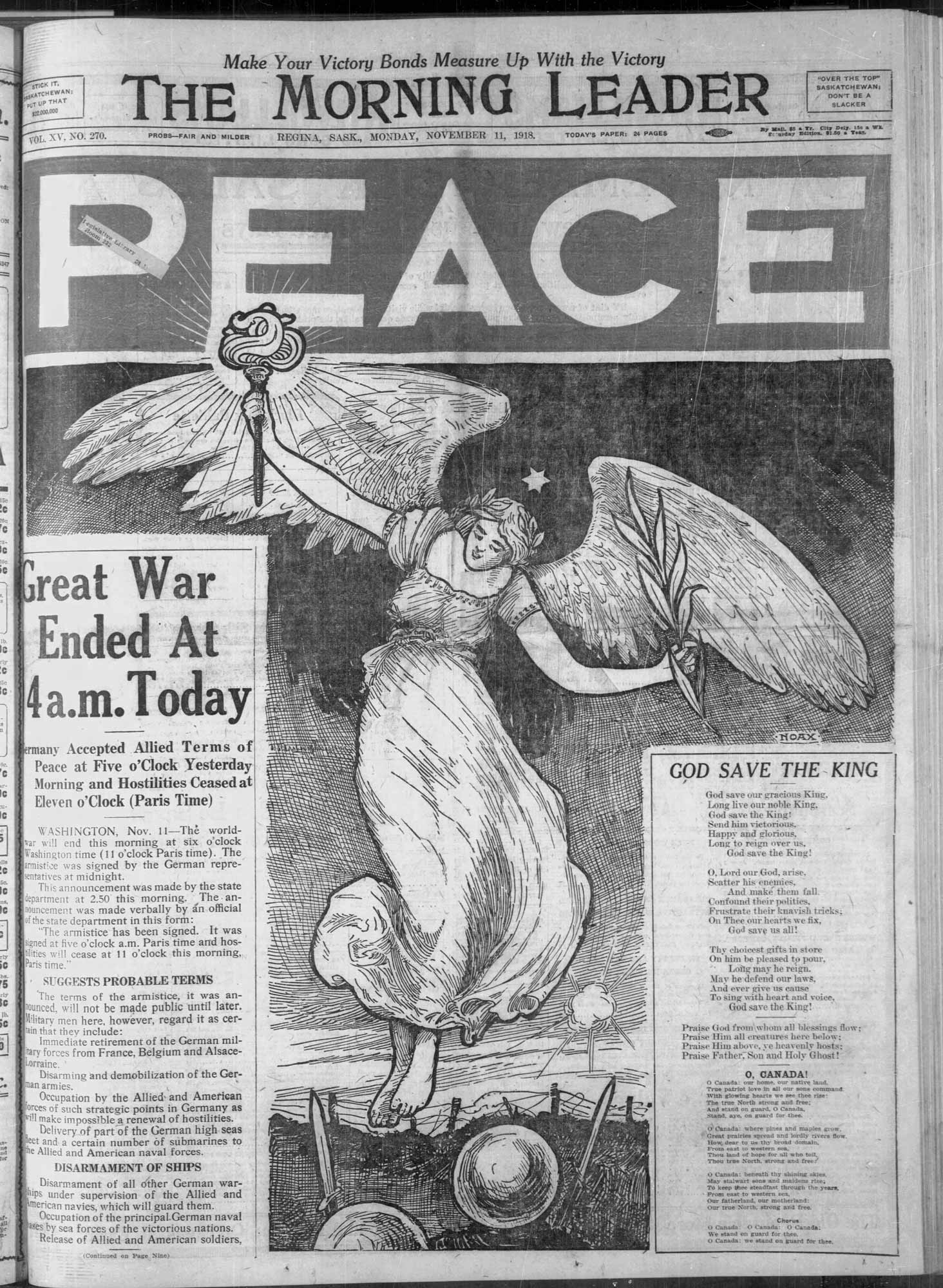
Newspapers in these years were a ubiquitous source of information and entertainment. As employers of professional illustrators, the papers used these artists’ talents to influence public opinion through war propaganda. The cartoonist and illustrator William Noakes (1871–1953), publishing under his pseudonym, Noax, depicted the tragedy of war and the patriotism of Saskatchewan’s residents in cartoons he published in The Morning Leader. Toward the end of the conflict, Noakes volunteered his services to the Victory Bond Loan Fund drive, and on November 11, 1918, he celebrated the Armistice with a full-page cartoon on the first page of The Morning Leader.
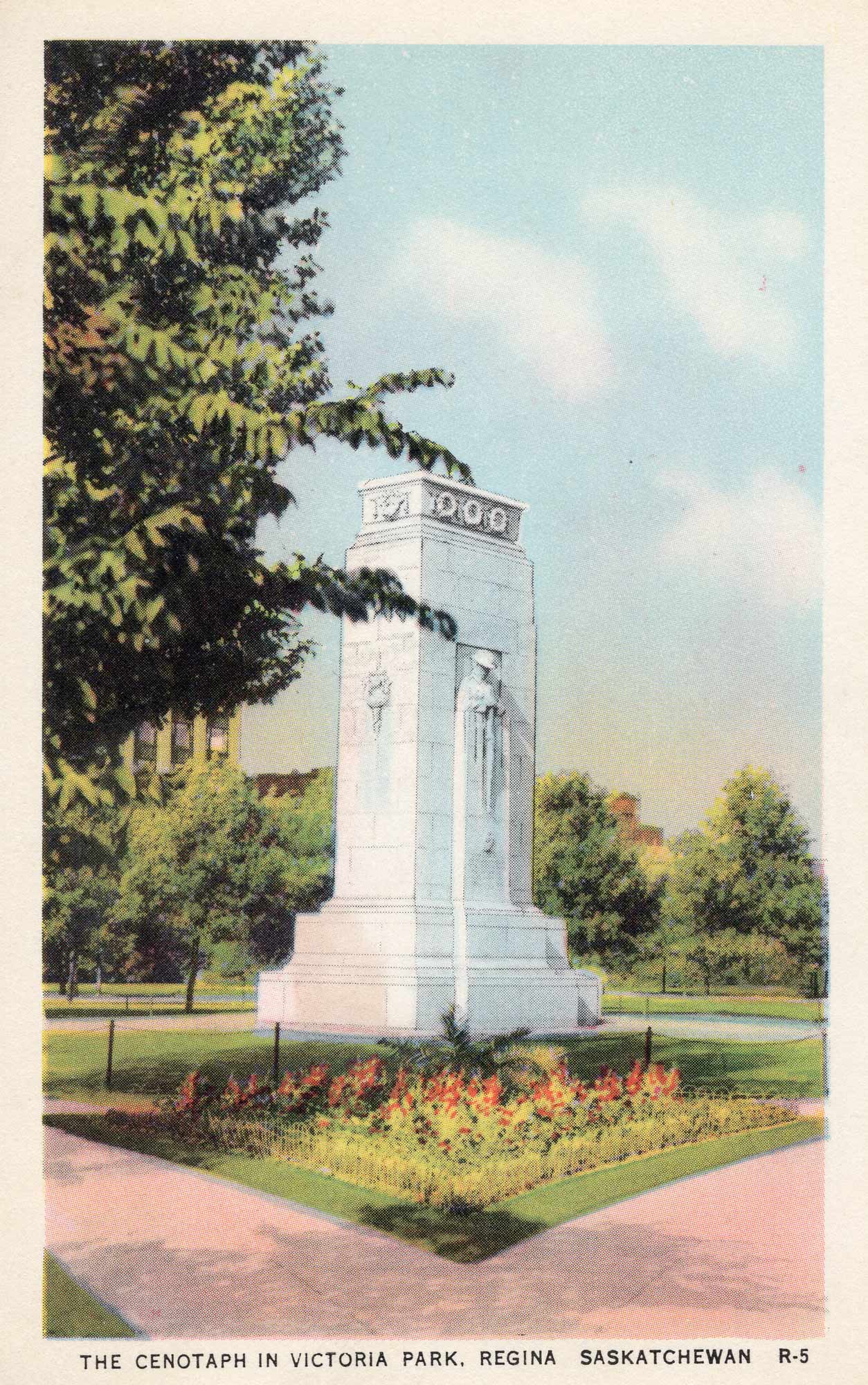
In 1926, residents of Regina who had fallen in the war were honoured with a cenotaph that replaced the fountain at the centre of Victoria Park. Unveiled on Armistice Day, November 11, the grey granite monument was designed by Montreal’s R.W.G. Heughan (1887–1950) in collaboration with Regina architect Francis Portnall (1886–1976).
In addition to the cenotaph, Saskatchewan’s provincial government had envisioned building a war museum in Regina on the grounds of the Legislative Building. The project was kept alive until the early 1920s, when it was cancelled despite an architectural commission having been awarded to Percy Erskine Nobbs (1875–1964) and George Taylor Hyde (1879–1944) of Montreal.
1920–1929: Prosperity and Patronage: Women’s Art Organizations Make Their Mark
Following the end of hostilities in Europe, attention returned to addressing the needs of the city’s residents. Saskatchewan was entering a period of rapid economic expansion. By the end of the decade, it ranked first among the provinces in per capita wealth, mainly on the strength of being the country’s top producer of wheat, oats, rye, and flax. Saskatchewan grew to be third among the provinces in population, behind only Ontario and Quebec.
In Regina, the Women’s Educational Club (WEC), the Fine and Applied Arts Committee of the Local Council of Women (LCW), and the Women’s Art Association of Saskatchewan (WAAS) became leaders in the arts. They were keen to provide exhibition opportunities for local artists, including women such as Ethel Barr (1882–1963), Sybil Henley Jacobson, and Harriette Keating. These organizations often recruited their members from the city’s social elite. Their work on behalf of community improvement had the added advantage of providing a social space for their members, connecting women to “conversational communities and platforms within the public sphere at a date when their activities in this area were strictly limited.”
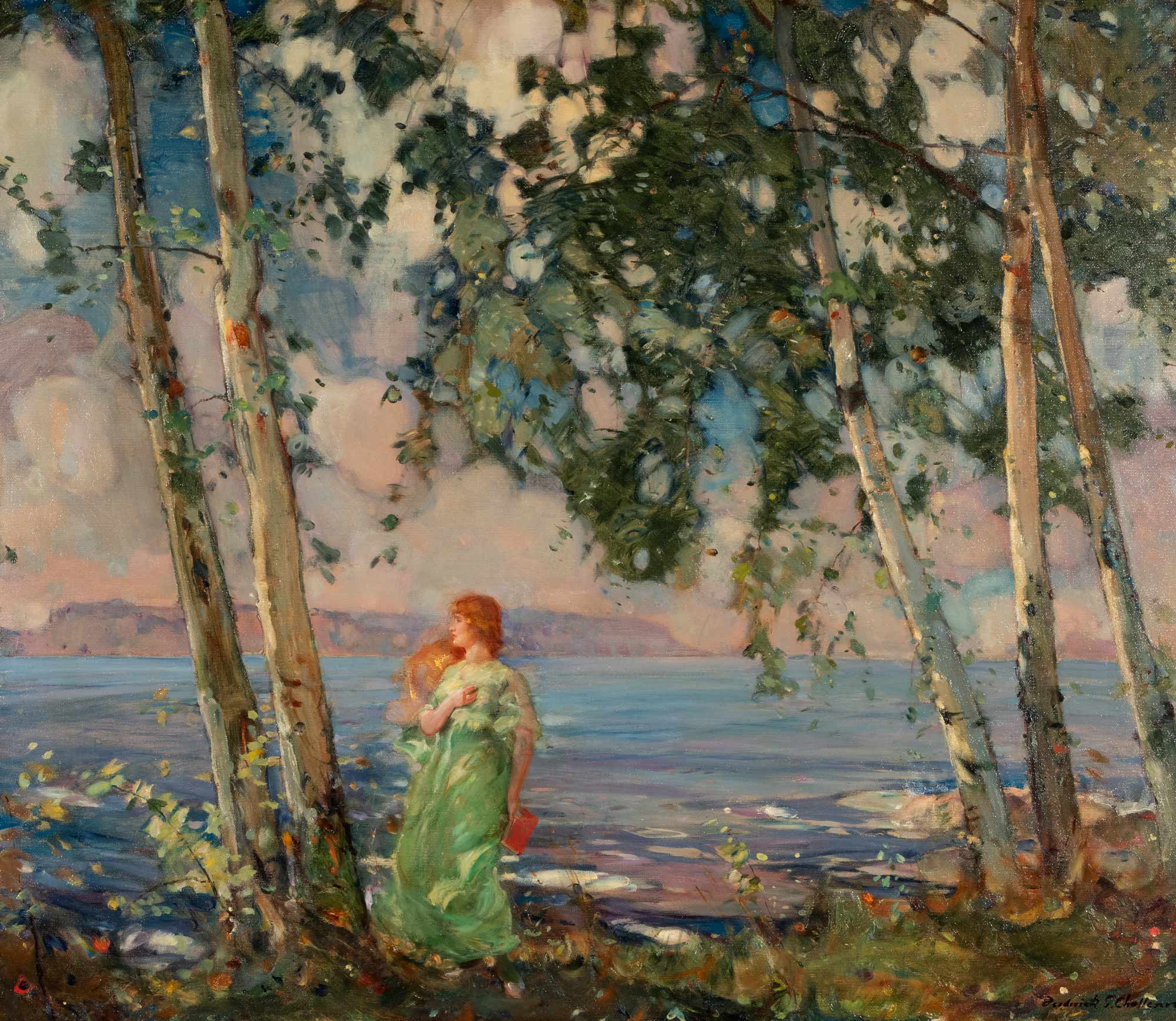
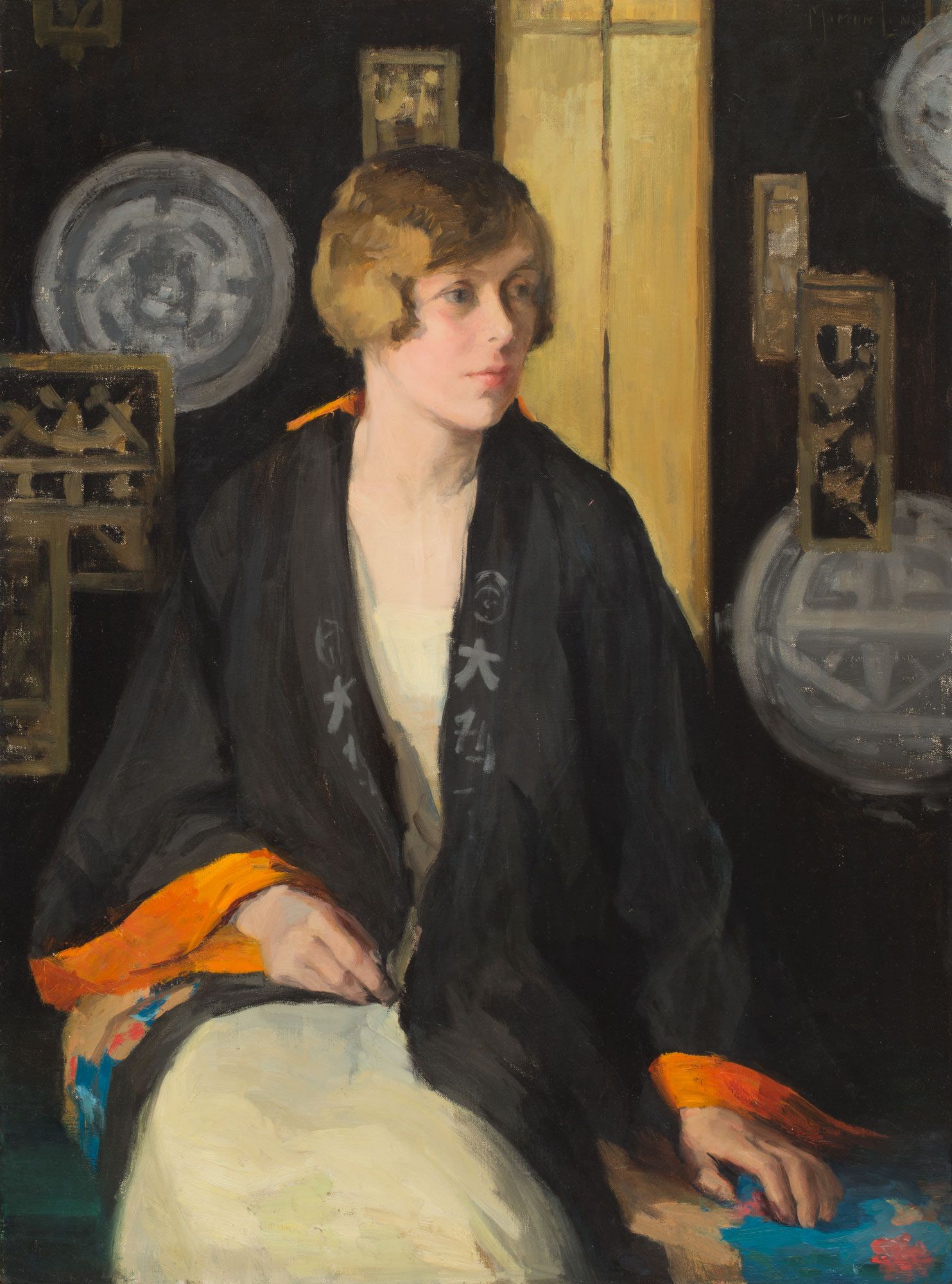
Both the WEC and the LCW’s Fine and Applied Arts Committee focused on developing art collections and making them accessible to the public. The first acquisition of the WEC was a painting by Frederick S. Challener (1869–1959), Vacation Days, c.1920. Later purchases included works by Frederic Marlett Bell-Smith, F. McGillivray Knowles (1859–1932), and Marion Long (1882–1970), all of which found a home in the halls and reception rooms of Regina College. With the 1929 opening of the Darke Hall of Music and Art (later Darke Hall), the club began displaying artworks on its walls. The paintings acquired by the LCW could be seen in the Regina Public Library and in local schools. The artworks purchased by the two groups became the first public art collections in Regina.
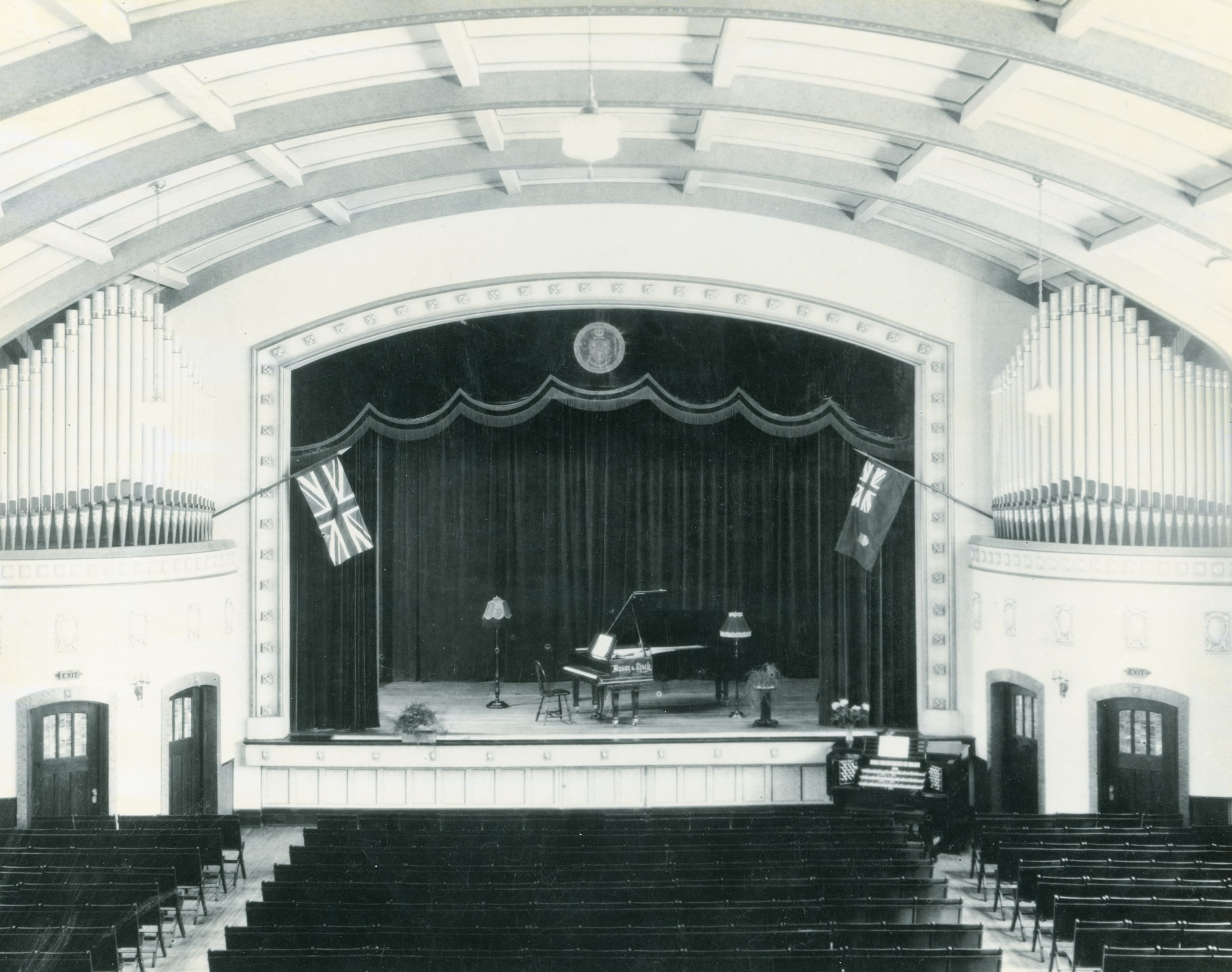
In 1922, Barr, Keating, Jean Bell (1884–1970), Dorothea Sheldon-Williams (1873–1938), and other members of the LCW’s Fine and Applied Arts Committee joined Joseph Henry Lee-Grayson, an instructor at Regina College, and Francis Portnall, one of the city’s best-known architects, to establish the Regina Sketch Club. This was the first artist-centred organization in the city, with members receiving advice from their peers rather than from professional instructors. Meeting twice a week, the group focused on portraiture and figure drawing from live models in the winter and outdoor sketching in summer. A selection of the work produced during the year, chosen by the club’s executive, was displayed in the club’s annual exhibition, which was usually held at Regina College or at the Regina Public Library. Regina College continued to be the city’s most important centre for art activities throughout the 1920s, hosting exhibitions, lectures, and other events. As the decade came to a close, women continued to contribute to the city’s cultural development with the formation of the WAAS.
No province suffered more than Saskatchewan during the Great Depression. Along with the global economic downturn and low agricultural commodity prices, a decade of drought and dust storms brought further devastation to prairie farmers and to the province’s economy. By 1933, Saskatchewan had the lowest per capita income of all Canadian provinces. As the economic crisis deepened, the province began to see a steady decrease in population that would last until 1946.
-
Edward John Hughes, Bridge and Parliament Building, Regina, 1957
Oil on canvas, 63.8 x 81.6 cm
Private collection
-
Albert Memorial Bridge, Regina (detail), 2025
Photograph by Saskatchewan Provincial Capital Commission
-
J. Fred Spalding, The Memorial Bridge, Regina, Saskatchewan, with the Parliament Buildings, c.1930
Postcard, 9 x 14 cm
University of Alberta Library, Edmonton
Despite the massive downturn, Regina’s cultural sector continued to develop. Amateur art groups kept up their support for the city’s artists through exhibitions and by building their art collections. The provincial government stepped in to fund projects that included the ornate Albert Memorial Bridge in 1930, featuring Egyptian-style terracotta elements and designed by Joseph Henry Lee-Grayson. Dedicated to Saskatchewan soldiers who had died in the First World War, the 256-metre bridge was part of a larger relief effort that continued the beautification of the vast park surrounding the Saskatchewan Legislature. The bridge remains one of Regina’s most enduring landmarks.
Still without a public art museum, Regina residents who wished to view art were generally dependent on the efforts of the Women’s Educational Club, the Local Council of Women’s Fine and Applied Arts Committee, and the recently formed Women’s Art Association of Saskatchewan (WAAS), all of which continued to organize exhibitions. Art was occasionally shown at special events, such as the prestigious World’s Grain Exhibition and Conference, held at Regina’s newly constructed Confederation Building for two weeks during the summer of 1933.
Significantly, the World’s Grain Exhibition included a major travelling exhibition of 150 paintings from the National Gallery of Canada, a loan facilitated by prominent Regina lawyer and art collector Norman MacKenzie (1869–1936). Arguably the most important selection of Canadian art to be shown in Regina, the exhibition featured some of the gallery’s best-known works, including Grey and Gold, c.1910, by Florence Carlyle (1864–1923); North Shore, Lake Superior, c.1926, by Lawren S. Harris (1885–1970); Dieppe, The Beach, Grey Effect, c.1905–9, by James Wilson Morrice (1865–1924); and Oxen Drinking, 1899, by Horatio Walker (1858–1938). Also on display was a large collection of Saskatchewan handicrafts, including hand-painted china, quilts, rugs, and woodcarving curated by the WAAS; an exhibition of twenty-four watercolours by Lee-Grayson; and murals in the main reception hall of the Confederation Building depicting Saskatchewan scenes by Augustus Kenderdine (1870–1947) and Fritz Brandtner (1896–1969). Attendees of the fair were given free access to all displays.
In 1936, Regina College, which had become a junior college affiliated with the University of Saskatchewan two years earlier, established an art department under the direction of Kenderdine. In addition to his teaching responsibilities, Kenderdine managed the more than 350 artworks bequeathed to the college by MacKenzie. MacKenzie also allocated funds to build a museum in Regina to house his collection, a project that the Great Depression and the Second World War would delay until the early 1950s.
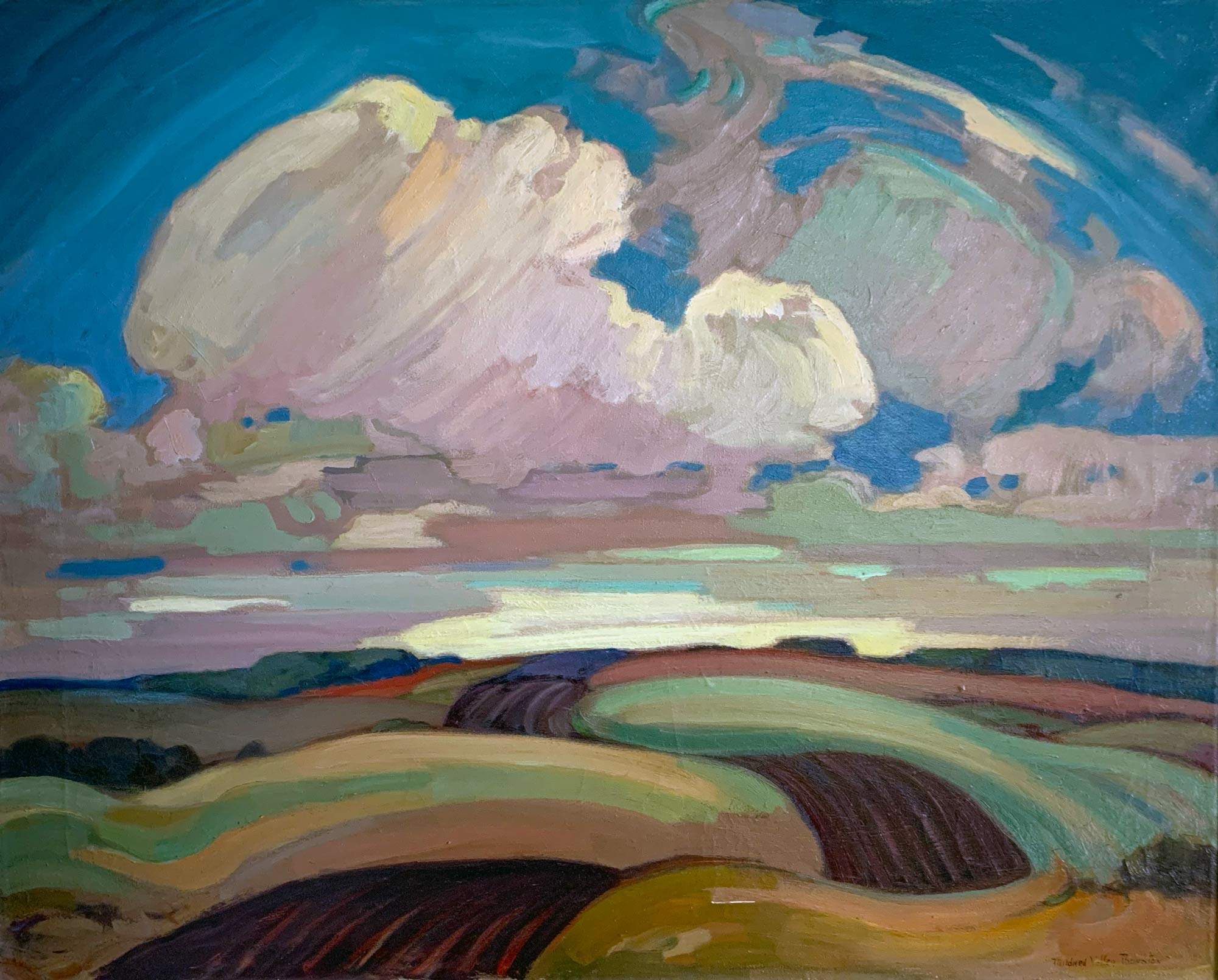
Supporting oneself through art was difficult at the best of times, and the economic catastrophe of the 1930s made it even harder. For example, Mildred Valley Thornton had arrived in Regina in 1911 after studying at Olivet College in Michigan and had become one of the city’s best-known artists. Despite her status, she was forced to leave the city for Vancouver in 1934, after her husband’s bakery business went bankrupt. The lack of professional opportunities also led George Campbell Tinning (1910–1996), a student of Lee-Grayson at Regina College and one of the city’s most promising artists, to leave Regina in 1938.
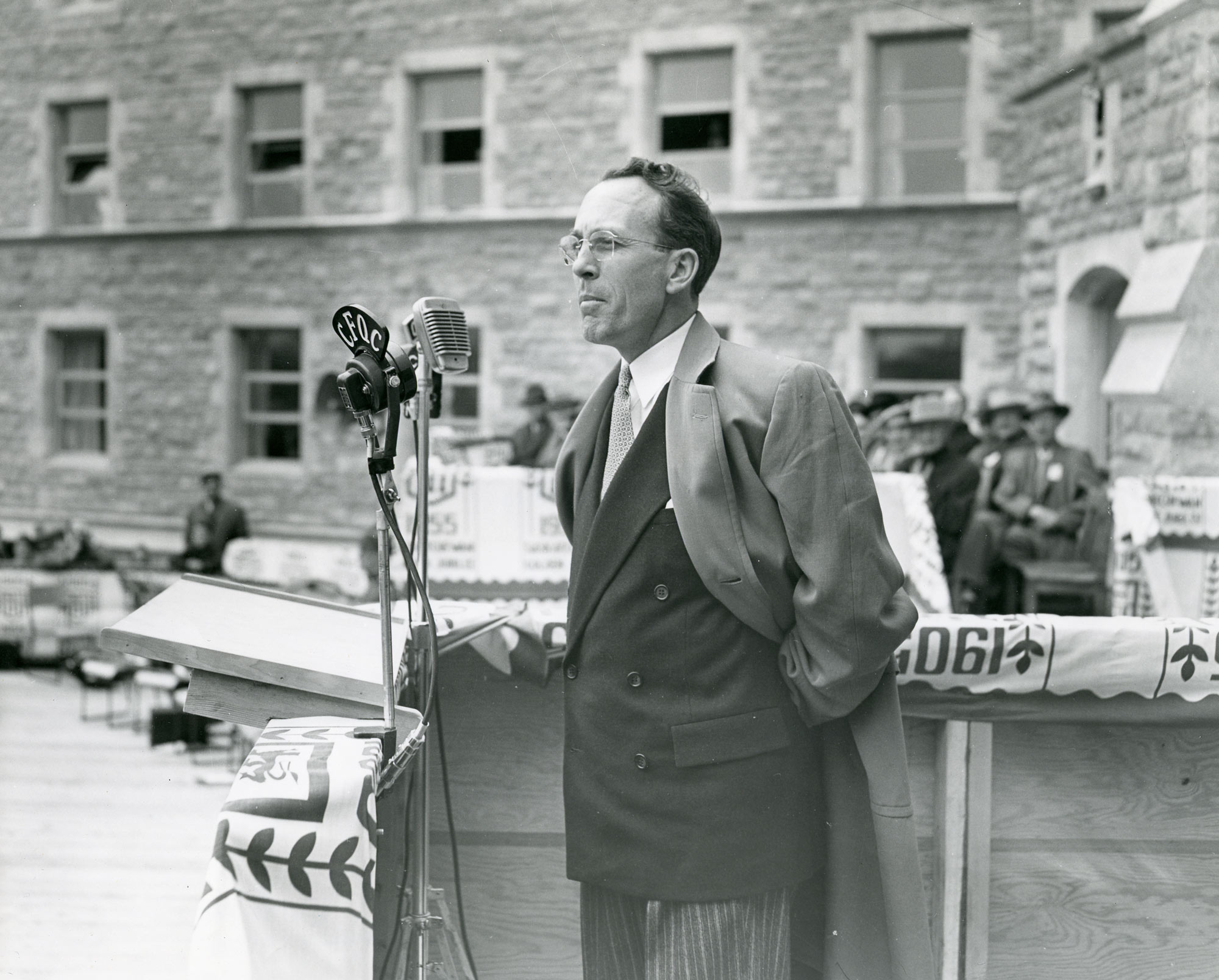
Against the economic turmoil of the Great Depression, the Co-operative Commonwealth Federation (CCF) was formed in Calgary in 1932. The following year, representatives of the United Farmers movement, the Socialist Party of Canada, the Canadian Labour Party, and the League for Social Reconstruction met in Regina to sign its founding document, the Regina Manifesto. A decade later, in 1944, Tommy Douglas led the CCF to victory in Saskatchewan in the election that gave the province the first socialist government in North America. The CCF and its successor, the New Democratic Party, governed Saskatchewan until 1964, vastly enhancing the province’s social fabric and providing democratic access to art and education.
1939–1959: Art in Regina Breaks the Mould
When the Second World War saw Regina College and the Provincial Normal School—the city’s providers of professional art education—transformed into bases for the British Commonwealth Air Training Scheme, Steward Basterfield, the dean of Regina College, was not fazed. He noted, “We regret having to vacate our own delightful halls, but we are still a community of scholars, and can, in the ardent pursuit of knowledge, easily forget the small inconveniences imposed on us by the exigencies of war.” However, the repurposing of Regina College was no small inconvenience to the city’s artists, as it temporarily halted programming by the Women’s Educational Club (WEC) and the Local Council of Women (LCW), including their regular exhibitions.
After the war, Regina’s art infrastructure became increasingly professionalized through the influence of the Federation of Canadian Artists (FAC), formed in 1941, and the Saskatchewan Arts Board (SAB), formed in 1948. The FAC focused on collaboration among artists in its efforts to expand access to art throughout the country. Its presence in Saskatchewan was established under the direction of Saskatoon artist Ernest Lindner (1897–1988). Among the organization’s early efforts in Regina was an annual exhibition of members’ works, the first judged by A.Y. Jackson (1882–1974) and presented at Regina College in November 1944. Soon thereafter, Jackson’s Group of Seven colleague Lawren S. Harris spoke to the local FAC branch on democracy and the arts, looking ahead to “a better world” in which the arts and philosophy “should be applied to everyday living.”
The SAB was a project of the Co-operative Commonwealth Federation government that had taken power in 1944 and set about transforming the province with initiatives such as a precedent-setting hospital insurance plan and expanded access to art and education. The promise of an era of progressive politics attracted a new wave of energetic, left-leaning professionals to Regina, including Morris Shumiatcher (1917–2004), who helped draft the 1947 Bill of Rights. Norah McCullough (1903–1993) arrived in 1947 to head the new SAB, the first funder of public art in North America. With the advent of organizations such as the SAB, the municipal management of the arts by amateur groups increasingly gave way to provincial participation under an activist social democratic government. Creating opportunities for public appreciation of the arts, the SAB would have an enormous impact on Regina’s artists—an influence that is still felt today.
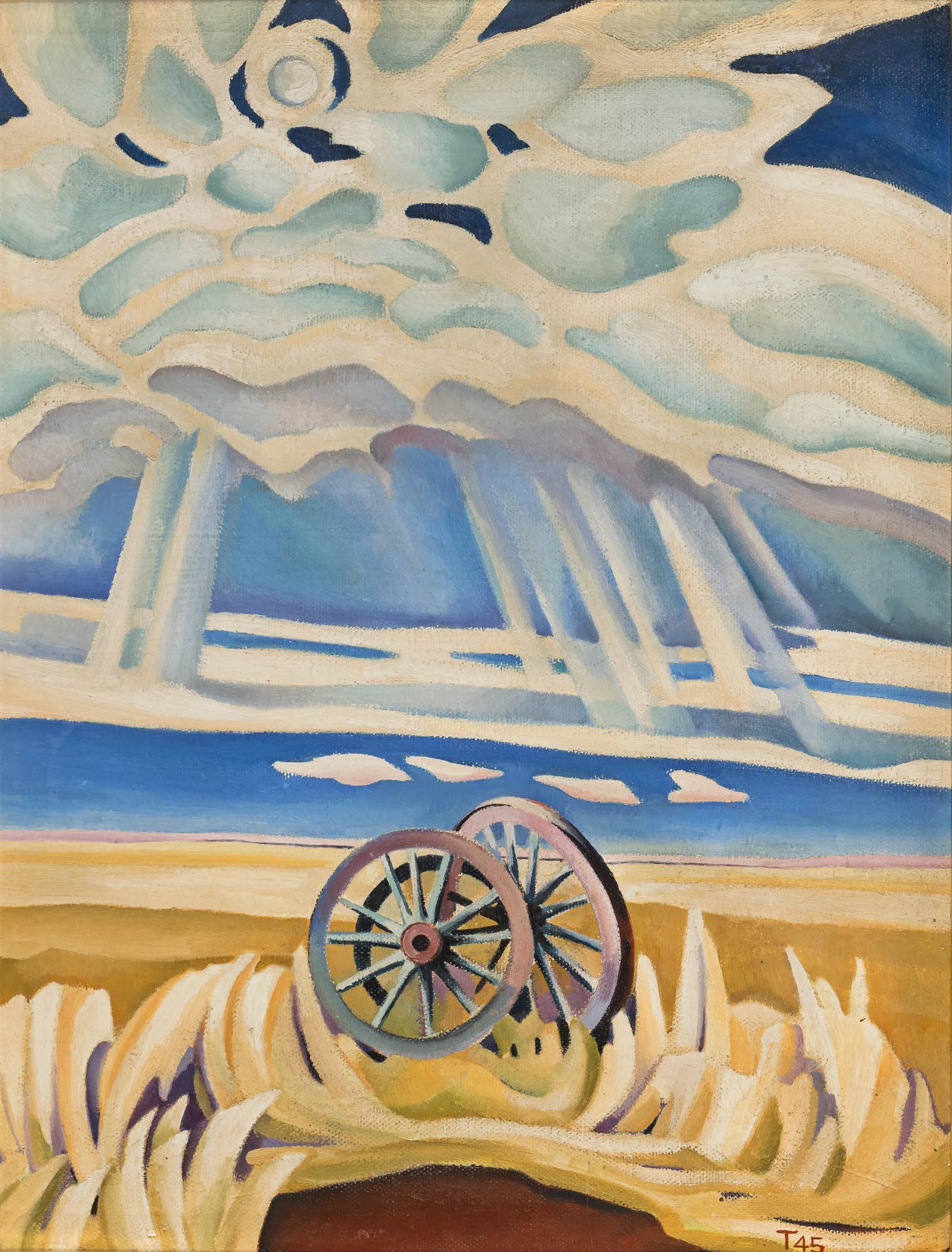
Mashel Teitelbaum, God’s Acre, 1945, oil on hardboard, 76.5 x 58.5 cm, McMichael Canadian Art Collection, Kleinburg.
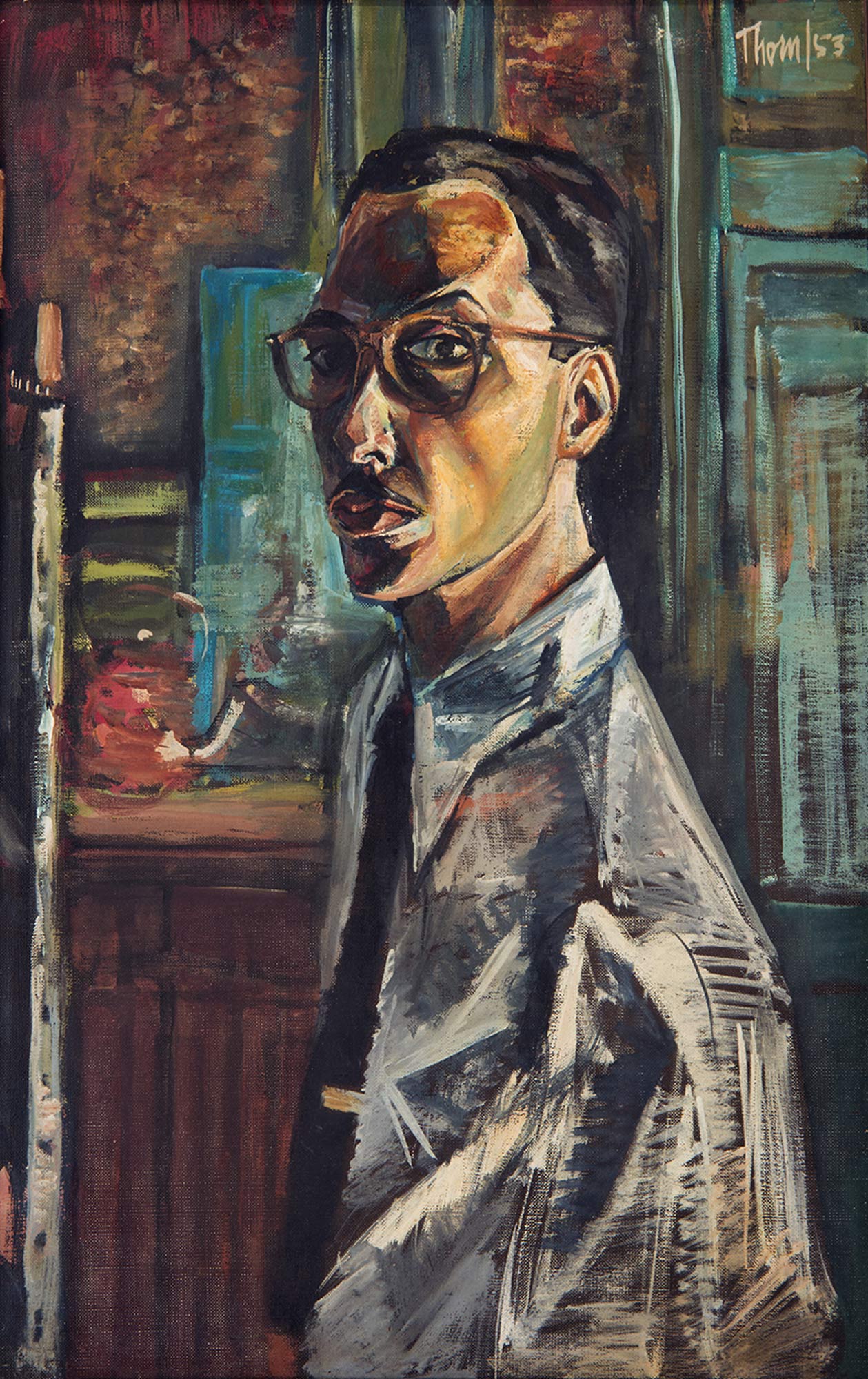
Anthony Thorn, Untitled (Self-Portrait), 1953, oil on canvas, 61 x 38 cm, SK Arts Permanent Collection, Regina.
Coinciding with these developments was a growing awareness of artistic activity beyond the city and the province, a trend that was reflected in the work of painters McGregor Hone (1920–2007), Mashel Teitelbaum (1921–1985), and Anthony Thorn (1927–2014), all of whom by the 1940s were adopting modernist elements inspired by American and European models of Post-Impressionism, Expressionism, and abstraction. Teitelbaum was especially influenced by the early paintings of Russian abstractionist Wassily Kandinsky (1866–1944) as well as the works of Americans Arthur Dove (1880–1946), Marsden Hartley (1877–1943), and John Marin (1870–1953), while Thorn drew inspiration from a wide range of international sources, from French stained glass to the Mexican Muralism movement. Openness to creative exploration laid the foundation for Regina’s eventual emergence as an epicentre of modernist painting during the mid-twentieth century.
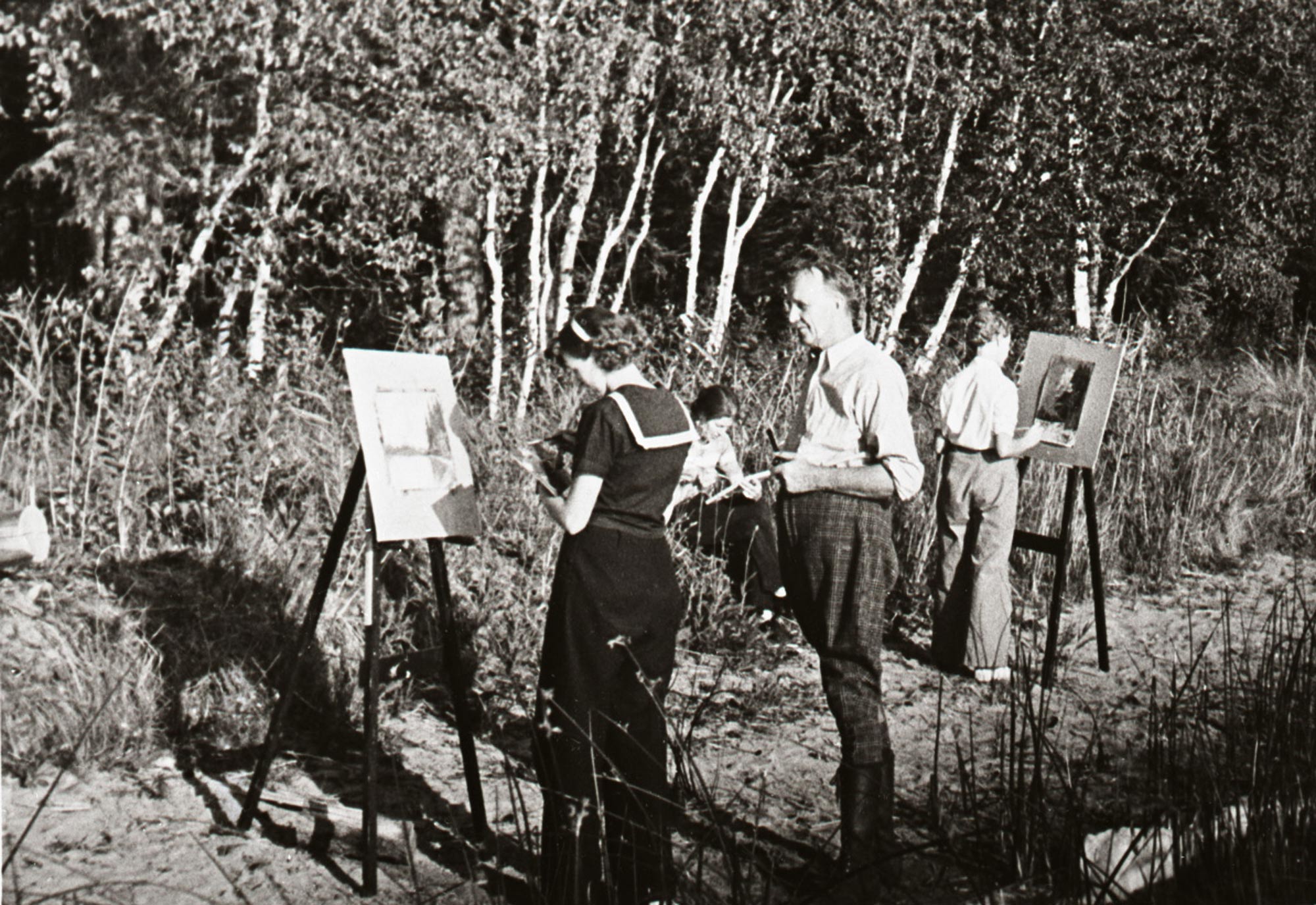
In 1950, Ottawa-born painter Kenneth Lochhead (1926–2006) was hired to succeed Augustus Kenderdine as the director of the art department at Regina College. Lochhead’s contemporary Arthur McKay (1926–2000) joined the staff in 1952, and three years later, they established the Emma Lake Artists’ Workshops at the site of the Murray Point Summer School of Art in northern Saskatchewan. The workshops aimed to connect with recent artistic developments outside of the province and were led by acclaimed artists and critics from Canada and the United States. These included British Columbia–born Jack Shadbolt (1909–1998) in 1955 and Joseph Plaskett (1918–2014) in 1956, both with experience in the United States and Europe, as well as New Yorkers Will Barnet (1911–2012) in 1957 and Barnett Newman (1905–1970) in 1959.
By encouraging experimentation, innovation, and a new interest in art theory, the workshops had a profound impact on many who attended, including the artists who later become known as the Regina Five: Ronald Bloore (1925–2009), Ted Godwin (1933–2013), Kenneth Lochhead, Arthur McKay, and Douglas Morton (1926–2004), whose bold, nonrepresentational paintings offered a new direction for abstract art in Western Canada. The workshops continued to play a major role in shaping art discourse in Regina throughout the 1960s, which saw the emergence of a new generation of painters, including Bruce Parsons (b.1937), Kenneth Peters (1939–2007), and Joan Rankin (1927–2014).
The idea that Regina should have an art museum had long been a preoccupation of many of the city’s residents. That aspiration was finally realized in 1953 with the opening of the Norman MacKenzie Art Gallery, whose first curator was Richard Simmins (1924–1999). Along with the works acquired from the city’s most prominent collector, Norman MacKenzie, the museum absorbed the collections of the WEC and the LCW’s Fine and Applied Arts Committee, which had advocated for a permanent public exhibition space.
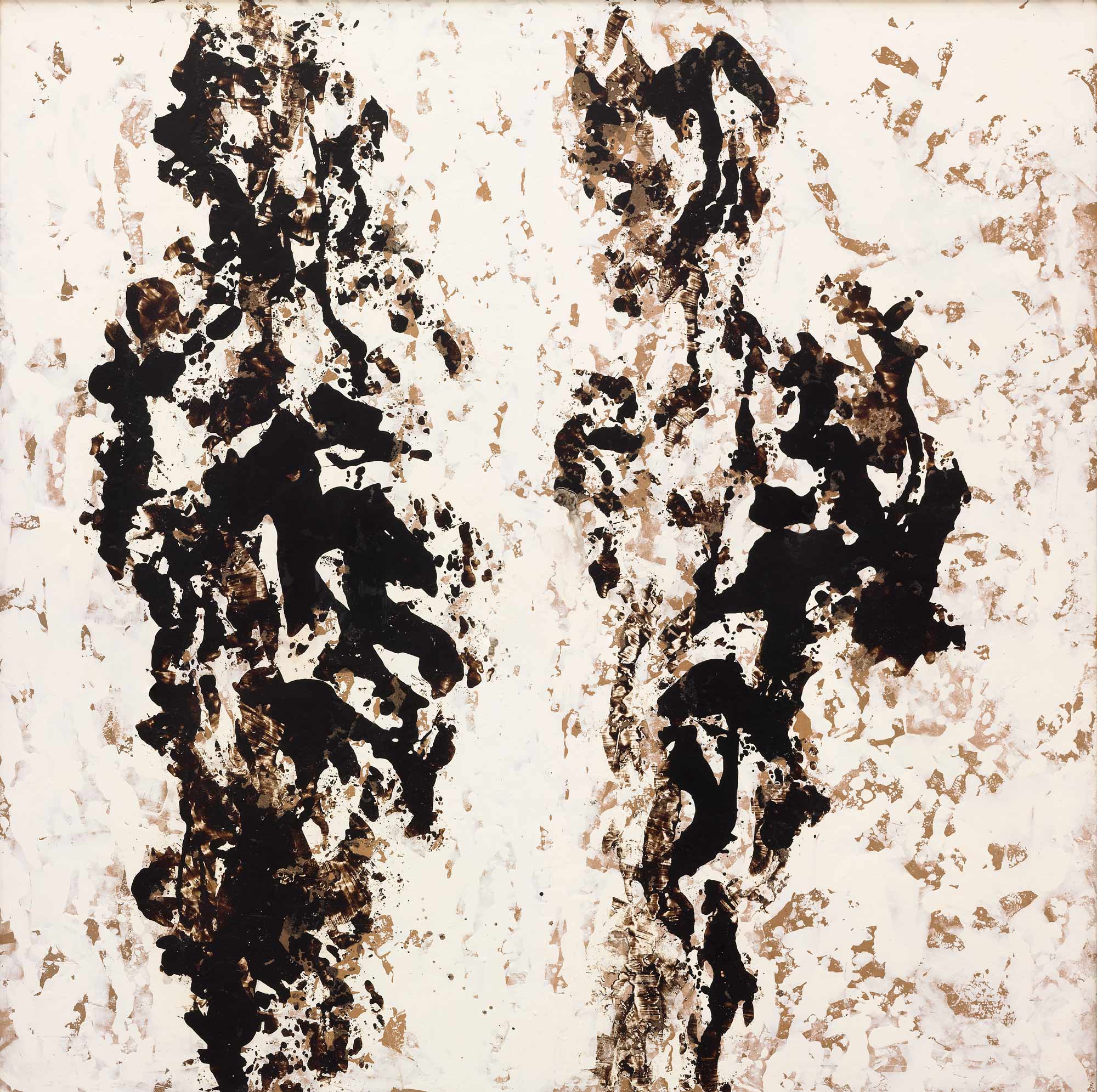
The museum became one more pillar in the professionalization of Regina’s art infrastructure after the Second World War. Simmins placed the gallery on a firm footing with a regular exhibition schedule and a lecture series, while his successor, Bloore, challenged the city’s predominantly conservative approach to art, bringing it national attention through a series of bold purchases and exhibitions. An exhibition that Bloore mounted in 1960 showed how far he was willing to go in challenging conventional approaches to art.
1960–1980: New Trends and Competing Visions in Art
In 1960, Ronald Bloore, curator of the Norman MacKenzie Art Gallery, collaborated with artists Ted Godwin and Kenneth Lochhead on an exhibition featuring eighteen works by a fictional female sculptor created with used car parts, discarded beer bottle caps, and pails of sand. Images and Studies, an Exhibition by Win Hedore caused an uproar in the city and led to calls for Bloore to be fired. The following year, having survived the scandal, Bloore brought international attention to a group of seven Regina artists in The May Show, which in turn served as the inspiration for the landmark exhibition Five Painters from Regina held at the National Gallery of Canada.
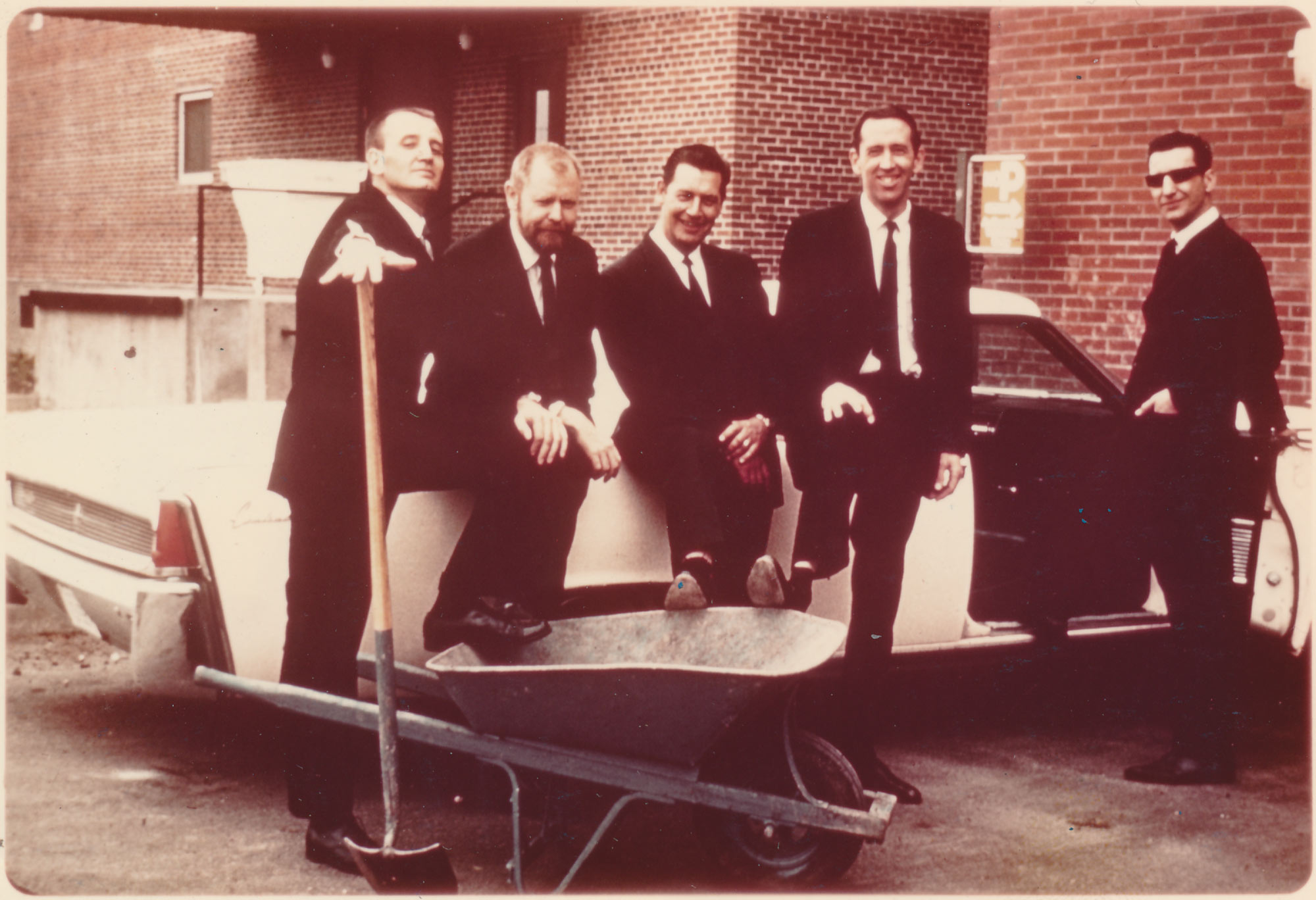
Opened in December 1961 in Ottawa, the first stop on a cross-country tour, Five Painters from Regina featured abstract works by Bloore, Godwin, Lochhead, Arthur McKay, and Douglas Morton. The exhibition brought the artists together—each with a different approach to technique and compositional elements of nonrepresentational painting—to emphasize their shared ambition to further the development of avant-garde art in Western Canada. They had honed their modernist explorations at Emma Lake, notably during the 1959 workshop led by colour-field painter Barnett Newman.
Beyond helping to catapult the Regina Five to national and international significance, the Emma Lake workshops continued to be important catalysts for the development of modern art throughout Saskatchewan—and Canada—over the next decade. Prominent American artists and critics, including Clement Greenberg (1909–1994), Lawrence Alloway (1926–1990), John Cage (1912–1992), Frank Stella (1936–2024), and Donald Judd (1928–1994), descended upon northern Saskatchewan, leading sessions and championing modernist ideals in the same boreal forest setting that had once inspired leading painters in the province like Augustus Kenderdine and Ernest Lindner.
A dedicated gallery space within the new Regina Public Library, opened in 1962, quickly became a venue for new art in the city. The first curator, Bruce Parsons—an artist who had studied at the Ontario College of Art (now OCAD University) and would later attend workshops at Emma Lake led by Stella, Kenneth Noland (1924–2010), and Jules Olitski (1922–2007)—promoted experimentation and innovation at the gallery, exhibiting his own vibrant colour-field paintings as well as abstract works by McKay and Morton. Parsons also showed works by emerging modernist painters such as Simon de Jong (1942–2011), Kenneth Peters, and Joan Rankin—all from Regina—as well as Marion Nicoll (1909–1985), an artist based in Calgary.
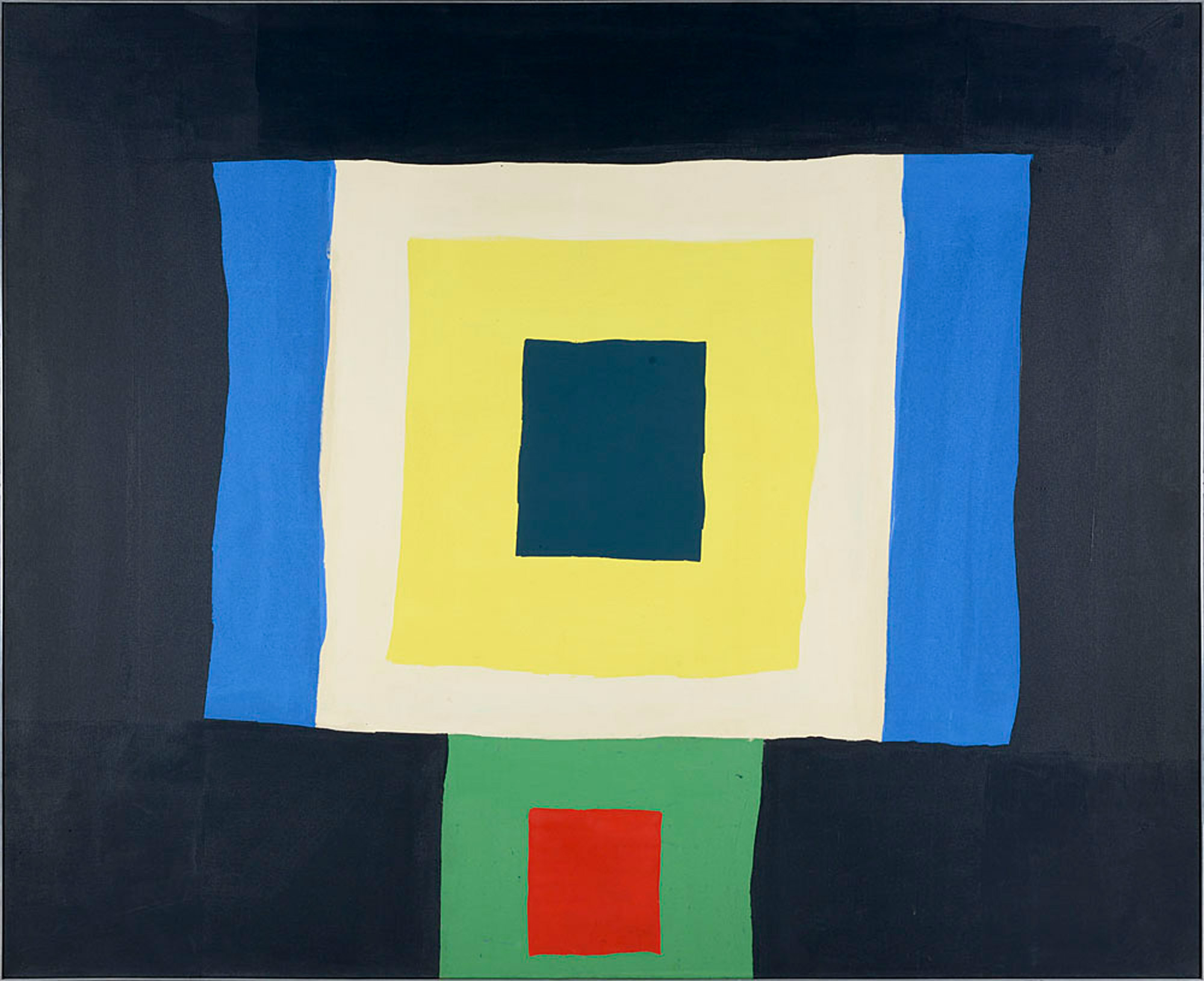
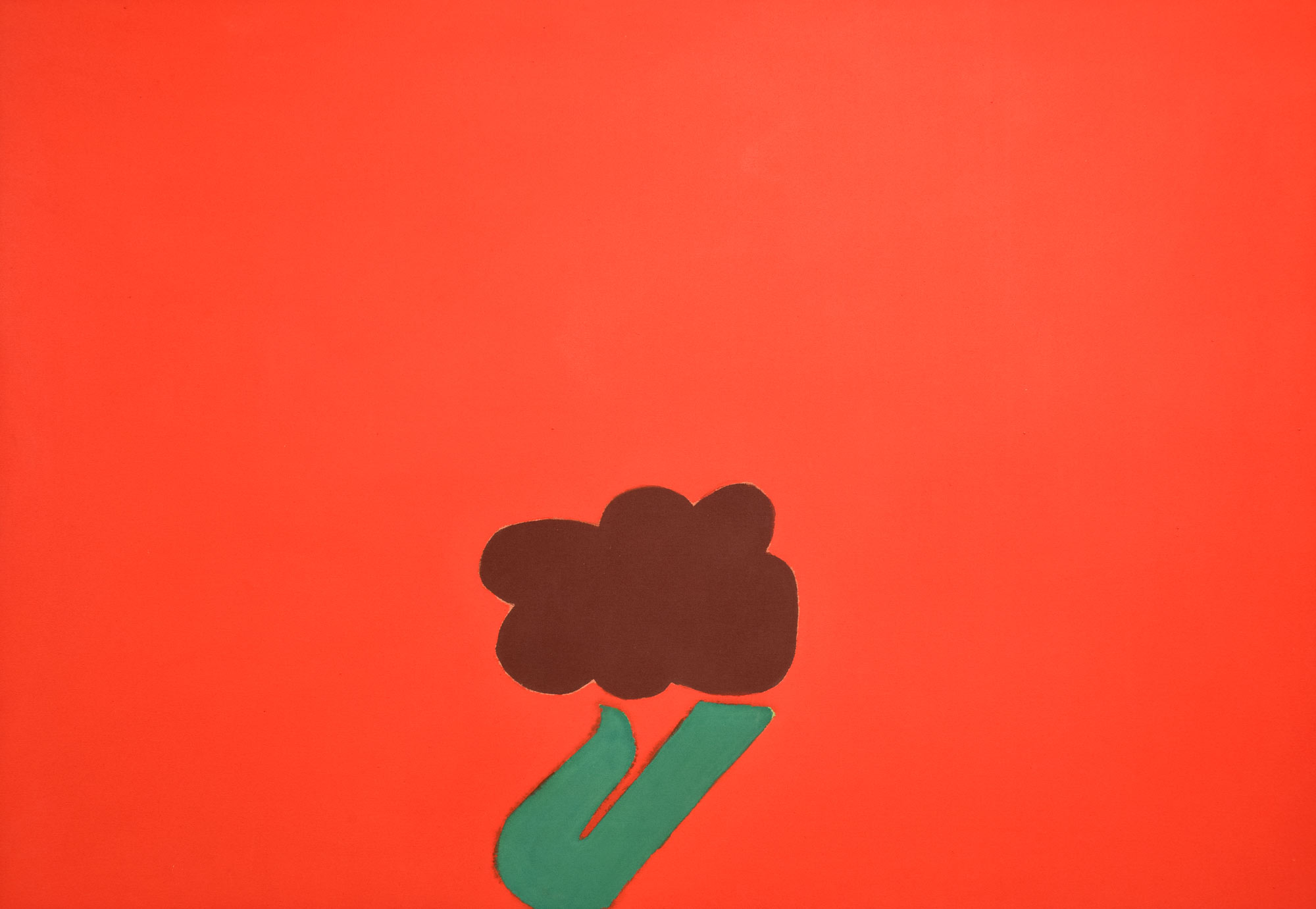
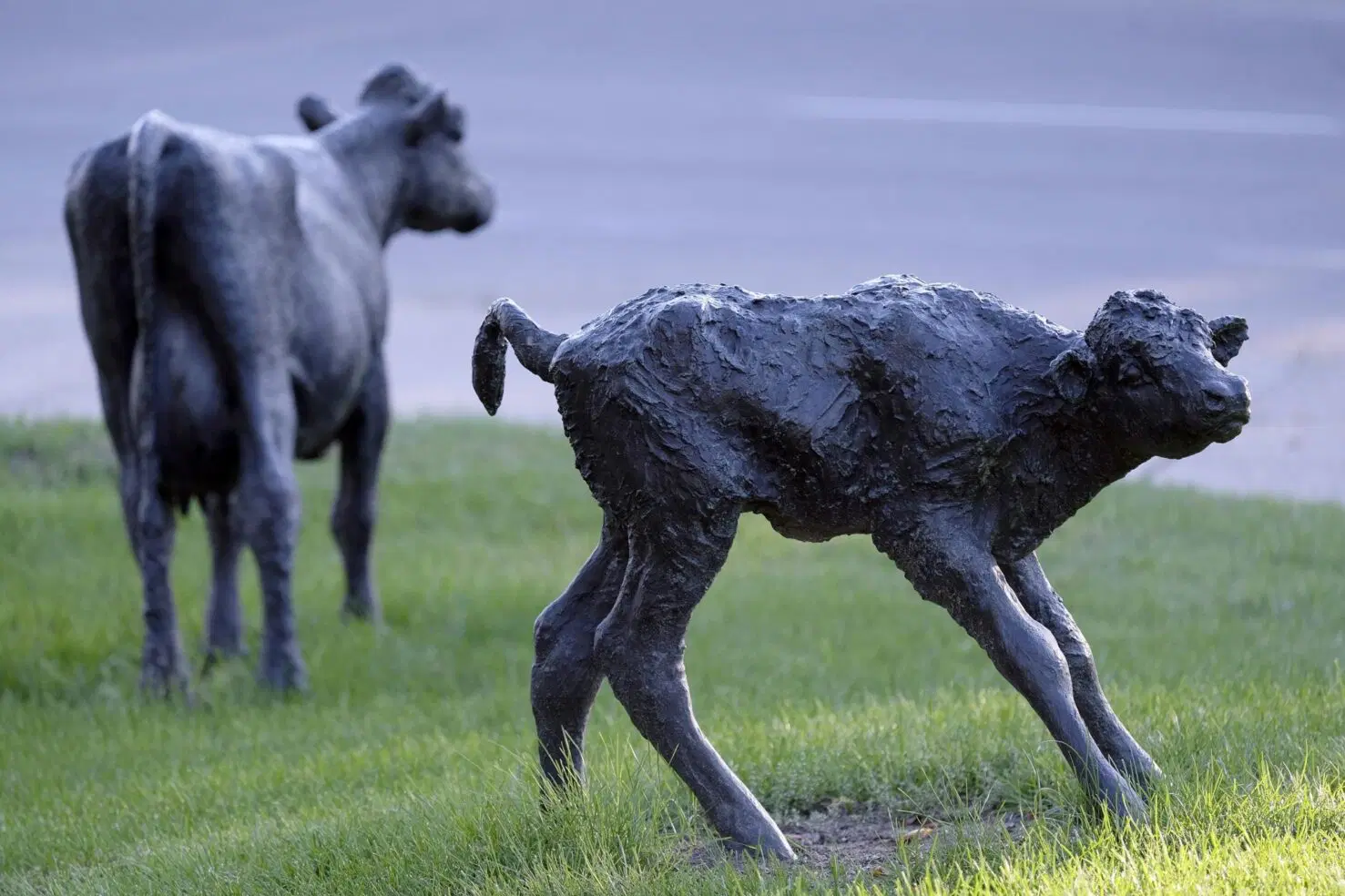
Regina continued to reap the benefits of a robust post-war economy and rapid growth throughout the 1960s. In 1962, partly in response to its growing population (from approximately 65,000 in 1945 to more than 120,000 in 1960), Regina formed the Wascana Centre Authority and hired architects Minoru Yamasaki (1912–1986) and Thomas Church (1902–1978) to add hundreds of hectares of land to Wascana Park. The new plan, built upon the earlier vision of Frederick Todd and Thomas H. Mawson (1861–1933) for the design of the area around the Saskatchewan Legislative Building, included the development of a new University of Regina campus in the southeastern portion of the city. At 930 hectares, Wascana Centre is one of the largest urban parks in North America. It features several notable artworks, including three bronze cows—Potter, 1990; Valadon, 1990; and Teevo, 1993—by Joe Fafard (1942–2019); the sculpture The Four Directions, 2005, by Lionel Peyachew (b.1957); and Four Part Vertical Double Plane Structurist Relief (Winter Sky Series), 1980–83, by Eli Bornstein (b.1922), which is displayed in the hall of Wascana Place.
Toward the end of the decade, the city’s art scene underwent a major shift from New York–influenced Post-Painterly Abstraction, endorsed by art critic Greenberg and embraced by the Regina Five and their followers. By the late-1960s, these formerly avant-garde approaches to painting had come to represent the artistic establishment. Another series of exchanges with American artists and critics—this time from California—would set the stage for further shifts in Regina’s identity as a hub for creative experimentation. As Matthew Teitelbaum suggests, ceramicist David Gilhooly (1943–2013) and artist–art historian David Zack (1938–1995), who joined the faculty at Regina College in 1969 and 1970, respectively, played large roles in changing the course of modern art in Regina. Gilhooly and Zack “provoked and encouraged students and faculty, opening up established categories and hierarchies of art making in the community through their willingness to think about art ‘as something ordinary people did.’”
When Gilhooly arrived from the University of California, Davis, to teach at Regina College, he brought his personal brand of California Funk, a West Coast aesthetic focused on everyday subjects, popular culture, and personal narrative, with a glance at humour and surrealism. California Funk in part inspired what would become known as the Regina Clay Movement. Sharing a studio space with Fafard, Gilhooly was “dramatic,” as Timothy Long reports: “Through frequent slide shows, Gilhooly exposed his ceramics students to a wide range of possibilities and then gave them the freedom to do what they wanted.”
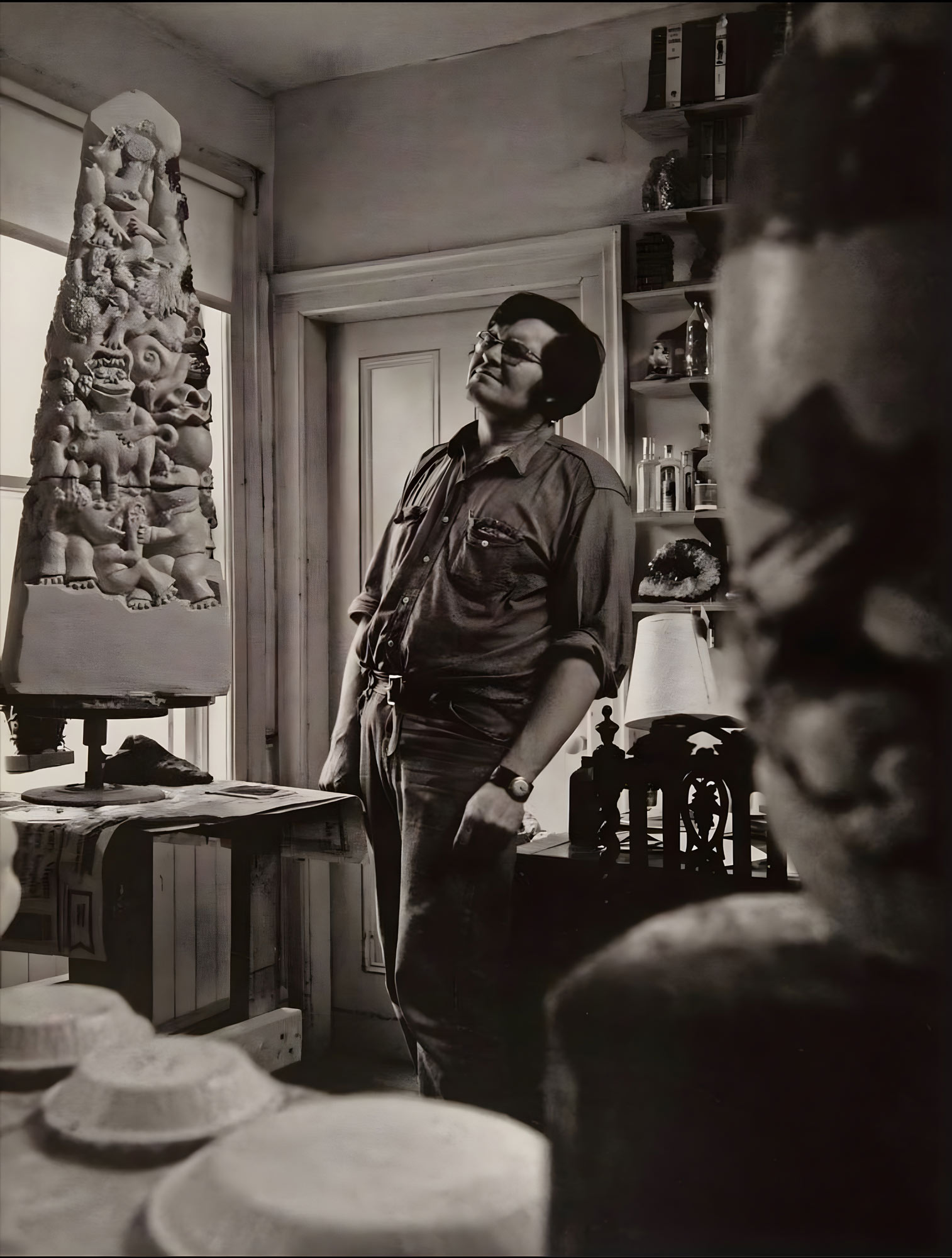
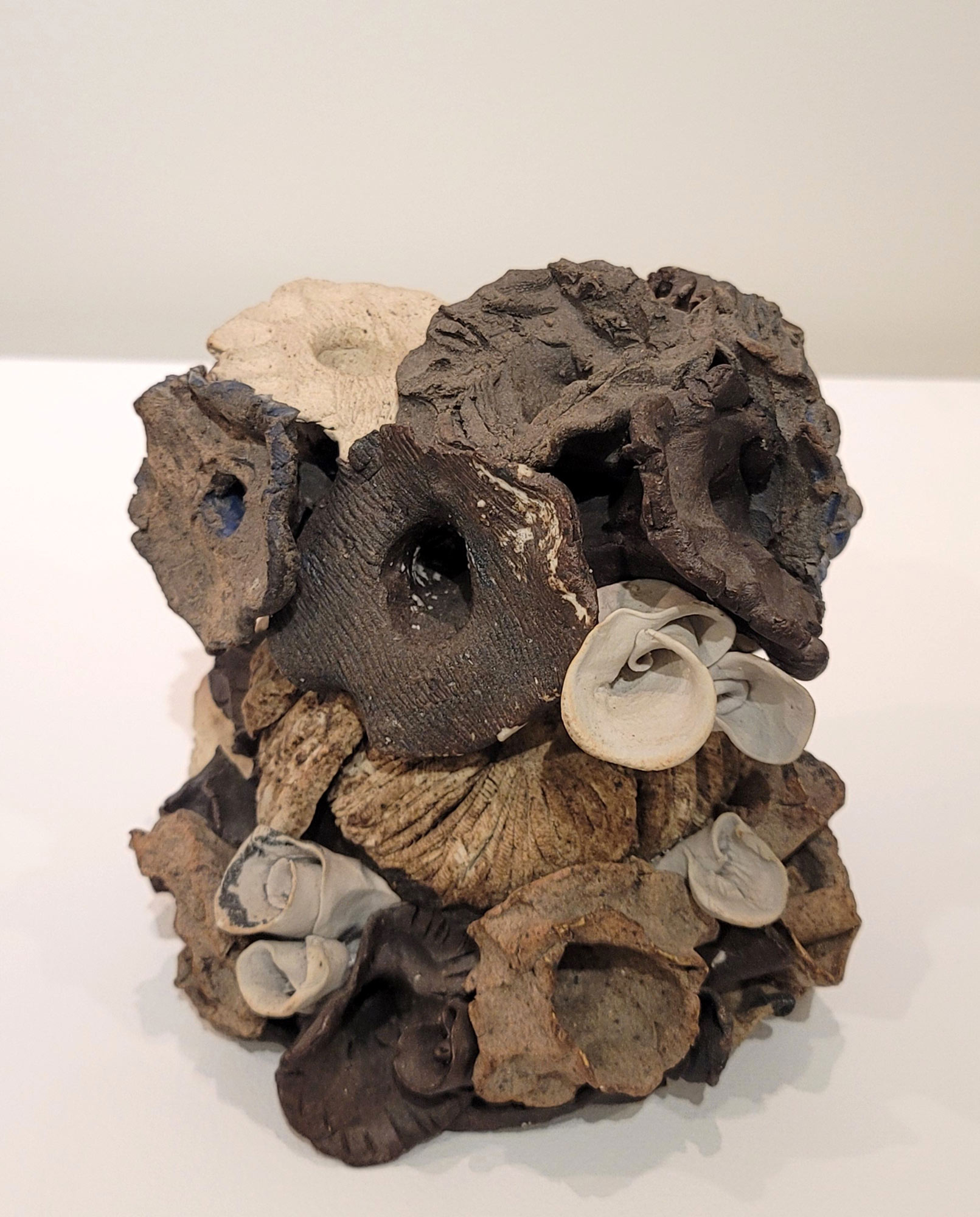
Gilhooly’s approach would influence a group of artists working in ceramic sculpture, including Victor Cicansky (1935–2025), Ann James (1925–2011), Marilyn Levine (1935–2005), and Jack Sures (1934–2018). Their art was rooted in the local environment, not the big cities, and emphasized commonplace, individual experiences. For artists like Cicansky, David Thauberger (b.1948), and Joe Fafard, an interest in the vernacular afforded them the confidence to see their “own culture and historical circumstances, the prairie experience, as equal to any other for cultural investigation.” Though the Regina Clay Movement was short-lived, it did achieve international attention when six Regina ceramic artists were included in the Paris exhibition Canada Trajectoires 73.
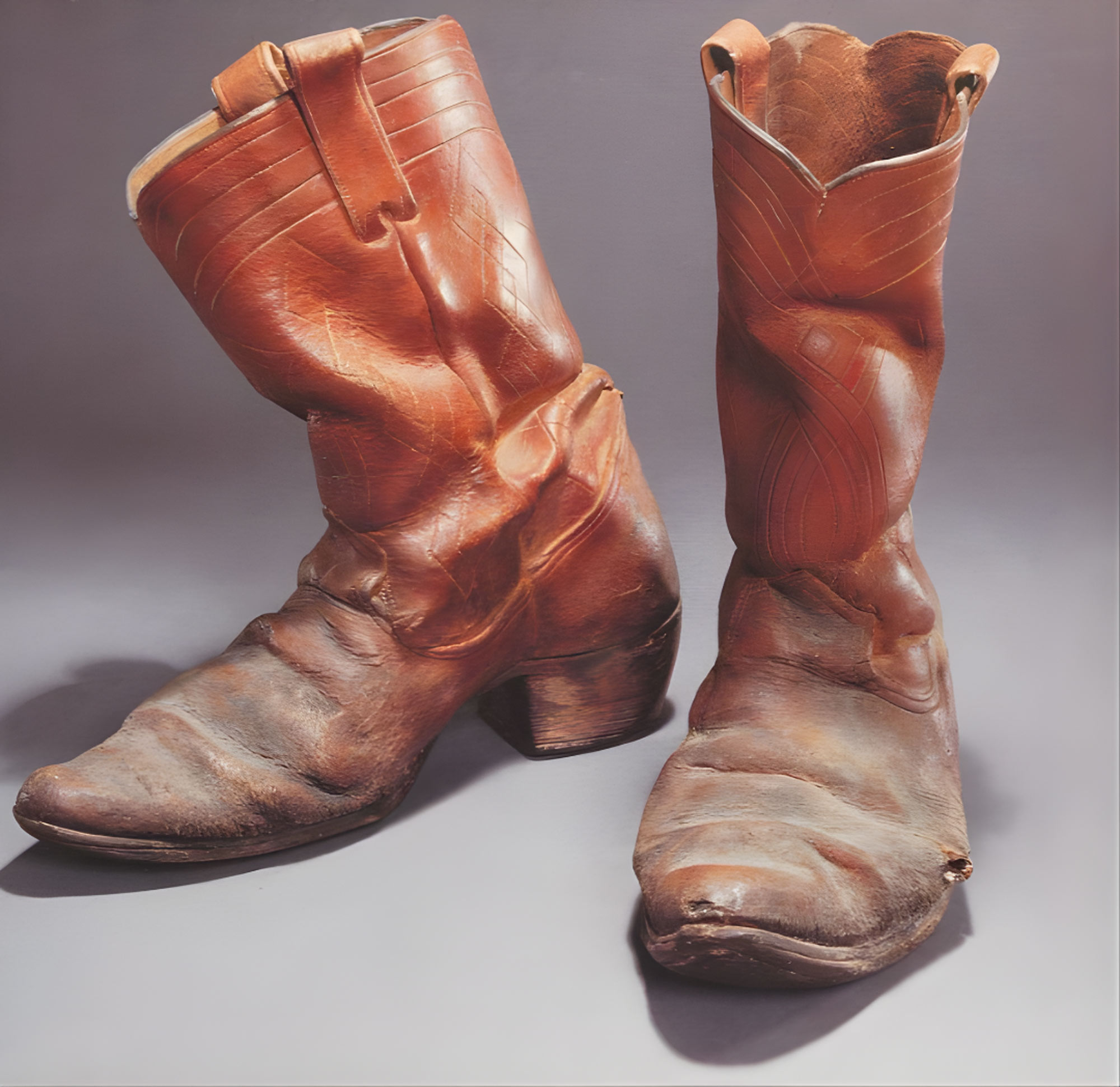
Marilyn Levine, Bob’s Cowboy Boots, 1973, ceramic, left: 33.7 x 34.1 x 13.0 cm, right: 33.3 x 33.5 x 15.4 cm, private collection.
Despite critical changes to Regina’s creative landscape—including those that garnered the city’s artists increased national and international attention—its arts community remained tight-knit. Public institutions were flourishing by the 1970s; however, it was difficult to operate a successful commercial art gallery in the city. This is in part due to the fact that collectors would often buy works directly from artists rather than through an art dealer. Mashel Teitelbaum, a Saskatoon-born artist, opened the city’s first commercial gallery, the Red Door Gallery, in 1947. That venture, which aimed to promote lesser-known contemporary Saskatchewan artists, received positive reviews in the local press but lasted less than a year. Regina remained without a viable commercial gallery until the Assiniboia Gallery and the Susan Whitney Art Gallery were opened in 1977 and 1979, respectively.
Since its establishment, the Assiniboia Gallery has focused on Canadian art, including painting, works on paper, and ceramics. It was the first commercial gallery in Regina to show Indigenous art, including the work of Allen Sapp (1928–2015), Bob Boyer (1948–2004), Daphne Odjig (1919–2016), and Gerald McMaster (b.1953). Of these, Sapp, best known for his realist paintings depicting scenes from his childhood in the 1940s and 1950s, generated the most interest and has since become one of the province’s most important artists. Still in operation, the gallery currently represents approximately fifty established and emerging artists, over half of them from Saskatchewan.
The Susan Whitney Art Gallery, in contrast, showed a larger number of works from other parts of Canada, including painting, sculpture, tapestry, photography, and furniture, as well as the Regina Five and Canadian folk artists such as Dmytro Stryjek (1899–1991), Molly Lenhardt (1914–1995), and William McCargar (1906–1980). Susan Whitney had been employed by the short-lived Kesik Gallery and knew how difficult it was to successfully operate a commercial gallery in Regina on one’s own. In response, she set up a gallery along with partners Victor Cicansky, Joe Fafard, Richard Spafford, and Jill Rawlinson. Among the gallery’s notable exhibitions were the annual Made in Saskatchewan show. The first, held in 1980, included French Canadian, Mennonite, and Ukrainian handmade decorative items, twenty pieces of Saskatchewan commercial pottery made in the early 1900s, and paintings by nine contemporary folk artists.
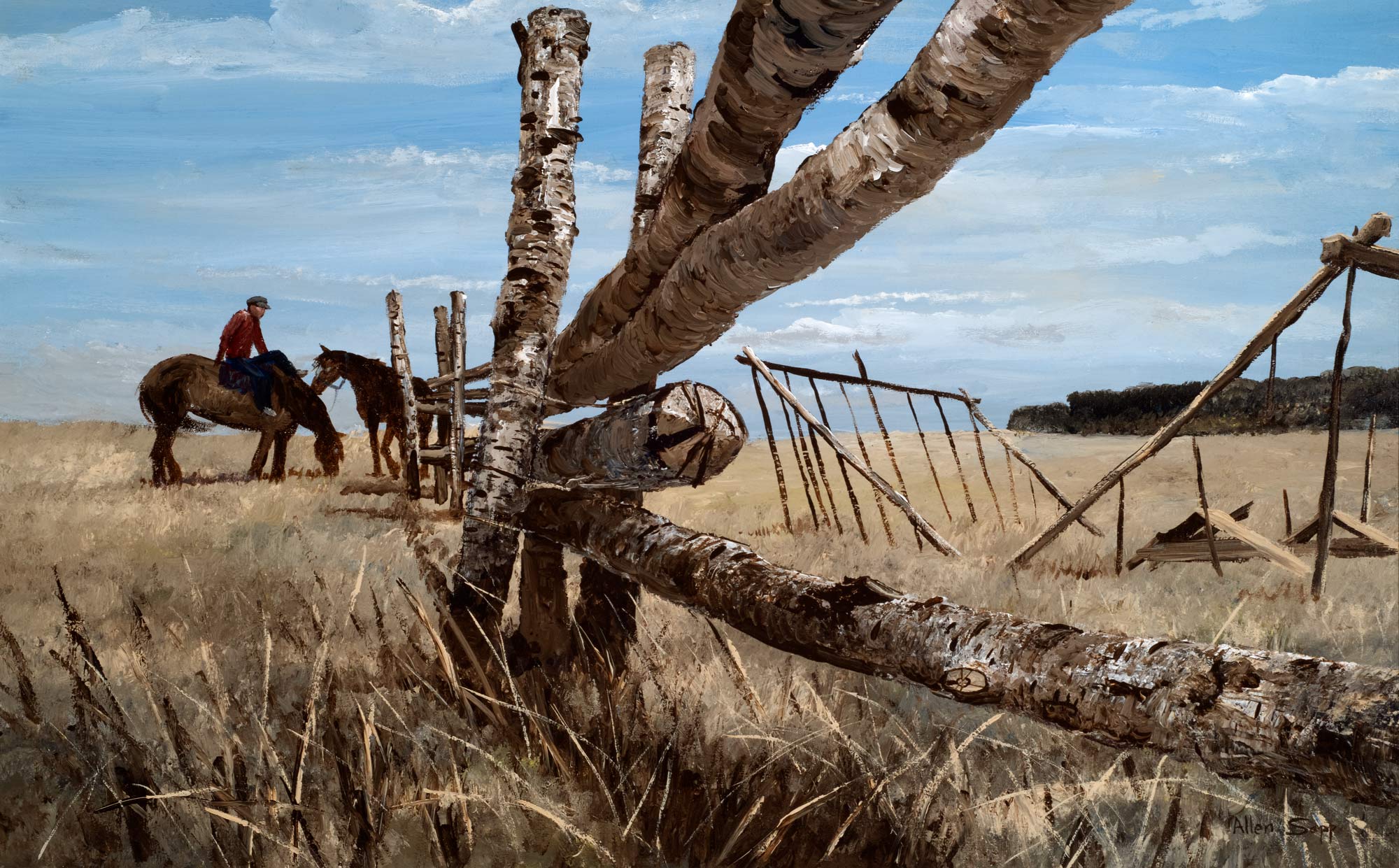
The critical acclaim for homegrown avant-garde movements such as the Regina Five and Regina Clay put the prairie city firmly on the map as an important cultural centre, undoing the sense of isolation felt by many previous generations of artists. New institutions, such as the Rosemont Art Gallery, founded as a satellite of the Norman MacKenzie Art Gallery in 1974, and Neutral Ground, the city’s first artist-run centre launched in 1982, would continue in the vein of redefining Regina’s art through a community-based focus.
1976–2000: New Indigenous Voices
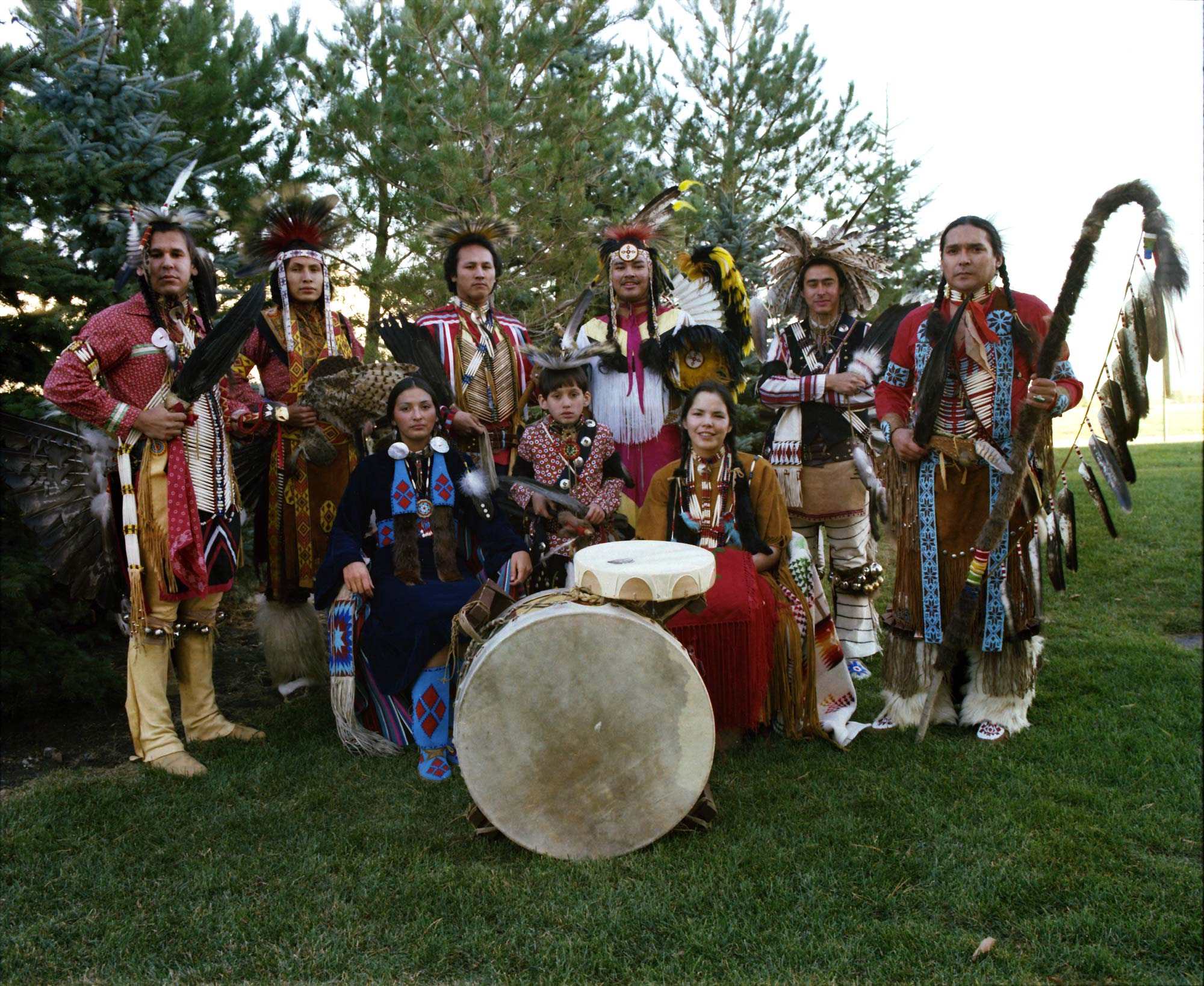
In a 1988 article for The Saskatchewan Indian, a newsmagazine established in 1960 to give a voice to Indigenous writers, artist and art historian Gerald McMaster, a Plains Cree member of the Siksika Nation, wrote about the complicated history of Indigenous art on the Prairies, noting that while creativity was so “inextricably woven into the fabric of [Plains Cree] culture,” the objects created by Indigenous makers were often only seen as curiosities or artifacts that needed to be salvaged as evidence of a vanishing culture. Indeed, the idea of making art was a new concept for many Indigenous nations on the Prairies, but this did not “preclude the fact that there were many gifted individuals who were immediately recognized within the traditional community as manifesting creativity…. In fact, Plains Cree terminology point out capabilities of craftsmanship, yet there is no word or concept for art.”
The 1970s were important years for deconstructing these established barriers to Indigenous artmaking, not only in Saskatchewan but across Canada. In large part due to the successes of Anishinaabe painter Norval Morrisseau (1931–2007) and his Woodland School, a new generation of Indigenous artists began to receive national and international attention for their groundbreaking works, often blending elements of their own cultural traditions with contemporary media and themes.
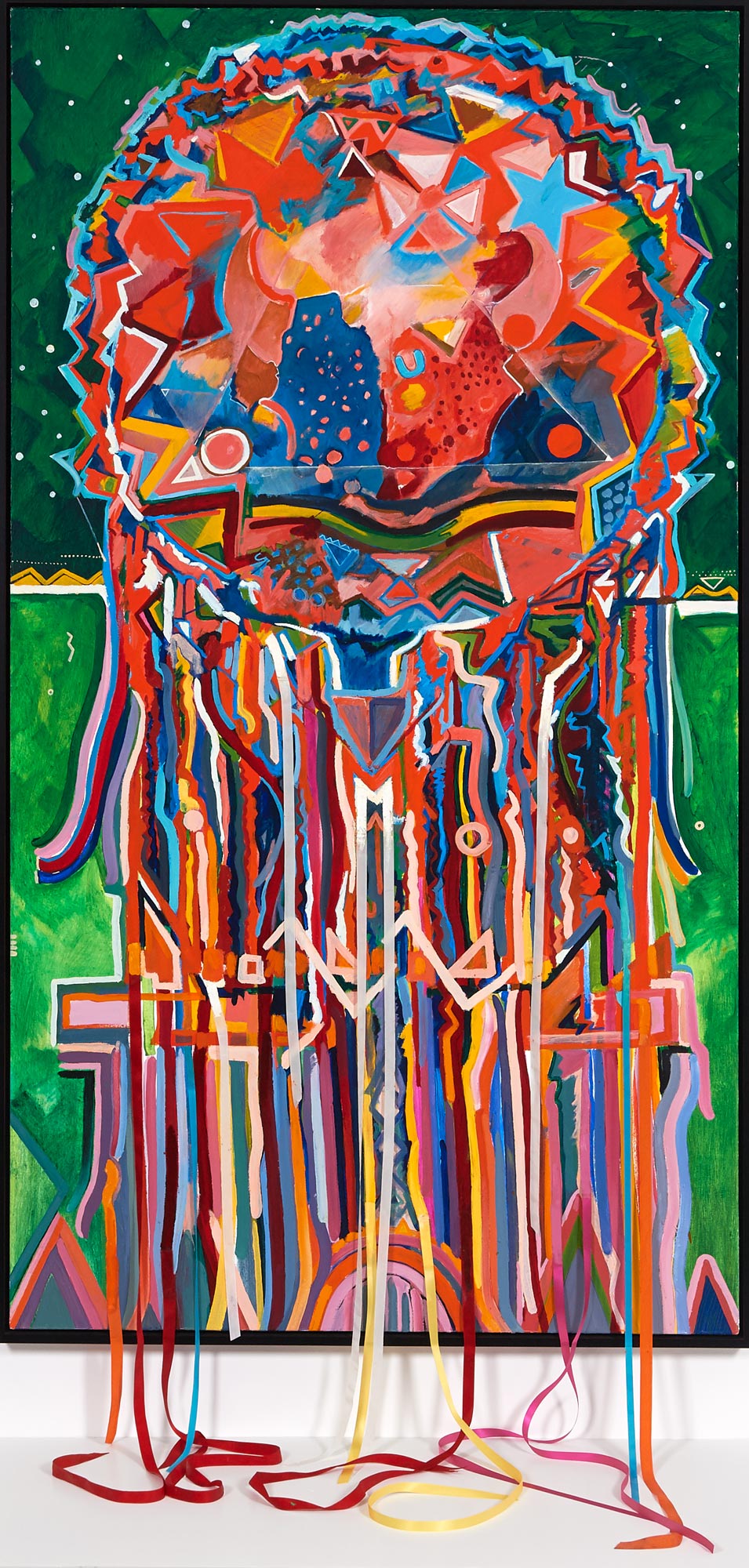
Regina became a hub for those who would soon break into the collective national consciousness. Key to their creative development was the founding of the Saskatchewan Indian Federated College (SIFC) at the University of Regina in 1976, which offered a program in fine arts, with courses in Indigenous art and art history. Early instructors included Bob Boyer, a graduate of Regina College and former student of Ted Godwin, and McMaster, then a recent high-school graduate who was hired to assist Italian-born artist Sarain Stump (1945–1974) in developing an art program for Indigenous students at SIFC. Both Boyer and McMaster would later credit their time at SIFC as foundational to their expanding knowledge of the visual design and philosophy of traditional First Nations art. Boyer’s employment at SIFC coincided with a pivotal moment in his artistic practice, one that saw him combining abstraction with design motifs derived from traditional Northern Plains visual culture. His work Sun Dance Shield, 1980, is a notable early example.
Building upon the foundation established by the SIFC, the city’s art institutions increasingly embraced Indigenous art. The MacKenzie Art Gallery has been a leader among Canadian museums in this regard for several decades. In 1975, it became the first public art gallery in Canada to present Indigenous material objects as fine art in 100 Years of Saskatchewan Indian Art 1830–1930, an exhibition curated by Boyer. The exhibition demonstrated how virtually every object used by the Indigenous people of the Northern Plains featured some degree of decoration. Among the items shown was a Sioux beaded pouch that is believed to have belonged to the daughter of Tatanka Iyotanka (Sitting Bull) (c.1831–1890).
The landmark 100 Years of Saskatchewan Indian Art 1830–1930 was followed in 1982 by New Work by a New Generation, the first major exhibition of contemporary Indigenous art in the country. A shared project of the World Assembly of First Nations, the SFIC, and the MacKenzie, New Work by a New Generation was co-curated by Robert Houle (b.1947) and featured works by Boyer, Carl Beam (1943–2005), Domingo Cisneros (b.1942), Edward Poitras (b.1953), and Jaune Quick-to-See Smith (1940–2025), all of whom were, as Houle described, “invariably and intimately involved in recording personal experiences determined by tribal culture… but expressed through modern concepts and techniques.”
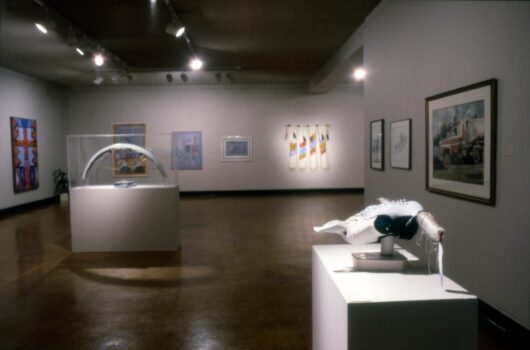
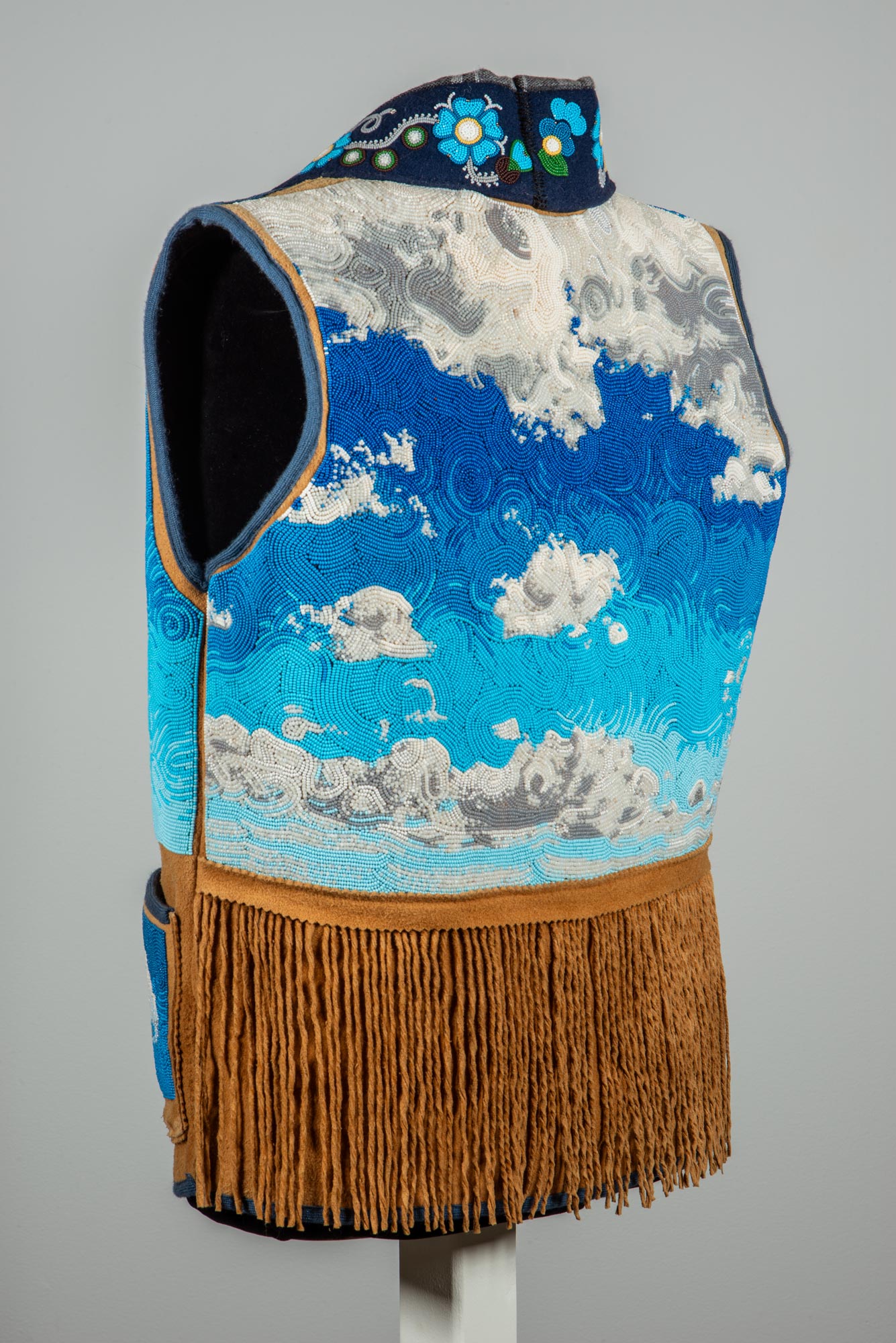
In 1998, the MacKenzie hired Lee-Ann Martin (Mohawk, Tyendinaga Territory) to serve as the first Indigenous head curator of a public art museum in Canada. Michelle LaVallee (b.1977; Ojibway, Chippewas of Nawash Unceded First Nation) joined the staff as a curator in 2007, organizing several important exhibitions, including 13 Coyotes: Edward Poitras, 2012, and a 2013 retrospective exhibition of the Professional Native Indian Artists Inc. More recently, the MacKenzie organized Uprising: The Power of Mother Earth, 2019–2020, as well as Radical Stitch, 2022, one of the most significant exhibitions ever presented on contemporary Indigenous beading across Turtle Island (North America).
2000–2025: Shifting Demographics and New Directions
Like other Canadian cities, Regina has experienced significant shifts in demographics since the early 2000s, with a growing percentage of the city’s residents born outside of Canada. In step with these changes, the city’s increasingly diversified art scene continues to thrive far beyond what early artists and patrons could have imagined when they set down their roots on a forbidding patch of prairie grassland.
-
Installation view of BLACK PRAIRIES at the Dunlop Art Gallery, detail of works by Richard Allan Thomas, Regina, 2025
Photograph by Don Hall
-
Installation view of BLACK PRAIRIES at the Dunlop Art Gallery, detail of glass-plate negatives by William “Billy” Beal, Regina, 2025
Photograph by Don Hall
Today, Regina’s artists are well supported by a network of institutions that provide them with opportunities to fund and exhibit their work. The Saskatchewan Arts Board, now known as SK Arts, continues to champion the province’s artists and work closely with institutions to make the arts and culture accessible and appreciated by a broad audience. Along with the MacKenzie Art Gallery, the Art Gallery of Regina and the Dunlop Art Gallery maintain their groundbreaking programming, which often spotlights Saskatchewan’s underacknowledged histories. For instance, in early 2025, the Dunlop presented BLACK PRAIRIES, an exhibition curated by its director, Alyssa Fearon, honouring more than one hundred years of Black and African Canadian cultural production on the Prairies, including the work of Manitoba-based photographer William “Billy” Beal (1874–1968).
The establishment of artist-run centres in Regina—the first being Neutral Ground, founded in 1982 by Nida Home Doherty (b.1950) and Roger Lee—profoundly impacted the development of the city’s contemporary art scene. The city’s second artist-run centre, Sâkêwêwak First Nations Artists’ Collective, followed suit in 1991, focusing its mandate on the promotion of contemporary Indigenous art. Advocating an artist-centred approach, artist-run centres—or “parallel galleries,” as they are often called—in Regina support multidisciplinary programming and create vital spaces for creators working in emerging media to exhibit their work. Local video and performance artists to benefit from exhibiting work in the city’s parallel galleries include Jori Anne Cachene, John G. Hampton, Rae Staseson, and Garry Varro.
Among the many promising artists to emerge in recent years are Lionel Peyachew, Jeannie Mah (b.1952), Keith Bird (b.1955), Ruth Chambers (b.1960), David Garneau (b.1962), Zachari Logan (b.1980), Ayla Dmyterko (b.1988), and Audie Murray (b.1993). Several of these artists, including Dmyterko, Garneau, Logan, and Murray, have exhibited throughout Canada and internationally, a trend that is increasingly common for Regina artists.
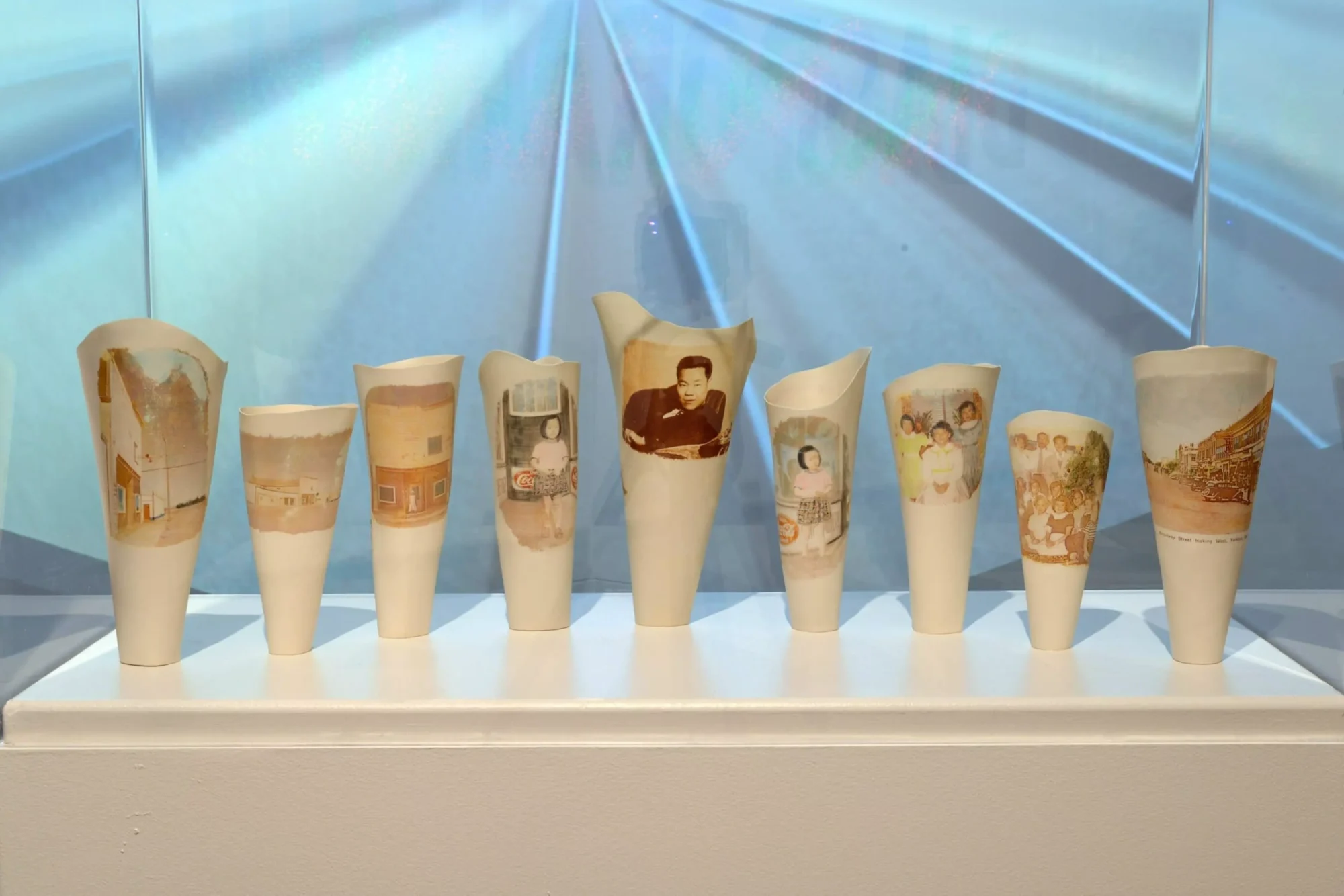
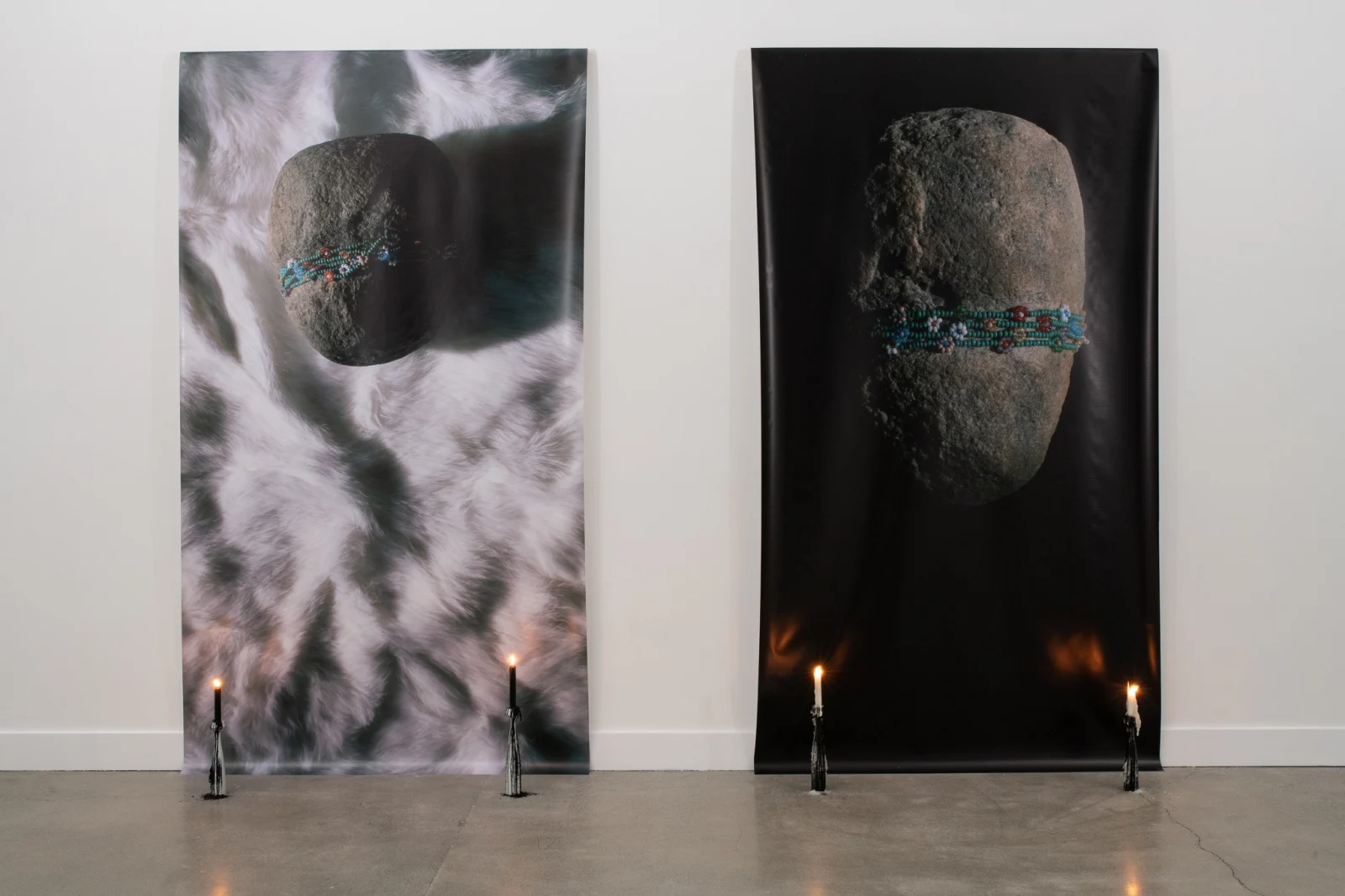
Commercial galleries continue to play an important role in promoting Regina art. The latest, the Slate Fine Art Gallery, was opened in 2013 by Kimberley Sarich and Gina Fafard, the daughter of Joe Fafard. Focusing on contemporary Canadian art in a variety of media, Slate represents the work of some of Saskatchewan’s most established artists, Ruth Cuthand (b.1954), Marsha Kennedy (b.1951), David Thauberger, and Zane Wilcox among them, as well as emerging artists such as Heather M. Cline (b.1970), Gabriela García-Luna (b.1963), and Belinda Harrow (b.1971).
As has been the case since Regina’s early years, the city’s art community has thrived through collaboration, a hallmark embraced by virtually every cultural organization in the city. Regina’s cultural sector also continues to benefit from the leadership of women, a robust educational infrastructure that includes fine art programs at First Nations University and the University of Regina, and a broad range of funding sources through organizations such as SK Arts. These factors in combination have ensured that Regina’s art scene remains among the most vibrant in Canada.
 About the Author
 More Online Art Books
 Acknowledgements