
Arthur McKay (1926–2000)
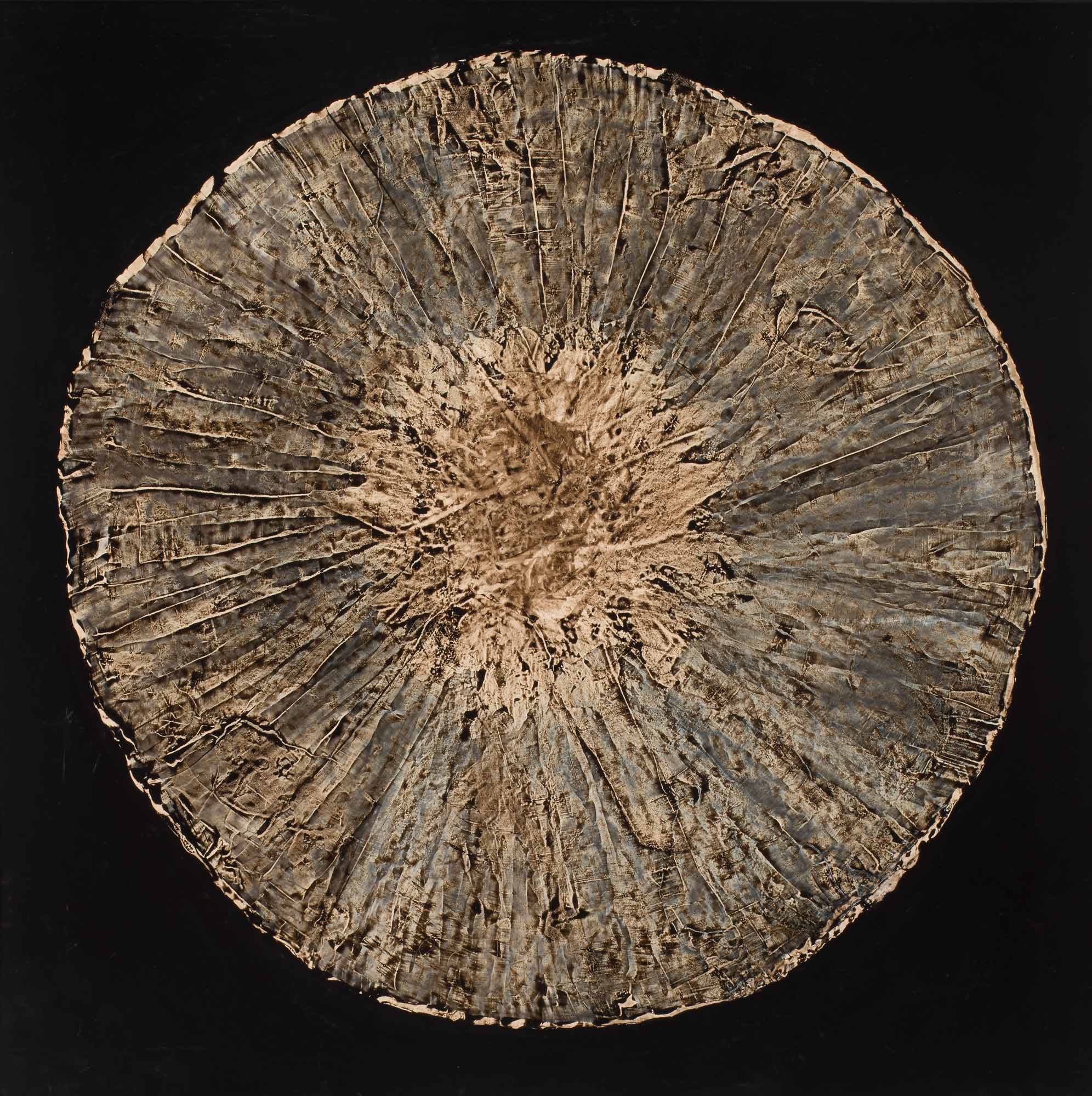
Arthur McKay, Effulgent Image, 1961
Latex, stovepipe enamel, and retail paint on hardboard, 122 x 122 cm
MacKenzie Art Gallery, Regina
Arthur McKay is best known for his scraped-enamel circular and rectangular “mandalas,” including Effulgent Image, a nonrepresentational work influenced by Barnett Newman (1905–1970), who led the 1959 artists’ workshop at Emma Lake, and by McKay’s Regina colleague Ronald Bloore (1925–2009), who began producing large paintings using a palette knife in the late 1950s. In Effulgent Image, McKay exploits the irregularities of the Masonite panel and the ridges left by his palette knife to give the illusion of a thickly textured surface. This now-iconic painting was among the works featured in the landmark Five Painters from Regina exhibition at the National Gallery of Canada in 1961.
McKay was born in Nipawin, Saskatchewan, and studied art at the Provincial Institute of Technology and Art in Calgary and at the Académie de la Grande Chaumière in Paris, where he was influenced by Cubism. In 1952, he was hired as special lecturer in art at the University of Saskatchewan, Regina Campus, where he worked alongside Kenneth Lochhead (1926–2006). In 1955, McKay and Lochhead collaborated in establishing the Emma Lake Artists’ Workshops at the site used for the Murray Point Summer School of Art, an initiative that in a few years would lead to Regina’s emergence as a centre of modernism in Canada.
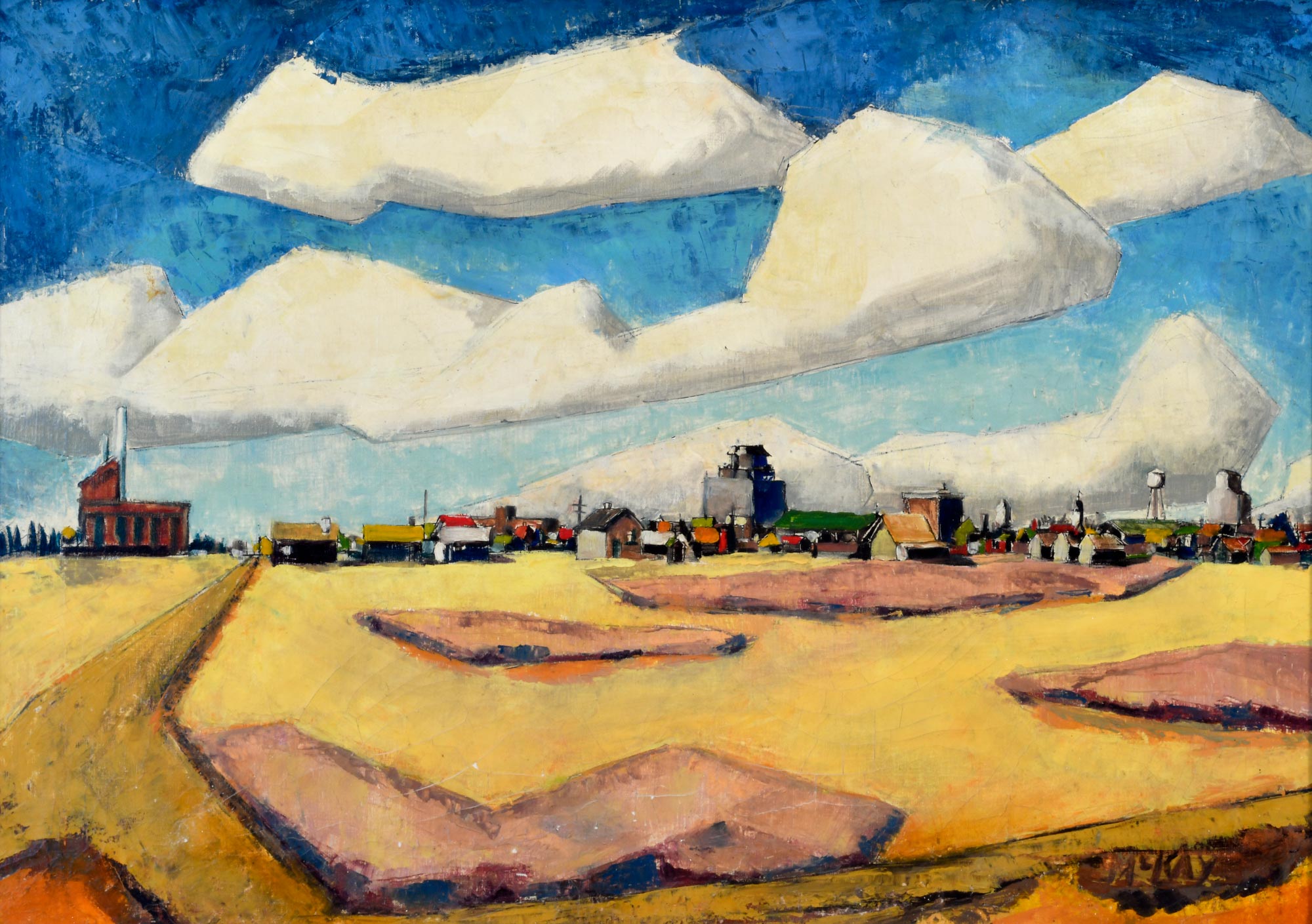
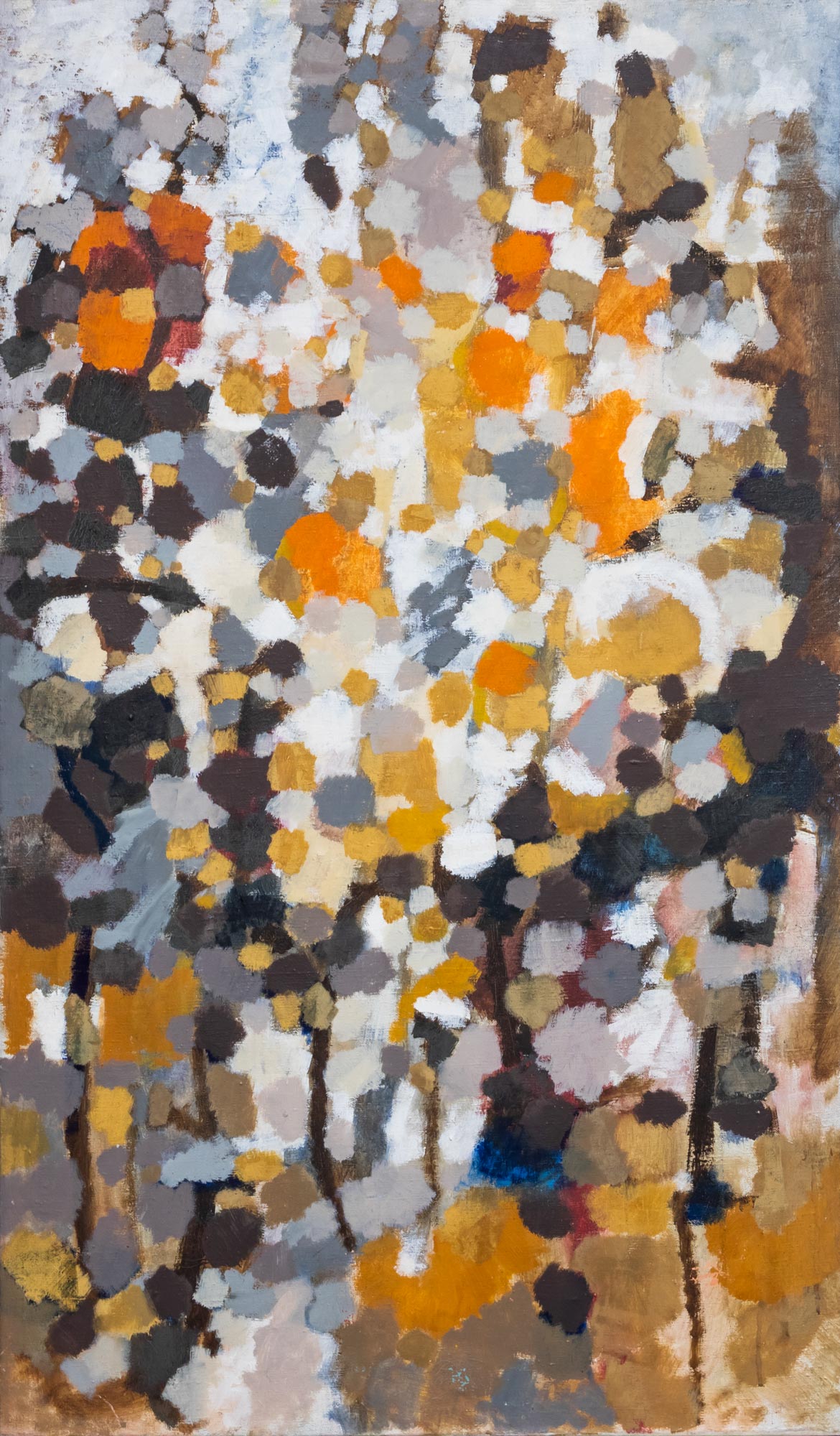
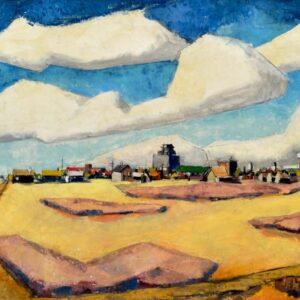
McKay was still painting figurative works, such as Prairie Landscape, c.1950, during those years. He took a leave of absence from Regina College in 1956 to study in the U.S., where he attended a major Jackson Pollock (1912–1956) memorial exhibition featuring forty-four paintings and works on paper at New York’s Museum of Modern Art. Inspired by Pollock, when McKay returned to teaching in 1957, he began to paint abstract canvases such as Untitled, 1957, and Interior, 1958. His practice was dramatically altered when he attended the Newman workshop at Emma Lake in 1959, after which he stopped making oil paintings in favour of non-figurative works on paper using a palette knife dipped in blackboard paint. After producing approximately one hundred drawings with that technique, he returned to painting, learning from Bloore how to apply thin layers of stovepipe enamel paint over latex on Masonite.
The Western Canada Art Circuit organized a solo exhibition of McKay’s work in 1961, and later that year, he achieved national attention with the Regina Five. Still, McKay continued to attend the summer workshops at Emma Lake, including one led by the esteemed American art critic Clement Greenberg (1909–1994) in 1962. Greenberg considered McKay one of Canada’s best abstract painters, remarking on the original way he mirrored the central motifs of his works with the shape of their supports, as with Statement of a Paradox, 1963. Greenberg included three of McKay’s works in the landmark exhibition Post-Painterly Abstraction, held at the Los Angeles County Museum of Art in 1964. Showing his work alongside that of Canadians Jack Bush (1909–1977) and fellow Regina Five member Lochhead, the exhibition confirmed McKay’s standing as one of Canada’s leading abstract painters.
 About the Author
 More Online Art Books
 Acknowledgements