
Joe Fafard (1942–2019)
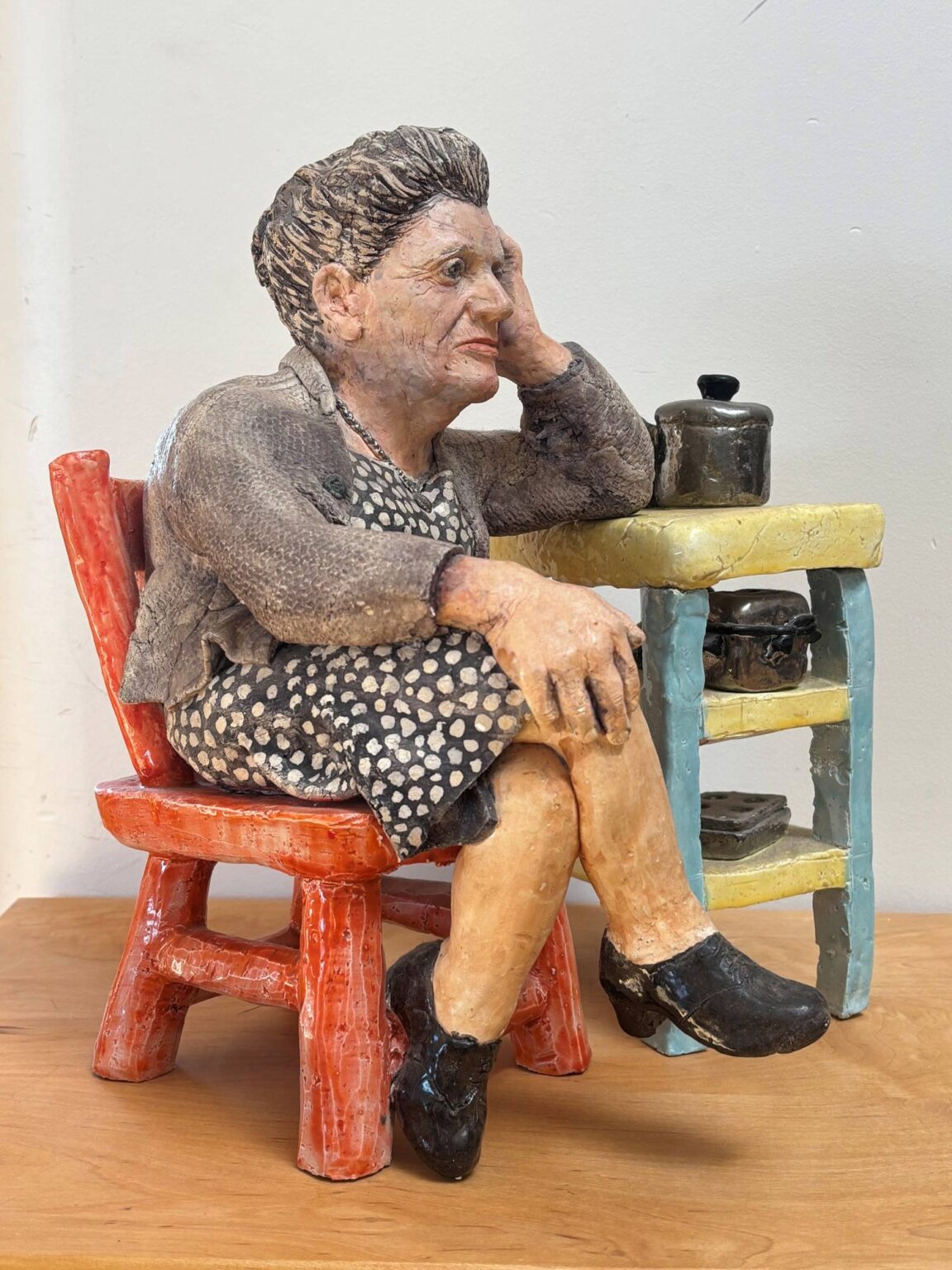
Joe Fafard, My Mother (Ma mère), 1972
Earthenware, glaze, acrylic paint, 34.1 x 28 x 27.5 cm
Private collection
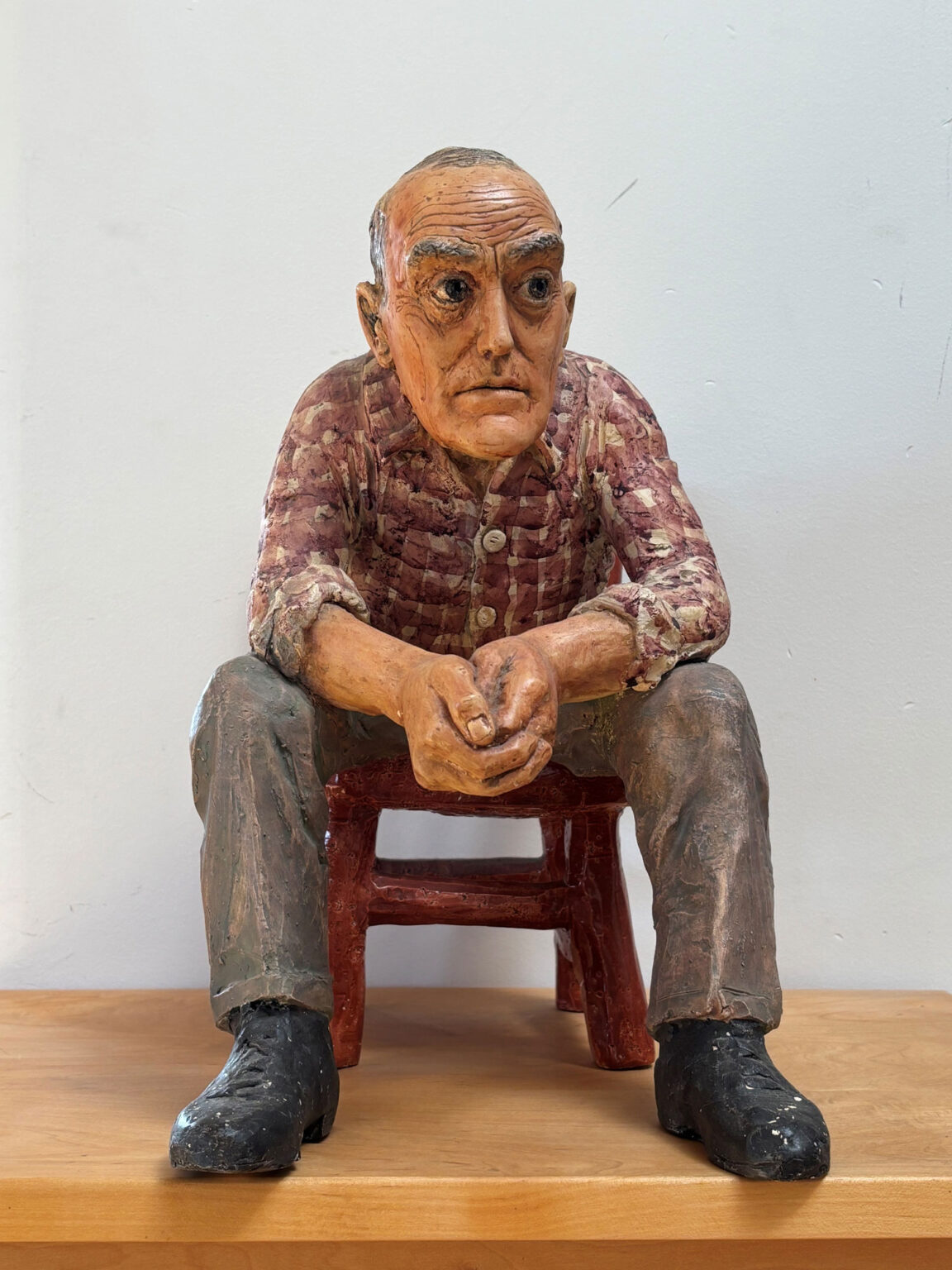
Joe Fafard, My Father (Mon père), 1972
Earthenware, glaze, acrylic paint, 34.1 x 35.4 x 35.4 cm
Private collection
One of Canada’s most celebrated sculptors, Joe Fafard produced during his lifetime a diverse body of work in clay, bronze, and steel, most of which is based on his life in Saskatchewan. His subjects include cows, horses, and other farm animals, as well as portraits of family, friends, neighbours, and even politicians and artists, such as John Diefenbaker and Emily Carr (1871–1945). Among Fafard’s early works are My Mother (Ma mère) and My Father (Mon père), affectionate clay portraits of his parents completed in 1972, both of which were included in Canada Trajectoires 73 in Paris, the first international exhibition of Regina ceramic art.
Fafard was born in the remote French-speaking agricultural community of Ste. Marthe, Saskatchewan, and studied art at the University of Manitoba in Winnipeg as well as at Pennsylvania State University. During that period, his main focus was on making sculptures in plaster such as Billyard, 1965, which reflected the influence of the Italian sculptors Giacomo Manzù (1908–1991) and Marino Marini (1901–1980). In 1968, Fafard was hired to teach sculpture at the University of Saskatchewan, Regina Campus. Not long after arriving, he was joined by David Gilhooly (1943–2013) and Ricardo Gomez (b.1942), who in differing ways encouraged him to abandon the kinetic sculptures he was then producing, such as Flying French Fries, c.1968, in favour of clay, which they believed to be a more expressive medium. Gilhooly was particularly influential, articulating a vision that emphasized personal concerns and enjoyment rather than the pursuit of theoretical agendas emanating from New York. It was during this period that Fafard made his first clay cow sculptures and portraits of family and friends, including portraits of his Regina colleagues Gilhooly, Victor Cicansky (1935–2025), and Russell Yuristy (b.1936): Gilhooly, 1971; Vic, 1971; and Russ, 1971.
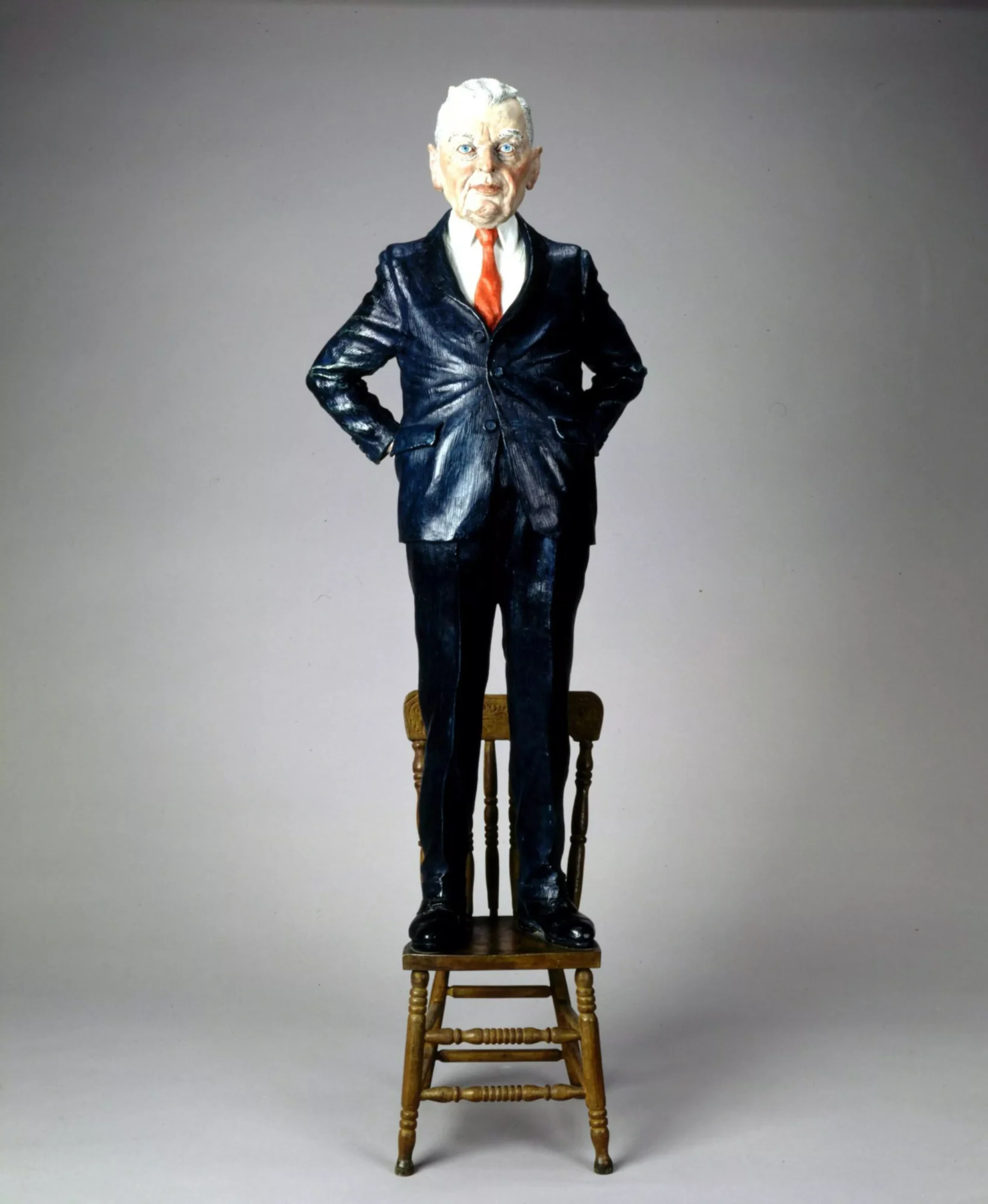
Fafard received his first major public commission in 1984, an installation called The Pasture that consists of seven life-sized bronze cows outside the IBM tower in Toronto’s financial district, a whimsical reminder to city dwellers of the importance of farming. That experience led Fafard to set up his own bronze foundry in Pense, Saskatchewan, the following year, which he named the Julienne Atelier Inc. in honour of his mother. Fafard began working almost exclusively in bronze, producing animals as well as a series of portraits of significant artists he called “ancestry figures.” They included Paul Cézanne (1839–1906), Frida Kahlo (1907–1954), Claude Monet (1840–1926), and Vincent van Gogh (1853–1890).
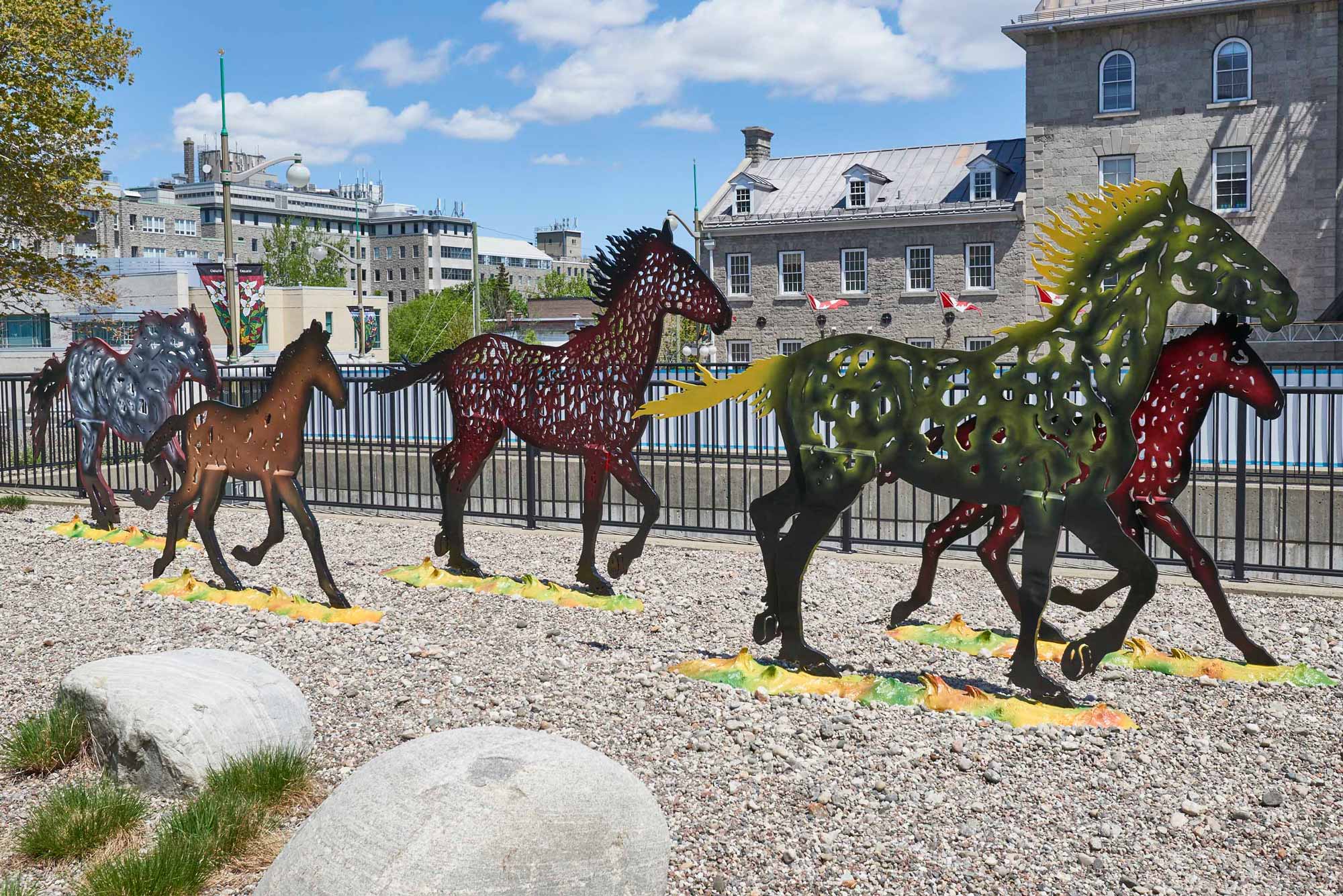
In the 1990s, Fafard began experimenting with two-dimensional laser cut-outs in stainless steel. He continued to depict cows and horses—subject matter he was then known for. One of his most renowned late works in steel is Running Horses, 2017, installed in front of the National Gallery of Canada (NGC), facing Sussex Avenue.
Fafard’s significant contribution to the ceramics movement in Canada has been acknowledged through numerous exhibitions, including a major show organized by the MacKenzie Art Gallery in collaboration with the NGC in 2007. As accurately summarized in the foreword to the catalogue for that exhibition, “Fafard’s work affirms the validity of personal experience, regional realities and community as the basis for artistic practice.”
 About the Author
 More Online Art Books
 Acknowledgements