
Tatanka Iyotanka (Sitting Bull) (c.1831–1890)
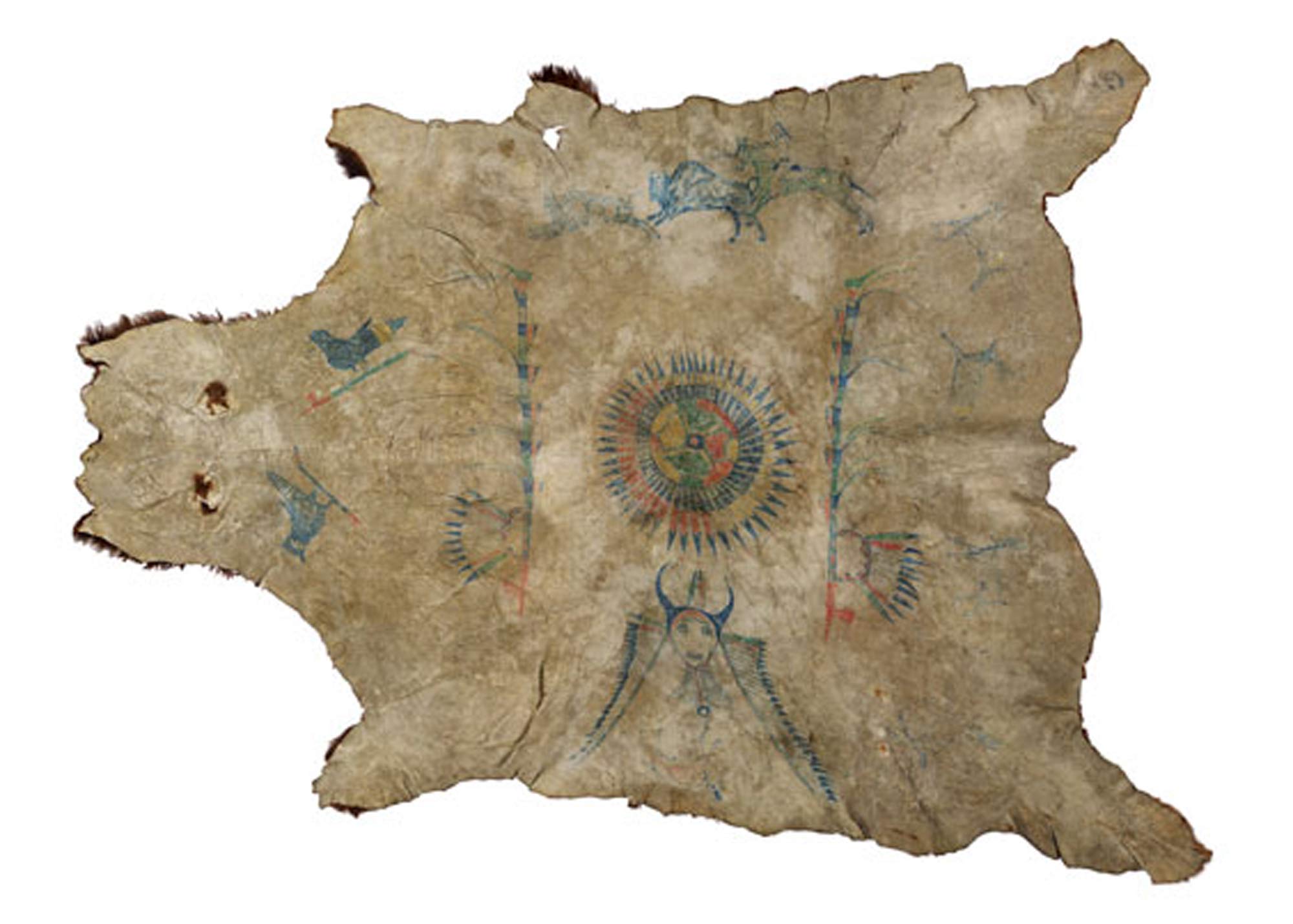
Tatanka Iyotanka (Sitting Bull), Buffalo Robe, c.1877–81
Pigment on American bison hide, 200.6 x 264.2 cm
State Historical Society of North Dakota, Bismarck
The famed Tatanka Iyotanka (Sitting Bull), born in what is now South Dakota, was a chief of the Hunkpapa Lakota. Between 1877 and 1881, Tatanka Iyotanka painted on his only surviving buffalo robe a presumed self-portrait wearing a split-horn bonnet with a pair of feather trails, the headdress of the elite Strong Heart warrior society. To the right of the portrait, at the centre of the robe, is a sunburst design surrounded by porcupine quills, a common feature on robes worn by prominent Lakota individuals. To each side of this motif are sacred ceremonial pipes. Along the outer edges of the robe are a depiction of a buffalo hunt and images of other animals, including antelope and deer, and at the top are two birds, each perched on a small peace pipe.
After defeating General George Armstrong Custer at the Battle of the Little Bighorn in 1876, Tatanka Iyotanka took refuge in the Wood Mountain region (in present-day southern Saskatchewan) with five thousand of his followers, and he remained in Canada from 1877 to 1881. During this time, Tatanka Iyotanka is believed to have used the robe in a prayer and healing ceremony called the Sun Dance, appealing to the Great Spirit to help his people preserve Lakota traditions. With his people facing starvation owing to the depletion of the buffalo and the Canadian government’s reluctance to issue food rations, Tatanka Iyotanka, accompanied by a few of his followers, returned to the United States in 1881. Before he left, Tatanka Iyotanka traded the robe to a Saskatchewan resident named Gus Hedderich, whose family donated it to the State Historical Society of North Dakota in 1945. It is poignant to consider that this robe, painted with imagery that appeals for the preservation of the Lakota way of life, would have been one of the last painted buffalo robes made by the peoples of the Prairies during a time when Indigenous artistic and cultural goods were becoming collectibles and museum pieces.
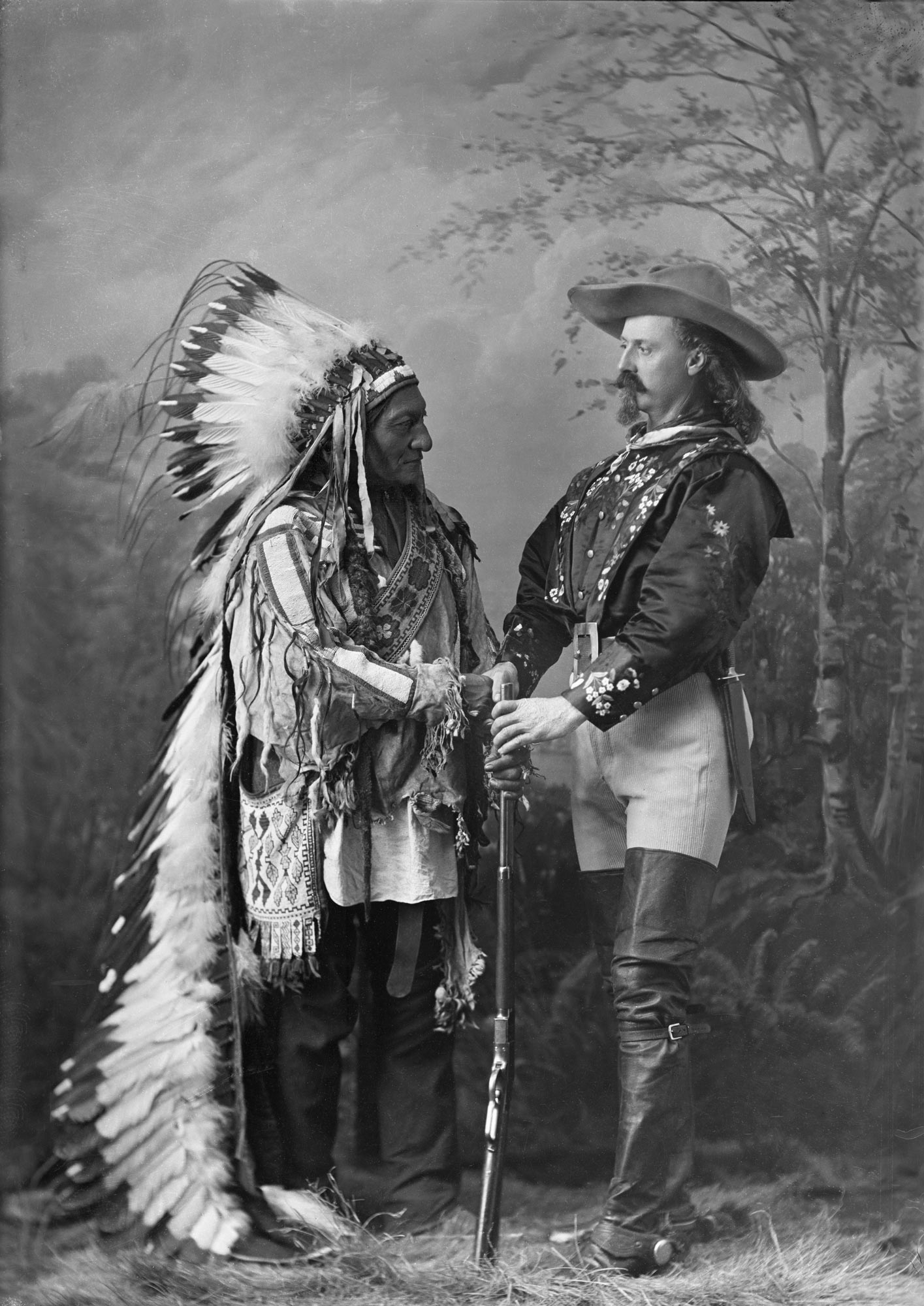
Tatanka Iyotanka appeared in William “Buffalo Bill” Cody’s Wild West show in 1885 and was photographed by William Notman (1826–1891) during a stopover in Montreal. Discouraged by the discrimination he experienced while touring, Tatanka Iyotanka returned to South Dakota, where he supported the teaching of the Ghost Dance, a ceremony aimed at ending European settlement of Lakota lands and restoring the Lakota identity and way of life. He was killed by government agents on the Standing Rock Indian Reservation during an attempt to arrest him on December 15, 1890.
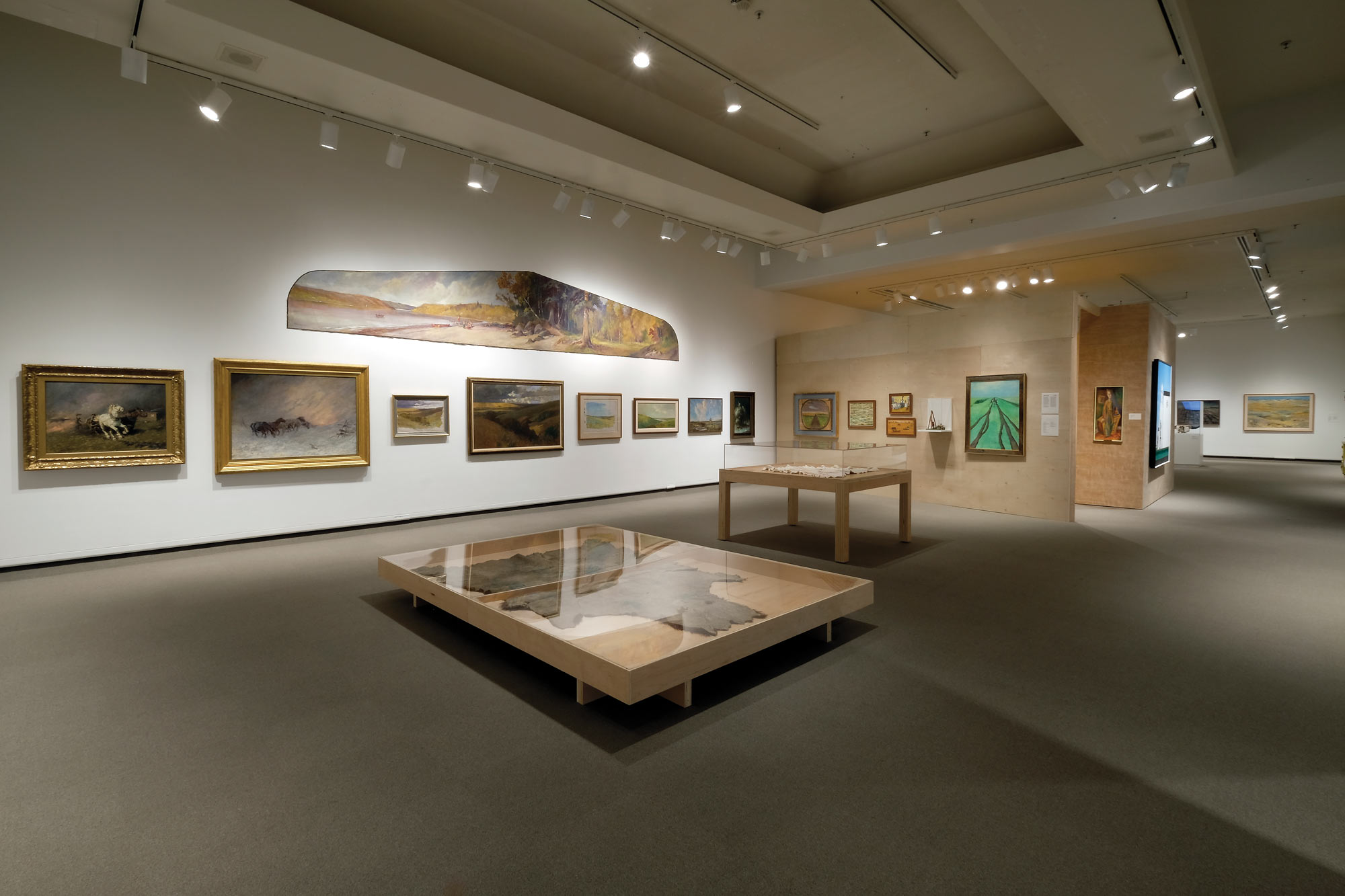
Tatanka Iyotanka’s robe was shown for the first time in Canada in the exhibition The Permanent Collection: Walking with Saskatchewan at the MacKenzie Art Gallery in 2019 and 2020. As part of the exhibition’s public programming, the gallery organized a class on video game design for youth and used the robe as inspiration for a project that combined Indigenous storytelling with interactive design. The robe and the students’ works were showcased in the exhibition Travelling Memory: Sitting Bull’s Robe, a bridge between past and future and a tribute to Tatanka Iyotanka’s hopes for the survival of the Lakota and their traditions.
 About the Author
 More Online Art Books
 Acknowledgements