
Roy K. Kiyooka (1926–1994)
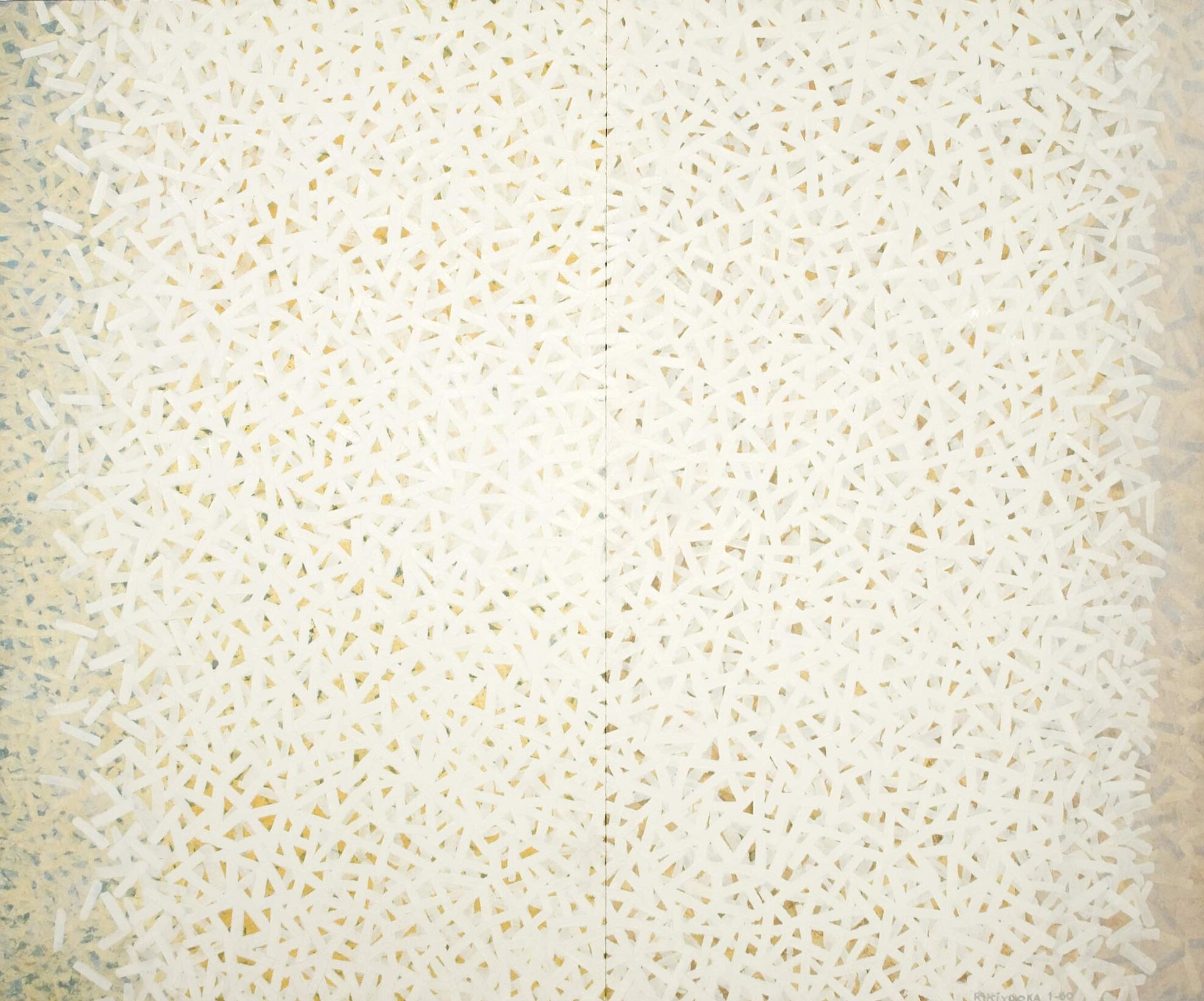
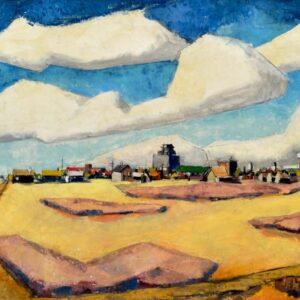
Roy K. Kiyooka, Untitled (Hoarfrost), 1960
Oil on Masonite panel, 150.8 x 181 cm
Remai Modern, Saskatoon
Though Roy K. Kiyooka resided in Regina for less than five years, he had a major impact as both an artist and a teacher. It was during his brief time in the prairie city that Kiyooka moved from figuration to abstraction in his works, his early efforts culminating in his Hoarfrost series of oil-on-Masonite paintings, which he produced following his participation in a 1959 workshop at Emma Lake led by Barnett Newman (1905–1970). Along with his Regina College colleagues, including Kenneth Lochhead (1926–2006) and Arthur McKay (1926–2000), Kiyooka was at the centre of one of Canada’s most significant movements in modern painting. At a time when much of Canadian art was still rooted in landscape and realism, Kiyooka’s bold embrace of abstraction helped to revolutionize the national art scene.
A second-generation Japanese Canadian, Kiyooka was born in Moose Jaw, Saskatchewan, and raised in Calgary. In 1949, he enrolled at the Alberta Provincial Institute of Technology and Art, where he studied with Jock Macdonald (1897–1960) and Illingworth Kerr (1905–1989). In Calgary, Kiyooka took his first steps toward abstraction, creating works such as The City, c.1955, which was selected for the First Biennial Exhibition of Canadian Painting held at the National Gallery of Canada (NGC) in 1955.
In 1956, Kiyooka was hired as an instructor at Regina College. Not long after arriving, he was included in a group exhibition with Maxwell Bates (1906–1980), Janet Mitchell (1912–1998), and William Leroy “Roy” Stevenson (1905–1966) at the Norman MacKenzie Art Gallery and was commissioned to complete mosaic murals on two exterior walls of the First Presbyterian Church in Regina. In 1958, twenty-one of his watercolours, “the result of the artist’s immediate response to a short period of time spent… in northern Saskatchewan,” were displayed at the MacKenzie. Kiyooka described the works, which included Emma Lake, 1958, as “poetic evocations based on a specific time and place based on observation and feeling,” expressing “an insistent verticality due to the profusion of trees and a limited but interpenetrating space.”
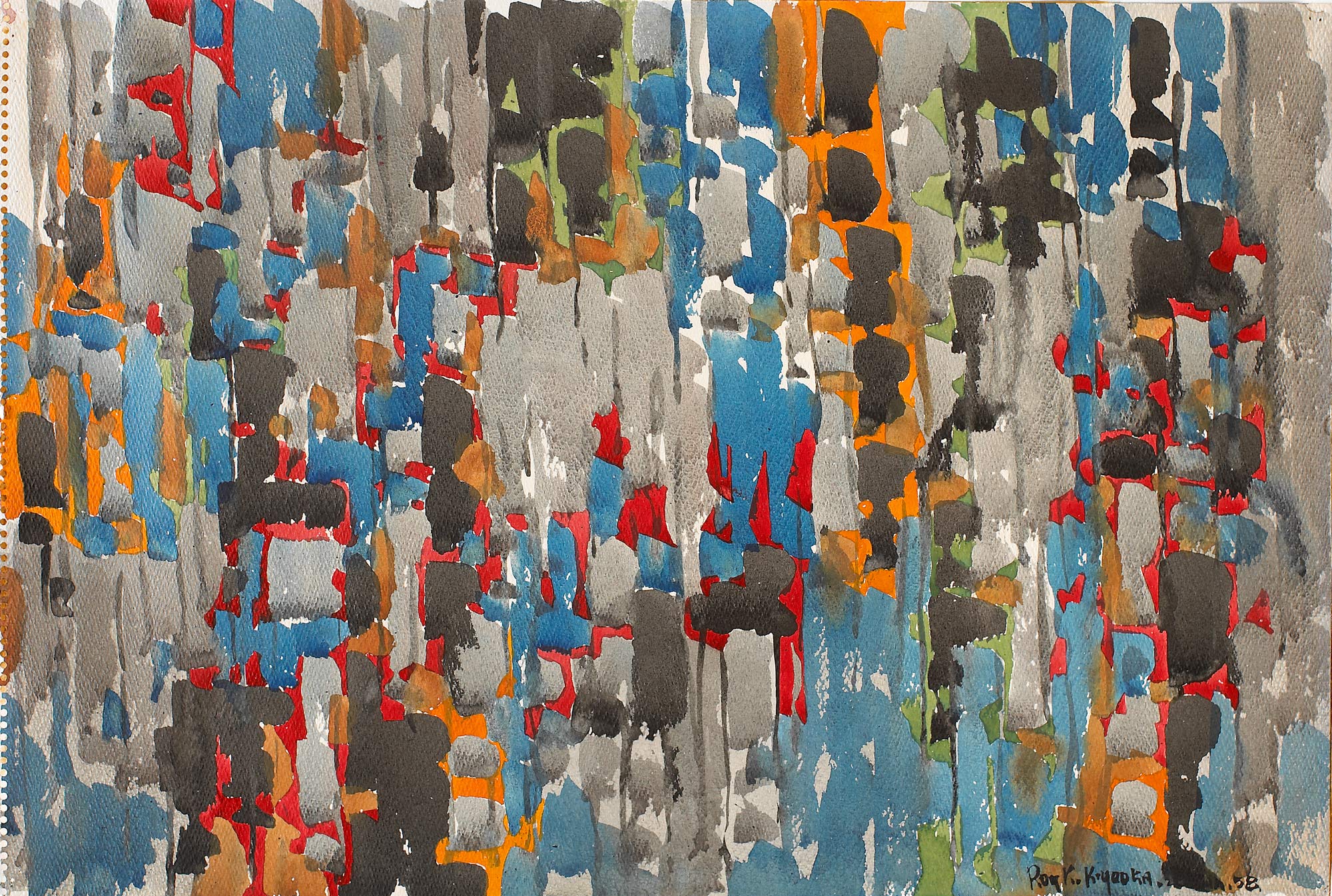
In the 1960s, Kiyooka began to shift his focus toward hard-edge painting, creating works such as Convergence (The Bridge), 1965, which employs geometric elements rendered in a simple colour palette of blue, grey, and gold. This evolution in Kiyooka’s style coincided with his departure from Regina to teach at the Vancouver School of Art. Though he was a central figure at Regina College and the Emma Lake workshops (he was the coordinator for the workshop led by Newman in 1959), Kiyooka was controversially excluded from the Regina Five exhibition held at the NGC in 1961, in large part because he had already moved to Vancouver in 1959.
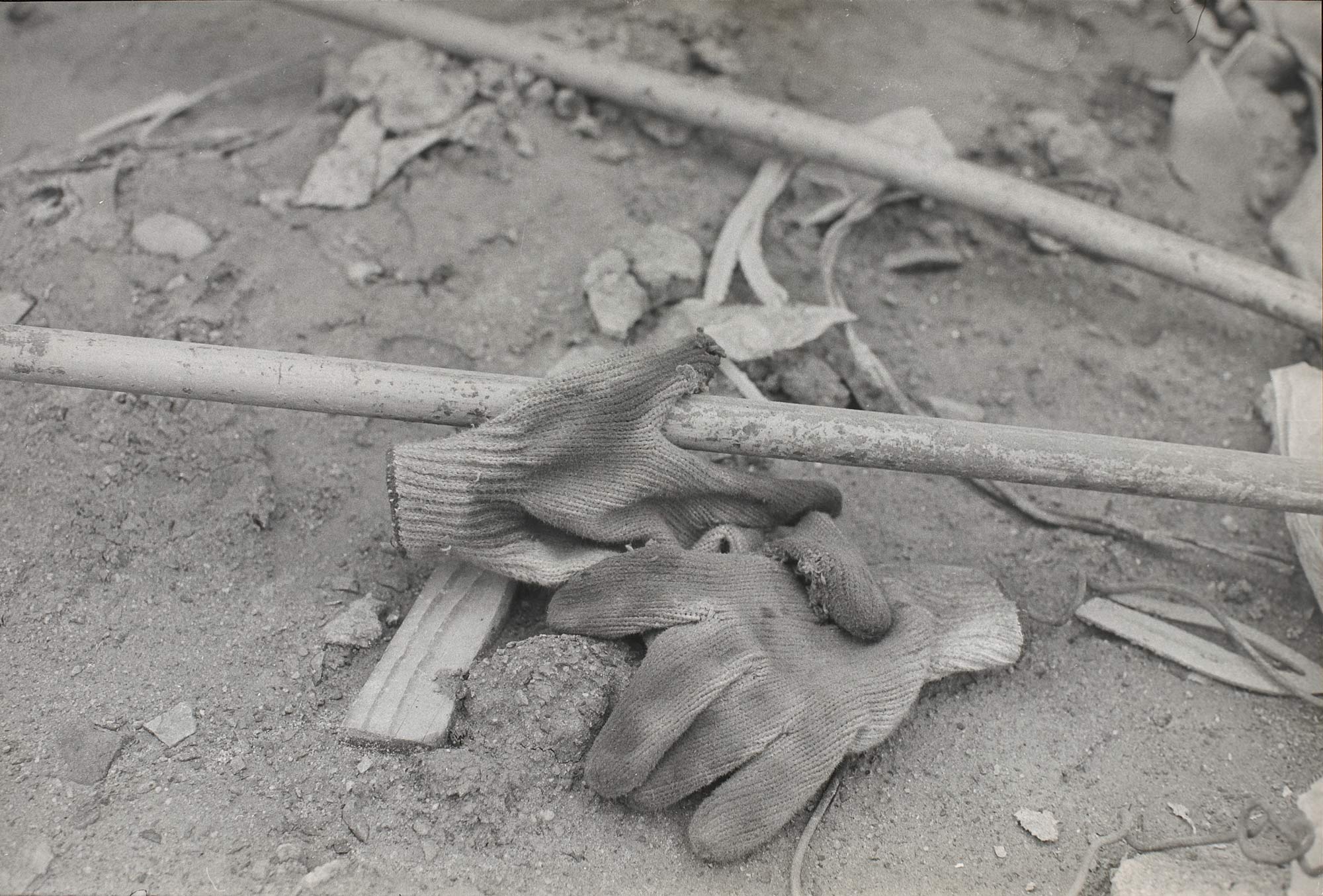
Despite being overlooked for the NGC show that gave unprecedented attention to Regina’s abstract painting movement, Kiyooka’s career flourished as he took it in new conceptual directions. In 1969, he was commissioned to build a sculpture for the Canadian pavilion at Expo 70 in Osaka, Japan. While that work was being assembled, Kiyooka photographed the workers’ gloves littering the site. These images became the foundation for a large photographic series and a book of poetry, StoneDGloves: Alms for Soft Palms (1970). Kiyooka’s ability to move fluidly between visual art and writing made him a pioneer of the conceptual art movement in Canada.
 About the Author
 More Online Art Books
 Acknowledgements