
Harriette Keating (1898–1975)
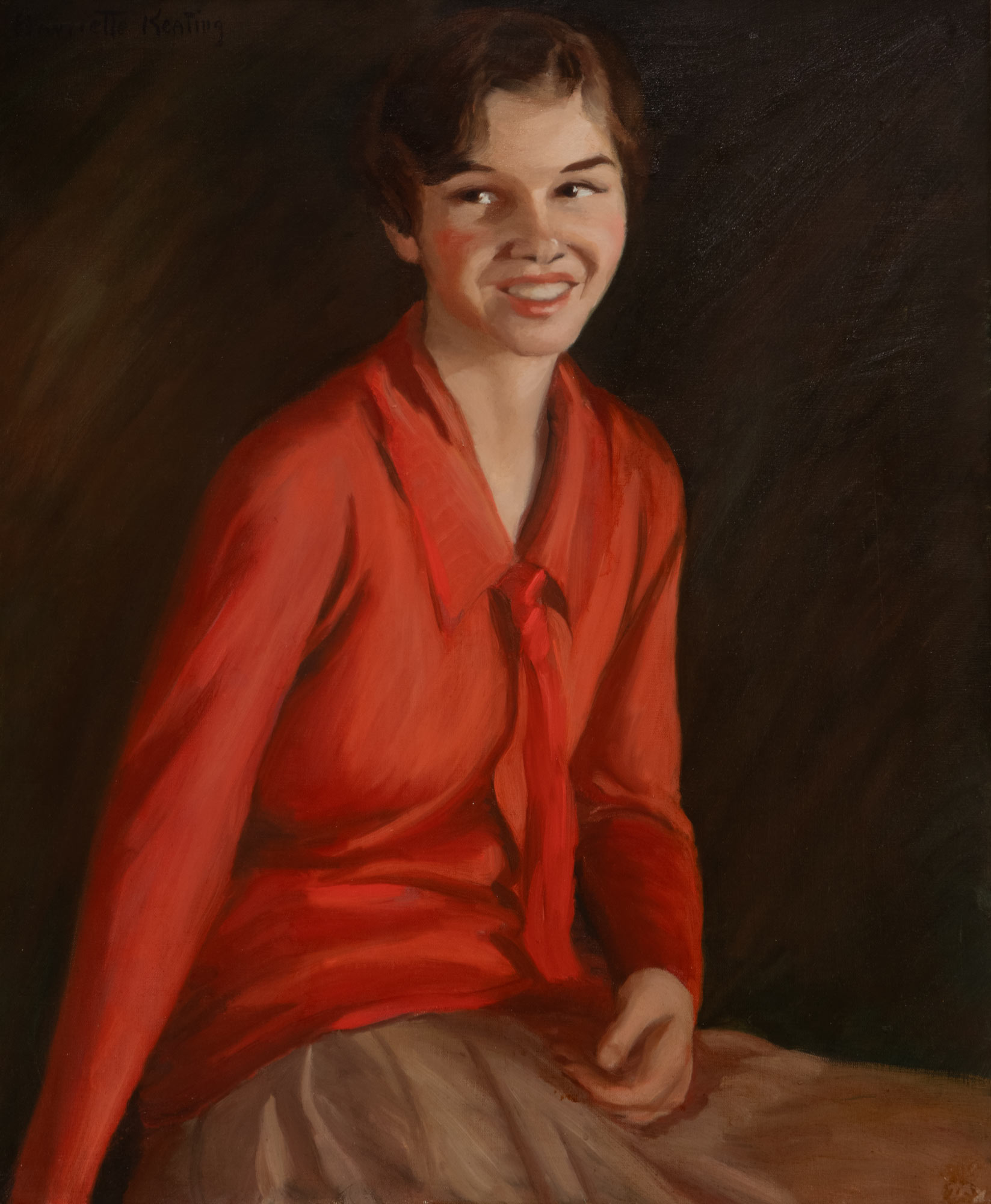
Harriette Keating, Margaret, n.d.
Oil on canvas, 75.6 x 62.9 cm
MacKenzie Art Gallery, Regina
Harriette Keating was one of Regina’s best-known artists during the 1920s and 1930s, and she was one of only a handful of Regina women artists during the era to study and exhibit work outside Saskatchewan. Keating focused her efforts mainly on portraiture and figure studies. Her sitters were often friends and colleagues like Mary Balfour, the model for The Dancer, 1923, a painting included in a solo exhibition at Regina College in 1924, before being shown in Toronto at Hart House in 1925 and the Canadian National Exhibition in 1930. The work helped establish Keating’s reputation as one of the city’s best portrait painters.
Keating spent her early years in Seattle and the Okanagan Valley before her family moved to Regina in 1912. She studied art first with Inglis Sheldon-Williams (1870–1940) at Regina College before enrolling at the Art Students League of New York in 1918. Upon her return to Regina, Keating taught art at Regina College for two years while continuing to pursue a career as an artist.
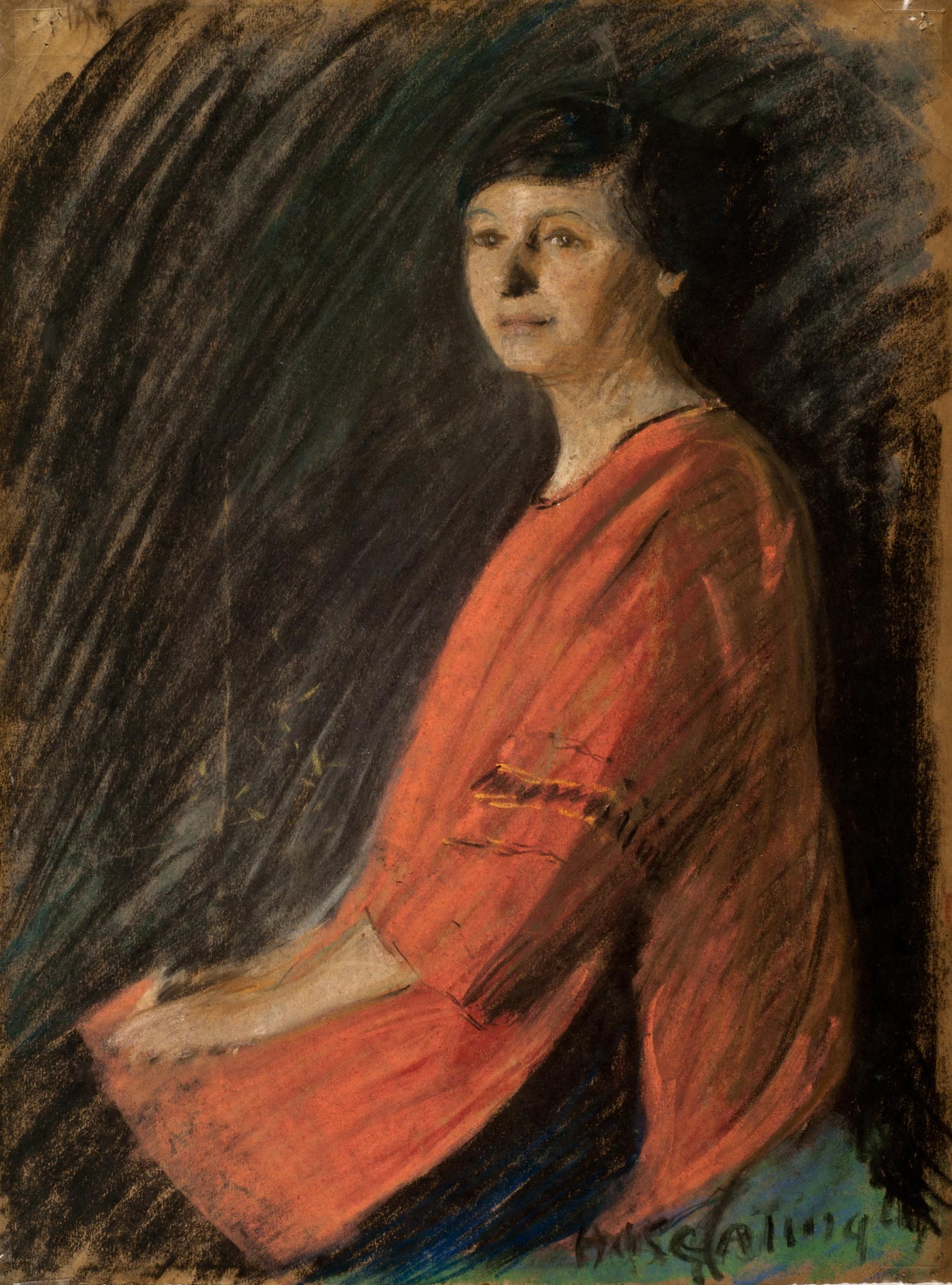
Keating was especially productive during the 1920s and 1930s, a period in which she grew her practice to encompass landscapes like Glen Ranche, n.d. Several of her works, including portraits of her father, Charles Keating, and her friend Violetta Worsley, were selected for the Local Council of Women’s Fine and Applied Arts Committee’s 1923 annual exhibition. The following year, the committee hosted a solo show of forty of her paintings at Regina College. Norman MacKenzie (1869–1936), an admirer of Keating’s work, delivered the opening remarks and later purchased her portrait of Grace Tinning, the sister of artist George Campbell Tinning (1910–1996). Keating continued to contribute works to the committee’s annual exhibitions. In 1930, the organization purchased her life-sized portrait entitled Margaret, for its growing art collection.
Keating was a founding member of the Regina Sketch Club and the Women’s Art Association of Saskatchewan (WAAS), regularly contributing works to the annual exhibitions of both organizations. In 1925, she was the only woman among the seven artists represented in the Artists of Saskatchewan exhibition held at Hart House, University of Toronto, appearing alongside the province’s most accomplished painters, including Sheldon-Williams and Augustus Kenderdine (1870–1947). In 1933, Keating’s portraits of Barbara Barber (1873–1966), a Regina artist and community activist, and Emile Delay (1875–1939), a local architect, were featured in the 54th Royal Canadian Academy of Arts exhibition, held at the Art Association of Montreal before travelling throughout Canada and the United States.
Following the death of her parents in 1942, Keating announced her plans to relocate to Nelson, British Columbia. The Regina Sketch Club organized a special banquet, while the WAAS honoured her with a final exhibition of her portraits and landscapes. Keating exhibited paintings in Nelson in late 1942, but like many women artists of the first half of the twentieth century, she did not sustain her career into her mature years. With the rise of Post-Painterly Abstraction in the postwar era, many of the women artists who were active earlier in the century were denigrated as “Sunday painters,” their art and their contributions in establishing a foundation for art in Regina mostly forgotten. With few connections to the art world in British Columbia, Keating abandoned painting.
 About the Author
 More Online Art Books
 Acknowledgements