
The McFarlane Children, 1871
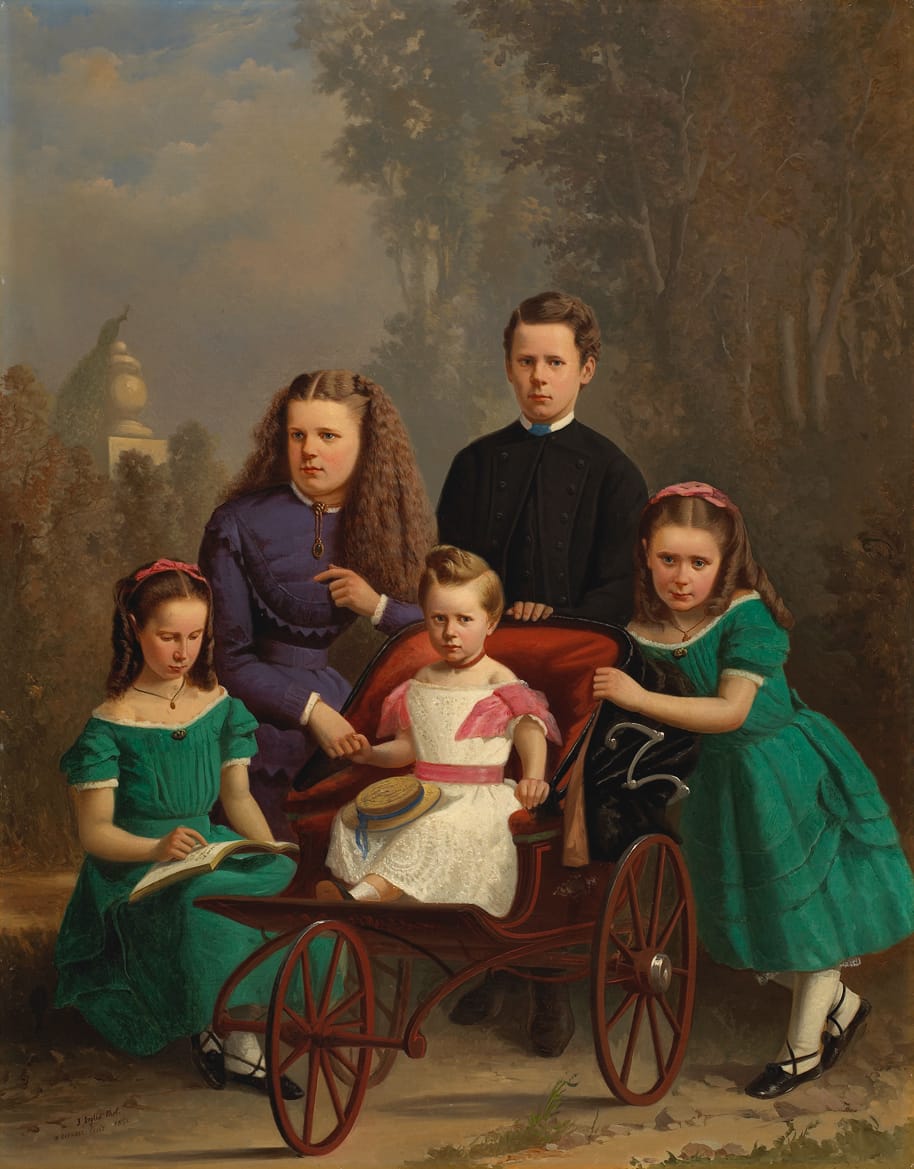
William Raphael, after James Inglis, The McFarlane Children, 1871
Oil on canvas, mounted on Masonite, 114.8 x 90.5 x 0.4 cm
National Gallery of Canada, Ottawa
In the years following his arrival in Montreal in 1857, William Raphael produced numerous portraits of prominent members of Canadian society. The painting The McFarlane Children, although made later, is nonetheless part of this early practice. This work, which is also an example of a group portrait of children from the same family, is reminiscent of the portraits of children painted by Théophile Hamel (1817–1870) in the middle of the century and the photographic portraits produced by William Notman (1826–1891). These works reveal a new sentimentality—one tinged with affection—for childhood during the Victorian period.
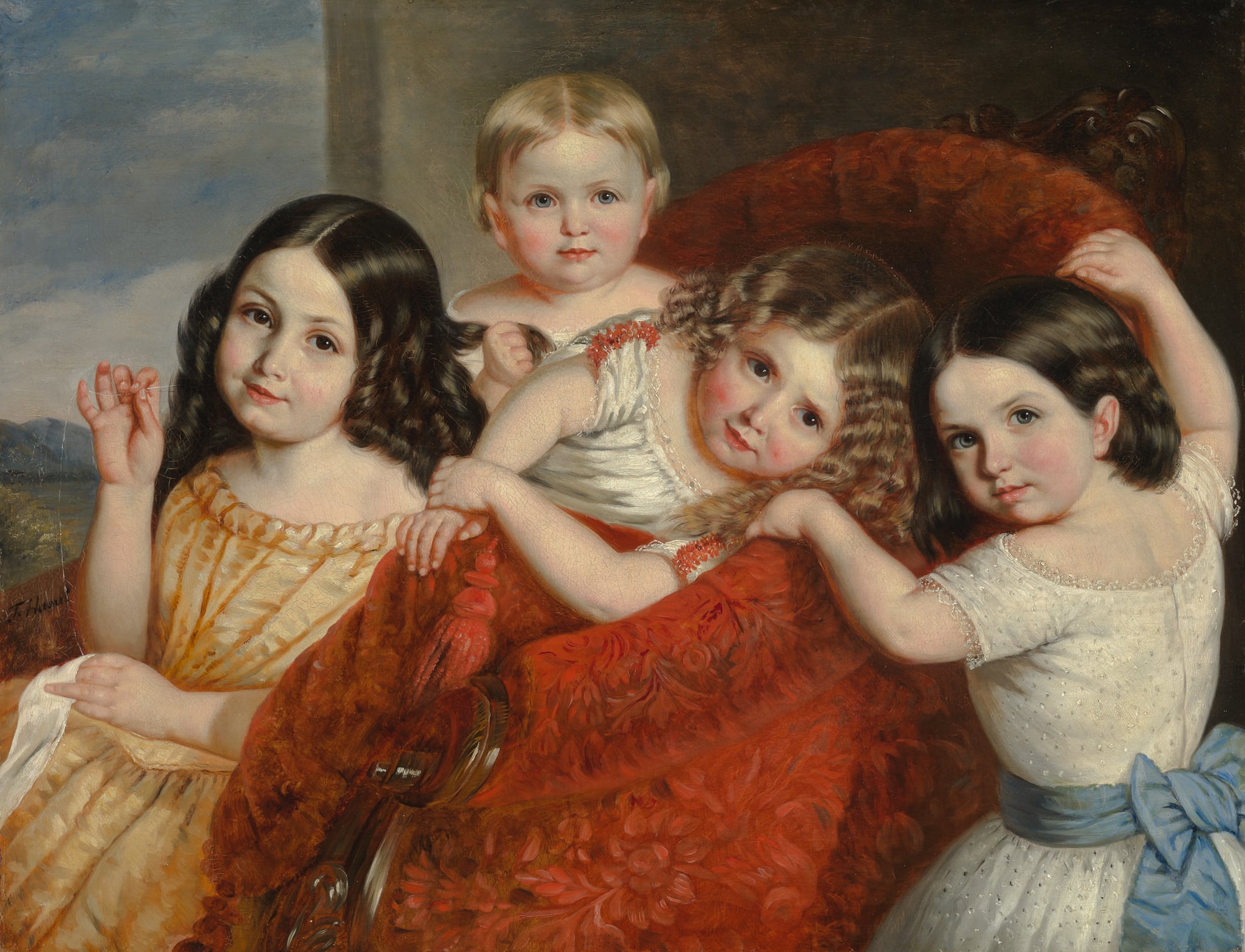
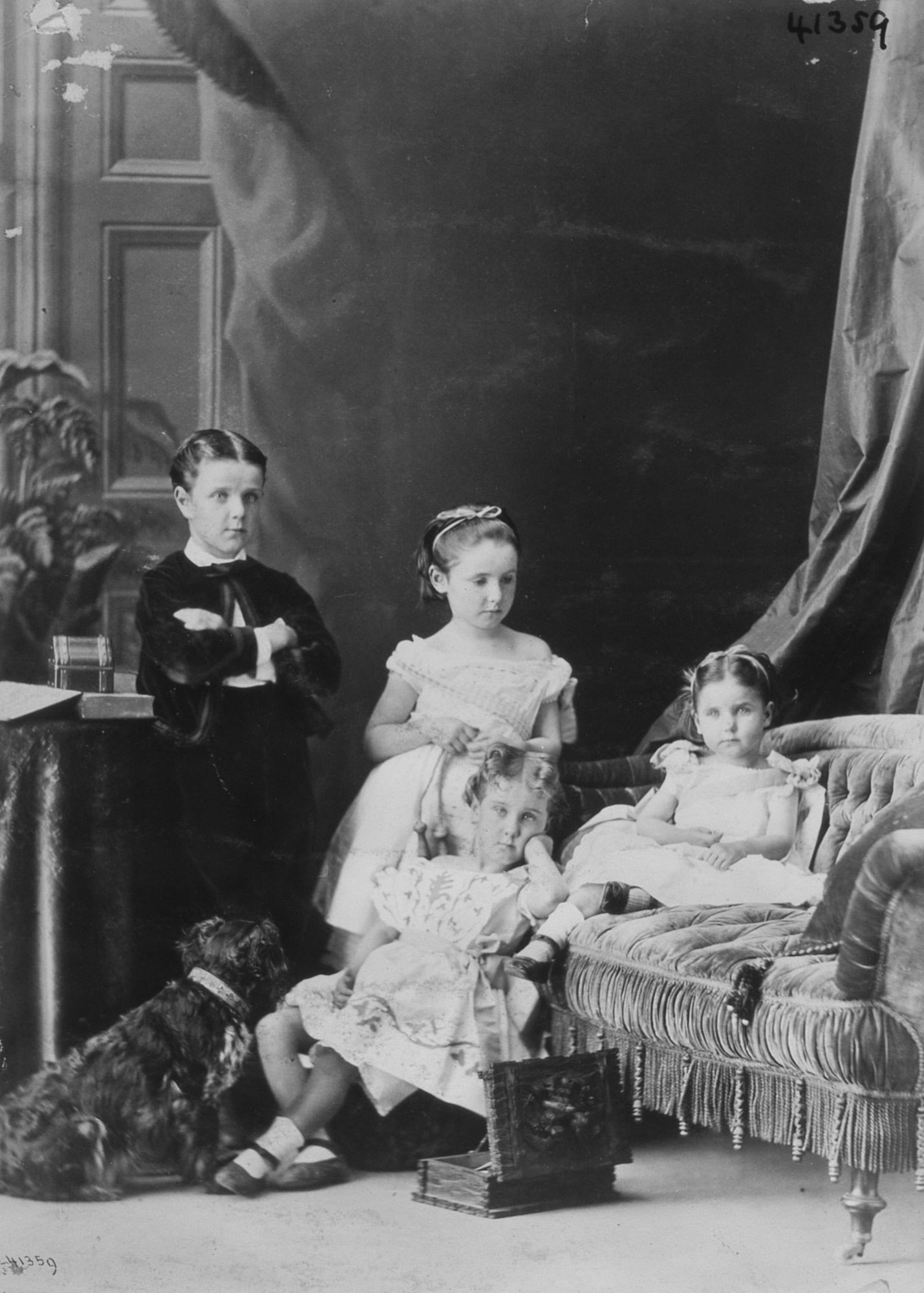
This piece, which is part photograph and part painting, also demonstrates Raphael’s use of photography as a resource for his work. Since its invention in the 1830s, photography has been regarded as a documentary tool as much as an art form. But it nonetheless quickly slipped into the sphere of activity of painters, creating important connections between the disciplines. While some abandoned their brushes and became photographers, others collaborated with photography studios, even using photographic images to compose their paintings.
William Raphael put his talents to work for William Notman and Abner Bedee Taber (1832–1866), thus developing relationships with two of the most important Canadian photographers of the day. The McFarlane Children is a rare example of the collaboration between Raphael and photographer James Inglis (1835–1904). The portrait is signed in the lower left-hand corner of the composition, first with the inscription “J. Inglis Photo” and then, below that, with “W. Raphael fecit.” Fecit is a Latin word meaning “did”—or in this case, “painted.” The names of the two men are followed by the date of creation, 1871.
This work, now in the collection of the National Gallery of Canada, was commissioned by David McFarlane. Born in Glasgow, McFarlane settled in Montreal in 1854. Although he was not part of the financial elite, he managed to establish himself in a favourable middle-class position, working for Alex Buntin & Co., a firm that sold office supplies and paper. In 1857, he married Margaret Kennedy and started a family, which by 1871 included five children: Margaret, David Jr., Jean, Ann, and Clement Hugh. Caught up in the Victorian era vogue for photographic portraits, the McFarlanes called on another new Canadian from Scotland, James Inglis, to immortalize their offspring.
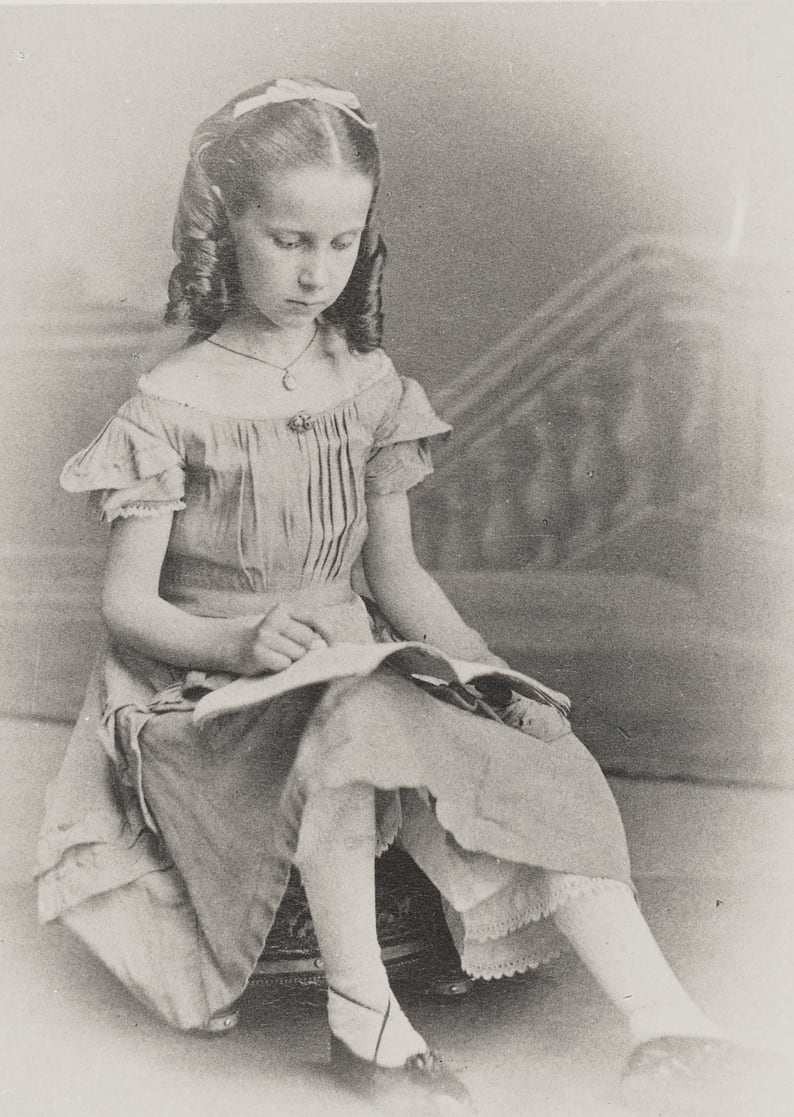
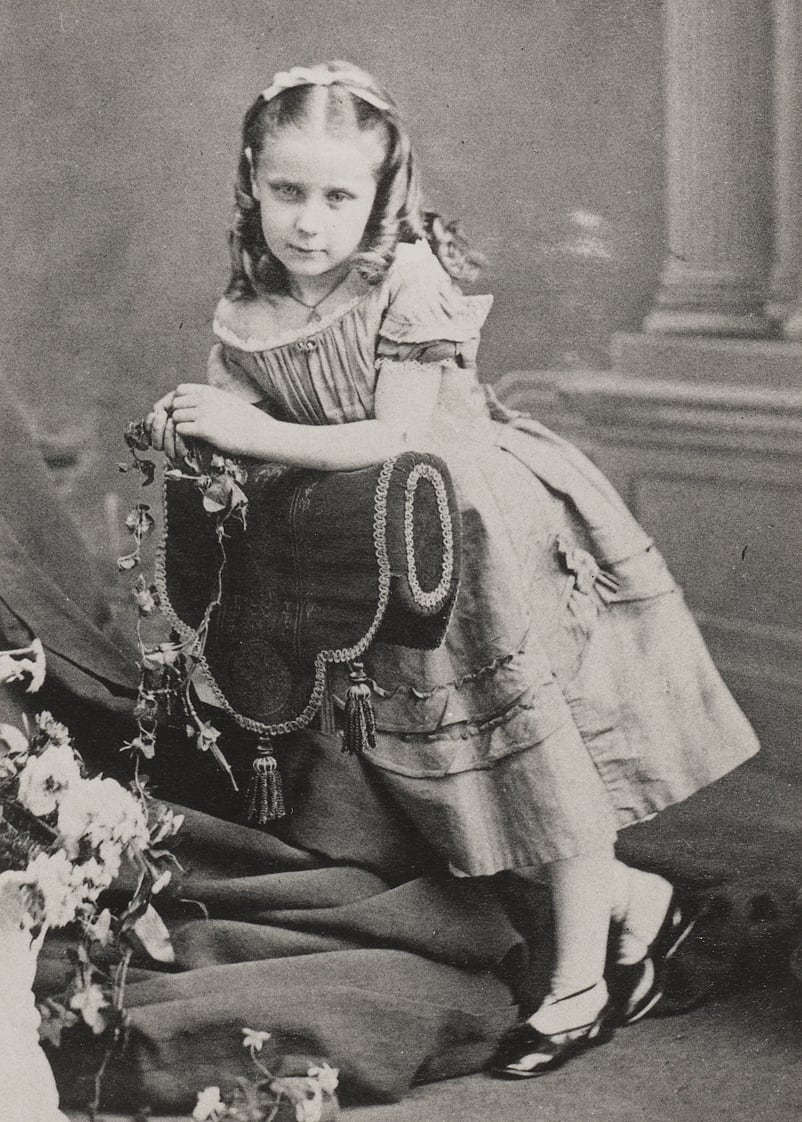
Renowned for his composite portraits, Inglis devised the triangular composition of the 1871 work, with young Clement Hugh on a three-wheeled varnished wooden baby carriage in the foreground. Inglis precisely determined the position and posture to be adopted by each of the children, and then set about printing individual portraits of them—notably the Portrait of Jeanie McFarlane and the Portrait of Annie McFarlane. With composite photography, the photographs are printed on paper and then the figures are cut out following their contours, assembled, and pasted onto a painted backdrop, usually of an atmospheric landscape. The collage is then harmonized by retouching and integrating the figures into the backdrop. Finally, the collage is photographed so it can be printed in various copies. In this particular case, Inglis called on Raphael to paint a photographic enlargement of the composition instead of limiting himself to black-and-white prints alone.
Raphael, who had already done this type of work for Notman and Taber at the start of his Montreal career, carried out the commission by reworking the entire surface. He added more saturated colours to the dresses, ribbons, and stroller. Notably, he also paid attention to the colour of the trees, whose foliage is brushed more broadly to produce the blurred effect of the background. Finally, the faces are meticulously painted using an interplay of thin, transparent coats of paint and polished strokes, to respect the photographic likeness.
 About the Author
 More Online Art Books
 Acknowledgements