
Behind Bonsecours Market, Montreal, 1866
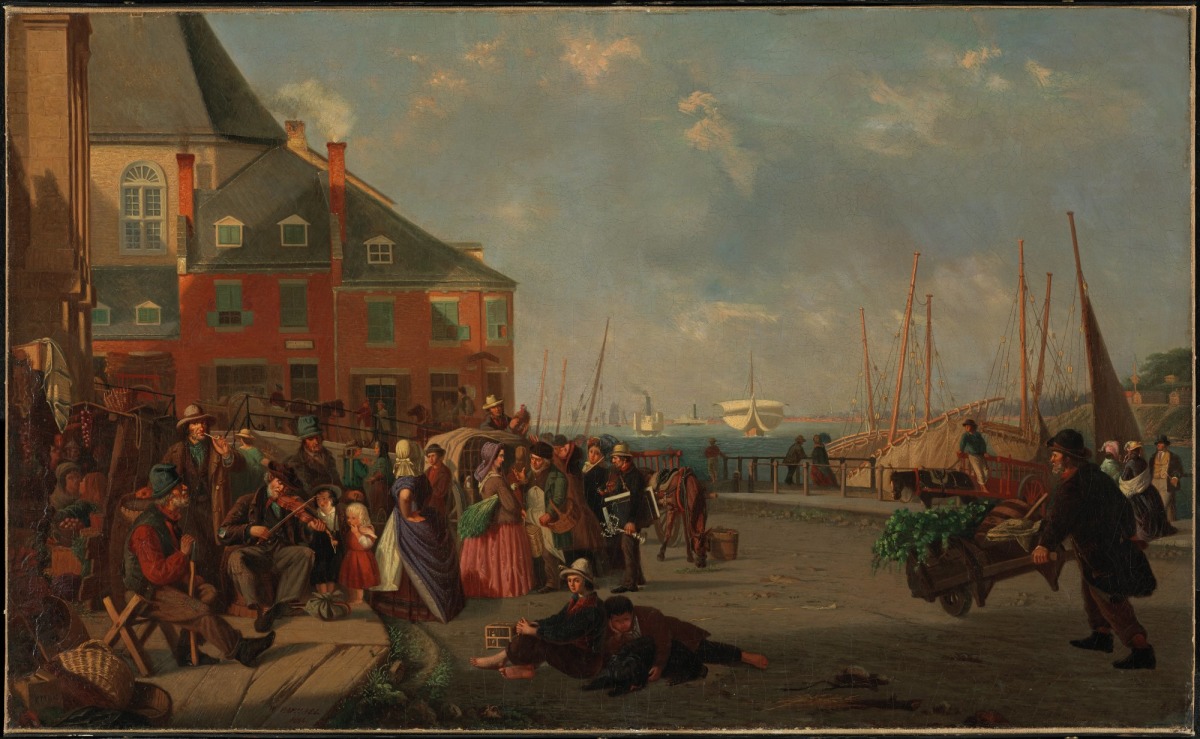
William Raphael, Behind Bonsecours Market, Montreal, 1866
Oil on canvas, 67.5 x 109.6 cm
National Gallery of Canada, Ottawa
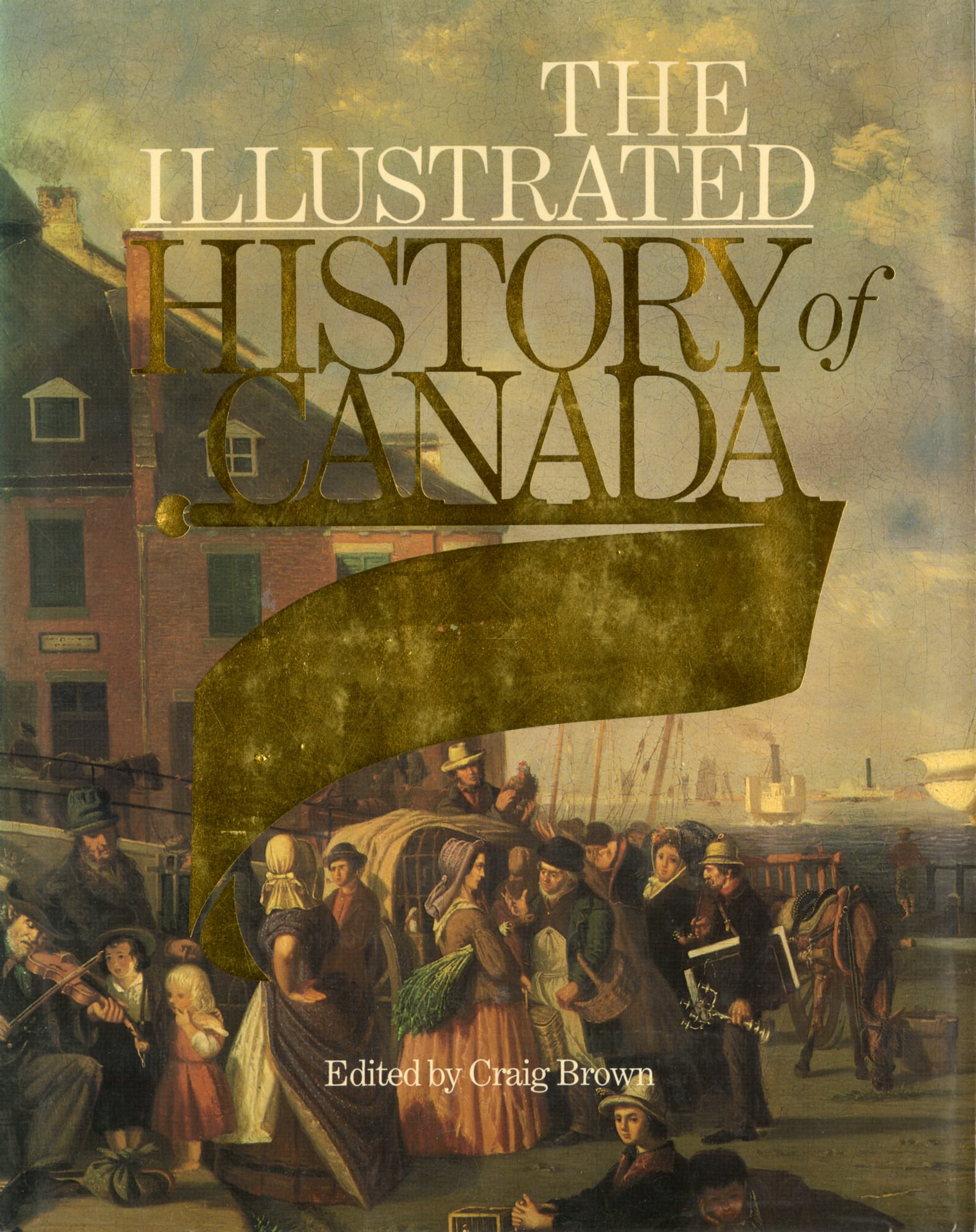
This painting, produced in 1866, is a central work in William Raphael’s oeuvre because of both its larger format and the critical attention it received. It seems to spontaneously capture a bustling city street, with crowds gathering near the temporary stalls that line the Bonsecours Market, a landmark of Montreal’s old port. Although it has a snapshot-like quality, the work was actually the fruit of several years of effort, with Raphael producing numerous versions that provoked a variety of responses from art critics of his era. This significant composition—exemplary of Raphael’s masterful application of Biedermeier principles—has endured: it was selected for the cover of the first edition of The Illustrated History of Canada in 1987.
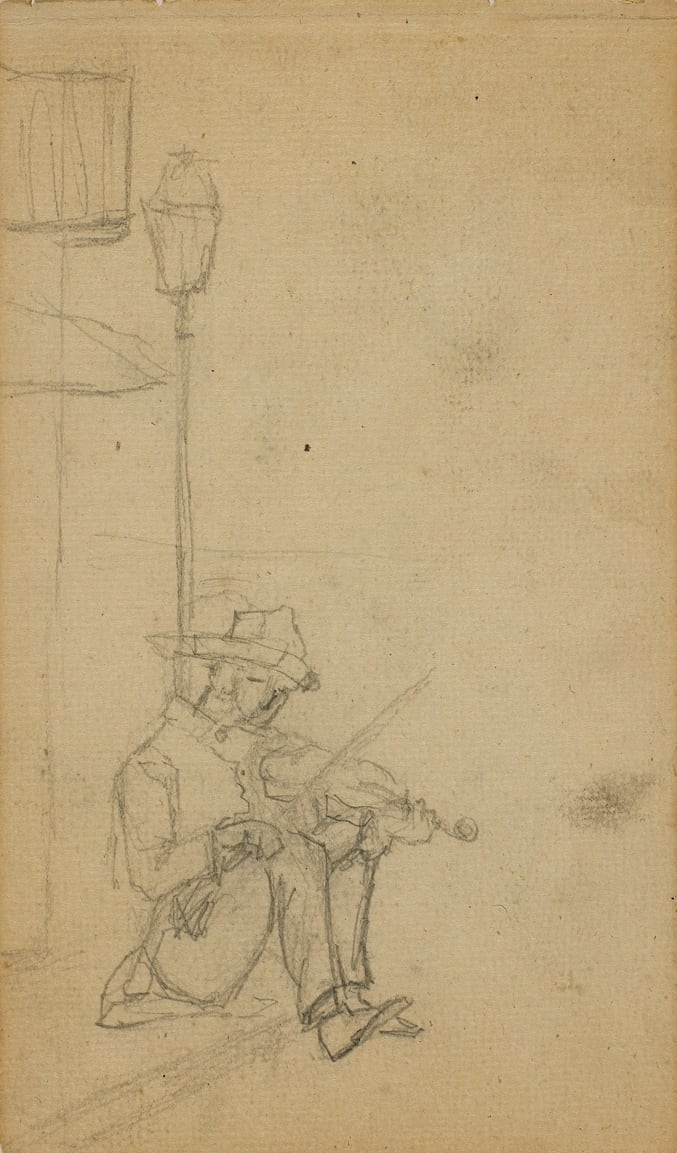
Two drawings by Raphael reveal the beginnings of Behind Bonsecours Market. Around 1857, he drew a violin player and an architectural view of the rear of the Notre-Dame-de-Bon-Secours Chapel: two motifs that he repeated years later. But it was only in 1865 that he produced his first painting depicting the back of the famous market. Small in scale, that piece was presented in September of that year at the Montreal Provincial Exhibition. Included in the fine arts section of the event, held at the Crystal Palace, the work attracted the lukewarm attention of an anonymous correspondent from the Journal de Québec. The reporter began by criticizing the artist’s name—“It’s such a difficult name for a painter to bear that it’s ridiculous”—and then he went on to write a mixed review of the piece: “[T]he scene this artist treats is quite skilfully rendered: it’s the Bonsecours market on the banks of the river. The group of peasants is well done, but some of the characters, especially the listeners to the strolling fiddler, verge on caricature, and that’s a fault.”
A second critical review appeared in the newspaper La Minerve. Once again anonymous, this appraisal complained more about the subject matter than the composition: “But why, in all the Bonsecours markets (of which there are many) signed by Raphaël, Duncan or others, are Canadians always given outfits and expressions that would be impossible to notice in their habits today?”
The two reviews, both published on September 27, 1865, could have been by the same hand, and might even have been penned by Napoléon Bourassa (1827–1916), an artist renowned for his writings on and knowledge of the Renaissance masters, including Fra Angelico (1395–1455) and Raphael (1483–1520). Some months earlier, in an issue of La Revue canadienne, Bourassa had critiqued a William Raphael painting exhibited the previous year at the salon of the Art Association of Montreal. That painting, depicting a street scene in front of the Bonsecours Market, had earned these mocking words: “We do have a Raphaël, who last year painted our Bonsecours Market, with lots of sheep, calves, cows, pigs, broods… under the effect of a setting sun; but we must confess with humility, this Raphaël is not the right one—I hope I can say this without insulting him.” Making no secret of his displeasure with the artist’s name and the caricatured appearance of some of his figures, Bourassa wrote in a way that seems too similar to the texts published in September 1865 to be ignored.
William Raphael was aware of the pejorative comments about his skills. These remarks seemed to him all the more inappropriate when his work won first prize for oil painting at the exhibition. In response to the insults, Raphael produced a variation of his piece the following year. In that version, he incorporated a deliberately caricatured figure of a blind critic who stands in the way of foreign artists wishing to enter Montreal. The work was sent to Scotland in November 1866 and probably purchased at its exhibition. To date, it has not been traced.

In February 1867, Raphael displayed a new larger version of Behind Bonsecours Market at the Art Association of Montreal exhibition. This was most likely the work now in the collection of the National Gallery of Canada, and it was an ambitious piece for an artist still at the beginning of his career. The composition is marked by a large diagonal that runs down the roofs and across the painting to the lower right. In this way, the canvas is separated between the vast sky and luminous blue of the water and the bustle of people crowding around the market.
The work is dynamic and also sonorous, even noisy. An elderly man listens to the music of a fiddler, his hand resting on an axe. Two children, one of them a little blonde girl who pensively places the index finger of her left hand on her mouth, watch the musician attentively. To the sounds of the violin is added the murmur of the many conversations taking place. Some people on the left seem to be negotiating the price of various commodities, while those in the centre are chatting, having perhaps unexpectedly crossed paths as they went about their business. On the slope behind them, the sound of horses and the creaking of carts can be heard.
Inspired by life in Montreal, Raphael thus offers his view of activities carried out by modest people of diverse origins with whom he can even identify. In fact, some experts believe that the figure in the centre, carrying a portfolio and a candlestick, is a self-portrait.
 About the Author
 More Online Art Books
 Acknowledgements