
Indian Encampment on the Lower St. Lawrence, 1879
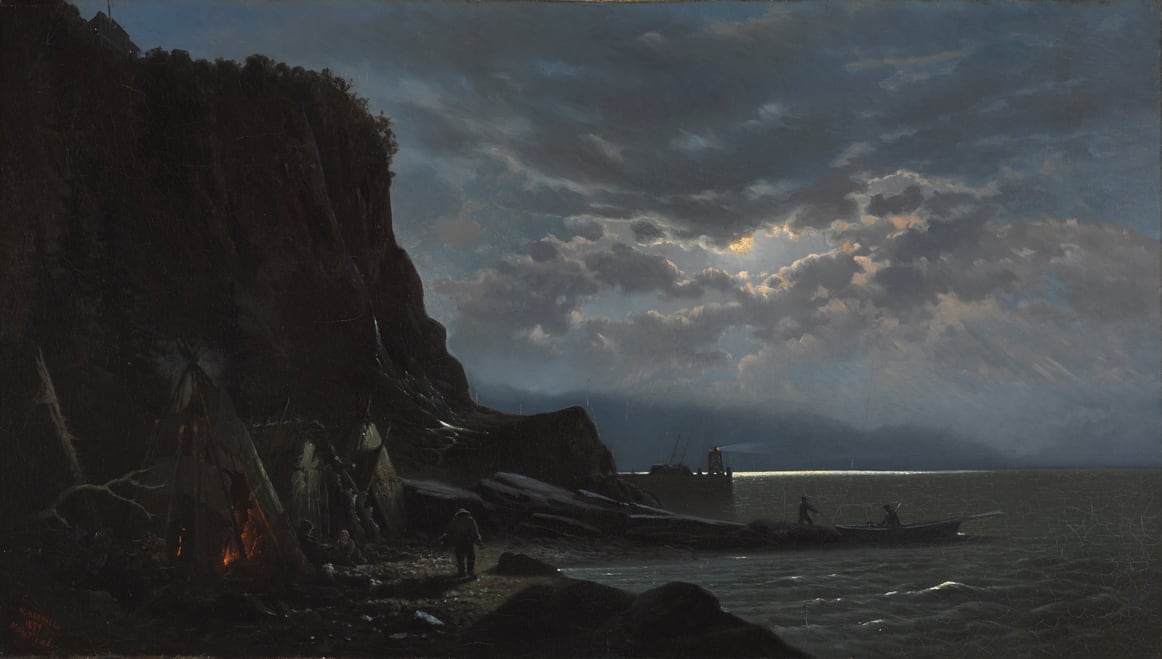
William Raphael, Indian Encampment on the Lower St. Lawrence, 1879
Oil on canvas, 61.3 x 107 cm
National Gallery of Canada, Ottawa
In the winter of 1879, William Raphael painted a landscape of the Charlevoix region showing the impressive Cap-Blanc cliff at Murray Bay (La Malbaie) and the St. Lawrence River, all under a moonlit sky. The work admirably displays Raphael’s mastery of landscape painting, which is perhaps what prompted him to submit it as his reception piece in 1880 to the newly founded Canadian Academy of Arts (renamed the Royal Canadian Academy of Arts in 1882).
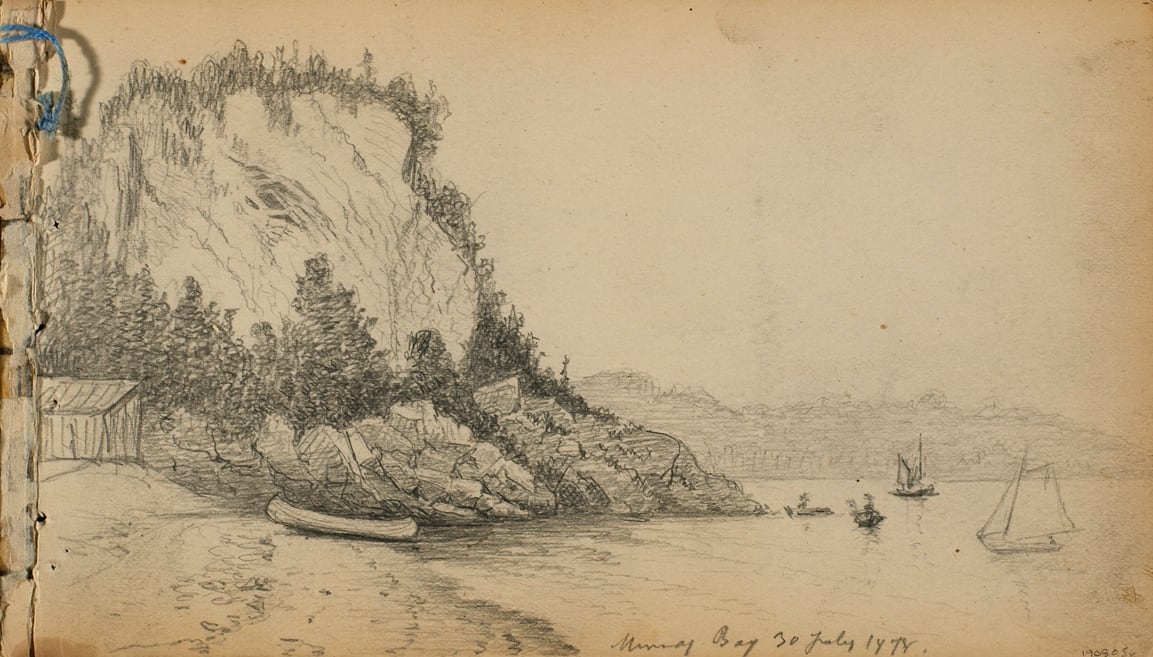

This dark, mysterious landscape is a fine demonstration of the artist’s understanding of various light sources. The fire in one of the tepees illuminates the scene with a few reddish flashes and attracts the viewer’s attention. In the distance, the faint beam from a lighthouse shines out to sea. The St. Lawrence flows through the right-hand side of the painting, overhung by heavy clouds whose contours are illuminated by the moon. Its silvery light also manages to pierce a gap to reach the waves below. For this composition, Raphael drew on sketches he had made on location the previous summer, as well as on a number of earlier paintings, such as Encampment by the River, 1871, which also depicted an Indigenous people’s camp.
Raphael exhibited Indian Encampment on the Lower St. Lawrence Estuary at the seventh annual exhibition of the Ontario Society of Artists in May 1879. The Globe newspaper described it as the artist’s most successful work at the event. Then, in March 1880, the painting was displayed at the first exhibition of the Canadian Academy of Arts, held at Ottawa’s Clarendon Hotel, and subsequently submitted to the institution, completing Raphael’s bid to obtain full membership. The painting thus became one of the first pieces in the Canadian national collection (soon to form the core of the National Gallery of Canada collection). Given the academy’s preference for landscapes, it was no accident that Raphael opted for this painting of a dramatic night scene. The work is tinged with a late Romanticism that is uncommon in the artist’s output but that animated the works of many of his contemporaries.
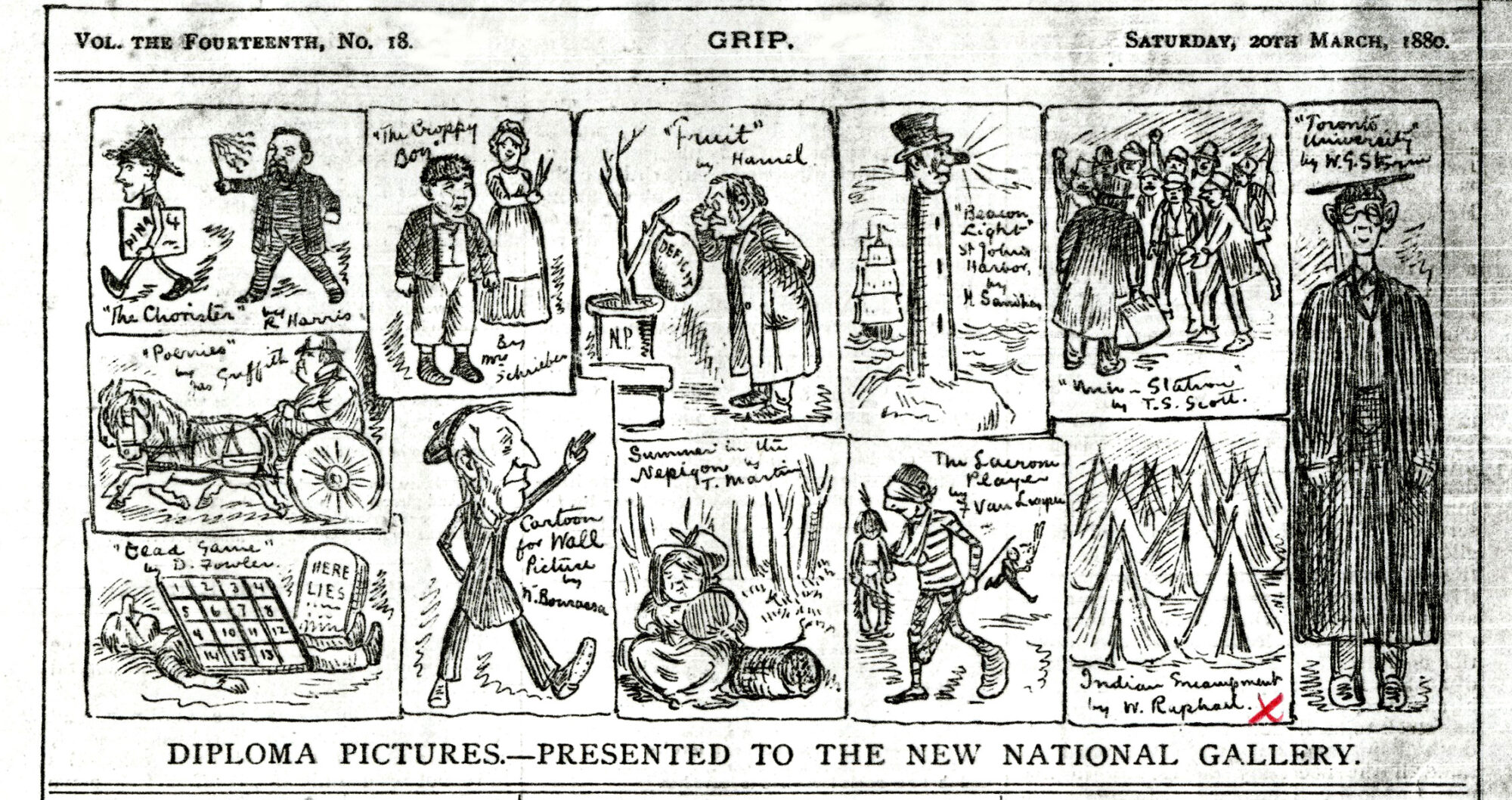
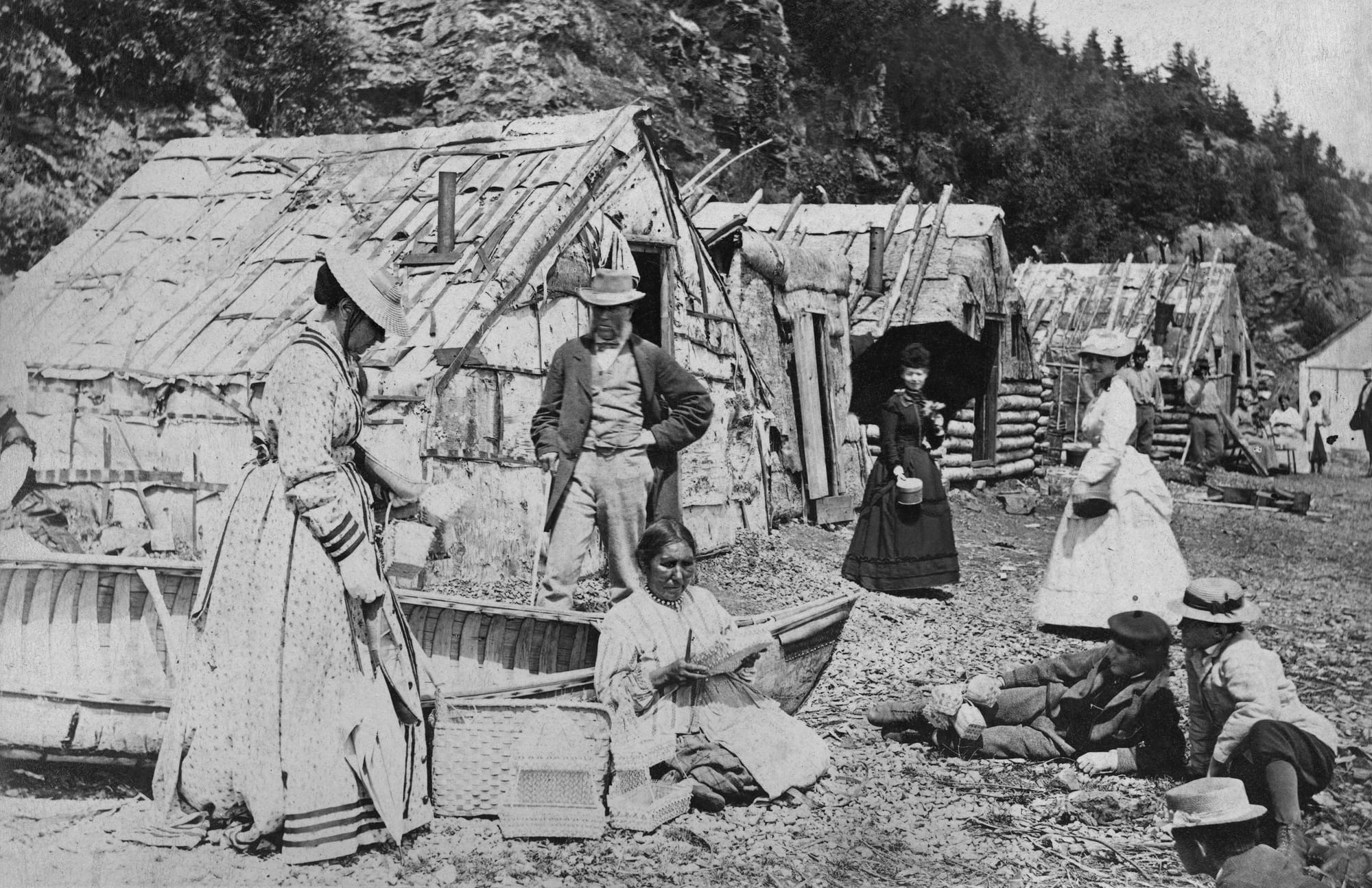
But the painting was not universally admired. In the March 20 issue of the satirical newspaper Grip, it was included in a set entitled “Diploma Pictures—Presented to the New National Gallery,” which caricatured the reception pieces submitted to the academy. Raphael’s composition is reduced to a pile of tepees invading the entire surface of the work. Contrary to the caricaturist’s vision, the Indigenous encampment is far less prominent in the original image: the dark silhouette of Cap-Blanc set against the blue sky attracts much more attention, as do the reflections of moonlight. Raphael also departs from the stereotypical cartoonish idea of tepees and takes care to offer a realistic representation of Indigenous dwellings, including a squat-looking hut built of bark and wood. With its sloping roof, this hut corresponds in every respect to the dwellings photographed on the site by the Livernois studio around 1873.
 About the Author
 More Online Art Books
 Acknowledgements