
Between 1962 and 1967, the Mi’kmaw artists of the Micmac Indian Craftsmen (MIC) transformed a small community workshop into one of Canada’s most dynamic Indigenous art co-operatives. Led by Michael Francis (1923–1995) and Stephen Dedam (1938–2022) under the guidance of Ivan H. Crowell (1904–2003), a key figure in the professionalization of craft in New Brunswick, they mastered weaving, silkscreen printing, painting, and pottery, producing handmade works sold across North America. Their bold fusion of modern design and traditional knowledge captured national attention. Yet, despite their success, federal funding cuts abruptly ended the enterprise. What remains is a remarkable legacy of creativity, collaboration, and cultural resilience that has been long overlooked.

For a brief moment in the 1960s, the focus of contemporary art shifted in Atlantic Canada. No longer was it fixated on Saint John and painters like Miller Brittain (1912–1968), Jack Humphrey (1901–1967), and Fred Ross (1927–2014). Nor on Mount Allison University in Sackville where Alex Colville (1920–2013) had recently left teaching to paint full time, and where Lawren P. Harris (1910–1994) was developing his austere language of sharp coloured lines. Nor the rural studio of Christopher (1935–2022) and Mary Pratt (1935–2018) in Salmonier, Newfoundland. While these artists and others were all part of the burgeoning visual arts landscape in eastern Canada, for however briefly the media and the art world’s attention was captured by an unexpected group of artists working as members of a vibrant co-operative experiment in avant-garde art that flourished from the early to mid-1960s at Elsipogtog (then known as Big Cove), a First Nations community in Kent County, New Brunswick.
They called themselves the “Micmac Indian Craftsmen.” They were the first modern Indigenous artists in Atlantic Canada, and they developed an international following almost overnight. Their work was inspired by traditional Wabanaki stories, but their visual language was eclectic, often minimalist, and unabashedly contemporary. Having left almost no trace in the current canon of New Brunswick visual art or Indigenous studies, it is staggering to see how intense and promising the studio’s work once was. What makes their accomplishments even more remarkable is that these makers and designers were primarily self-taught. What they did possess, however, was an intrinsic understanding of craftsmanship, patience, and a desire to make their mark in material culture based on traditions and stories older than Western art itself.
Origins in Big Cove
For New Brunswick’s First Nations communities, the mid-twentieth century was often a hard time tainted with injustice and inequity. Housing conditions on reserves were marginal at best, and status Indians only gained the right to vote in provincial elections in 1963. Employment opportunities beyond intermittent labour were rare, and income levels were a fraction of those in the white population. In 1964, the average life expectancy of an Indigenous person in Canada was half that of the average Canadian. Big Cove was statistically among the poorest reserves in the country.
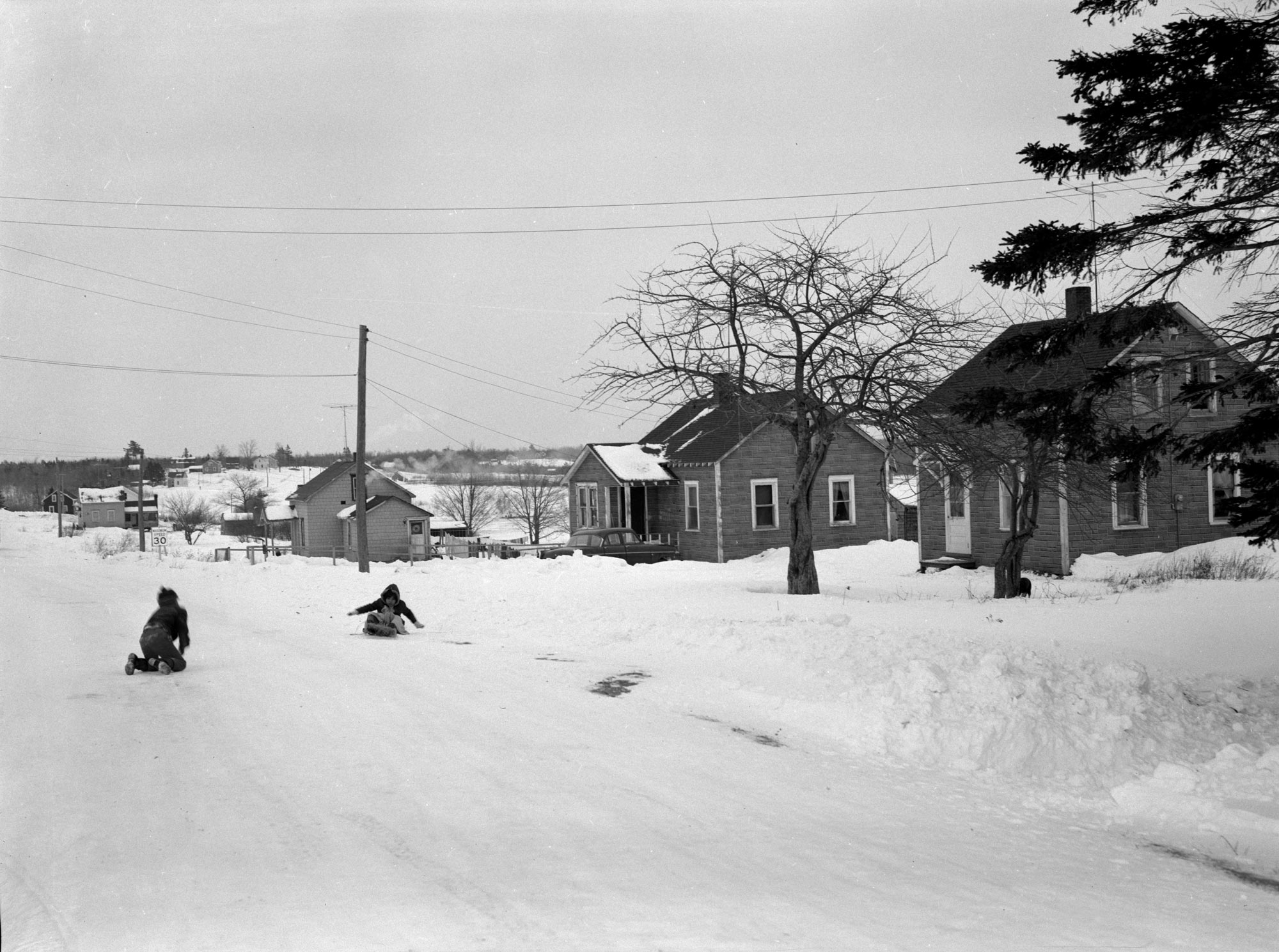
Given these challenges, Big Cove was well poised for federal and provincial attention in the early 1960s. A focus on arts and culture as a way to aid such a community aligned with the federal government’s 1951 Massey Commission Report, whose recommendations would transform much of Canada’s post-war cultural environment. In the section entitled “Indian Arts and Crafts,” the Report acknowledged a widespread ignorance and scorn toward Indigenous culture in the general population, as well as an increasing indifference to traditional cultural pursuits within First Nations communities. While tainted with some obsolete views, the Massey Report did encourage the use of time-honoured materials and craftsmanship (decrying the kitsch of “degraded objects mass-produced for the tourist trade… and other regrettable ‘Indian’ souvenirs made in Japan”). It also lauded Indigenous art’s traditional levels of excellence and design originality, as well as its willingness to adopt new materials. The Report understood the social roadblocks to non-Indigenous Canadians appreciating the value of Indigenous art and artists and recognized that cultural and artistic vibrancy was vital to the social and intellectual health of Canada’s Indigenous Peoples. The Report encouraged the federal Indian Affairs Branch to look after these matters and be properly resourced to do so.
With increasing prosperity and leisure time in the 1950s and 1960s, interest and participation in the fine crafts (often called “handicrafts” then) grew throughout North America, and especially in New Brunswick. The federal and provincial governments saw an opportunity to create a centre of Indigenous art and fine craft—as much for regional economic development as for benefit to the First Nations communities—and pushed hard to encourage it. In many ways, these efforts were inspired by the prominent Inuit co-operative workshops of the Arctic, which were already flourishing.
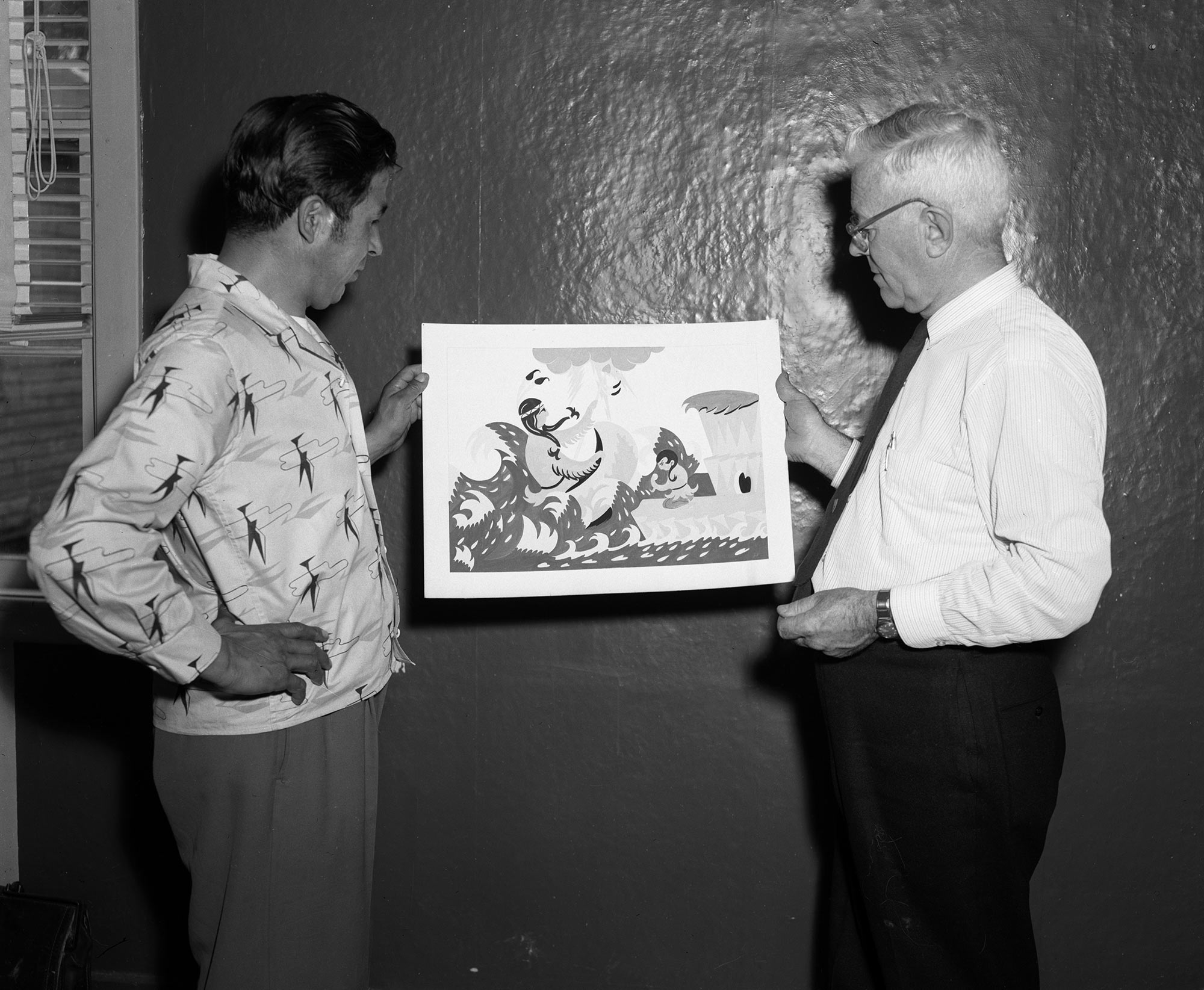
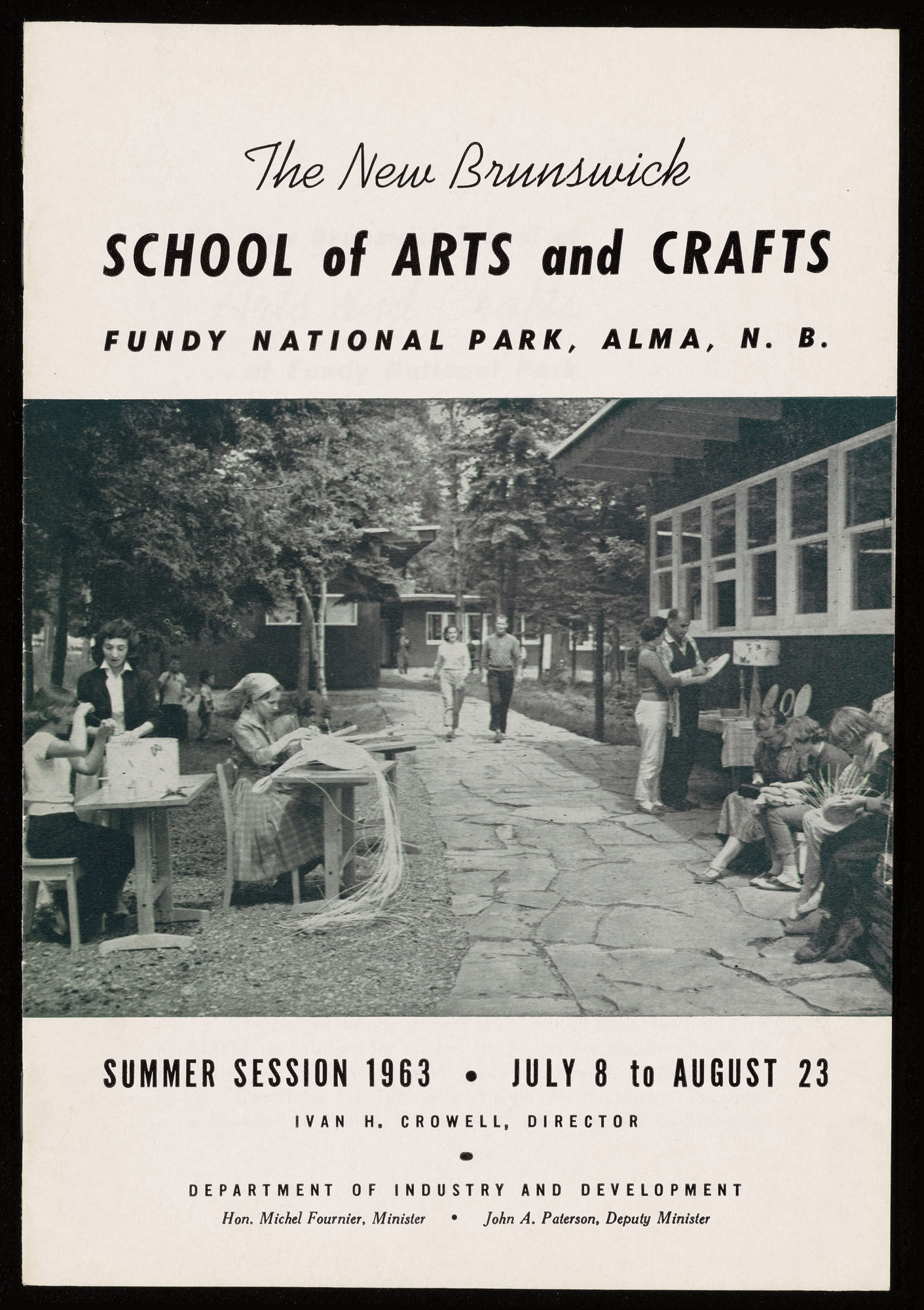
The main promoter of the MIC was Dr. Ivan H. Crowell, a key figure in the professionalization of fine craft in post-war New Brunswick. One of the first arts administrators in New Brunswick and provincial director of handicrafts from 1946 to 1969, Crowell was also a respected master weaver, teacher, and pewtersmith. Following a stint as director of handicrafts at McGill University, Montreal, in the early 1940s, Crowell moved to Fredericton in 1946 to become director of the handicrafts division of New Brunswick’s Department of Trade and Industry. He was encouraged to develop and revive interest in craft production (especially in rural areas) and champion New Brunswick fine craft. To this end, Crowell established a training centre at the newly vacated army base on Fredericton’s exhibition grounds that taught woodturning, loom weaving, gemology, leatherwork, and rug hooking.
Backed by Ottawa
The MIC began with a simple meeting in 1961. Crowell got together with Big Cove Chief Anthony Francis and F.B. McKinnon, the Miramichi, New Brunswick-based Regional Supervisor for the Indian Affairs Branch, to discuss “Indians doing handicraft work on the reserve.” Crowell recalled:
The possibilities looked so promising that they both came to discuss the project with me as the Provincial Director of Handicrafts. It was agreed that we would do some teaching on the Reserve in the hopes of discovering any talents that might be there. We soon found that there was an abundance of unusual talents in the variety of crafts, and I felt a sincere interest in creative handicraft work. This was a most pleasant find.
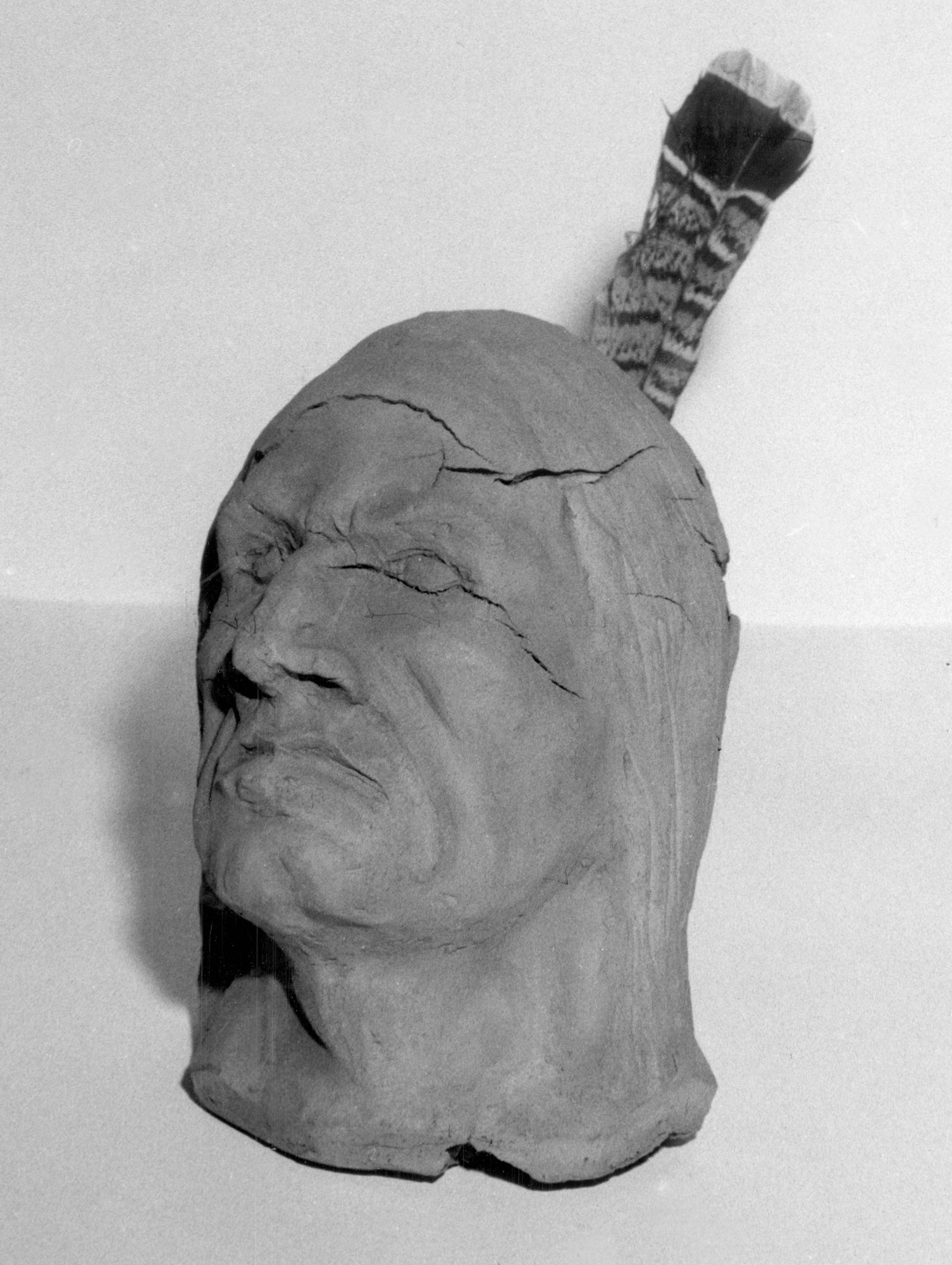
In December 1961, Crowell contacted Andrew Peters and Stephen Dedam of Big Cove as potential artists for the new endeavour. The experiment would focus on creating a cottage industry that specialized in “traditional Indian design,” with an eventual aim of employing ten full-time and fifteen to twenty part-time artisans. He distinctly noted that “provision should also be made for training for outstanding Indian artists,” using his Handicraft Branch staff as instructors. Small sales of items by Dedam, his brother Michael, and a few other artists took place early in 1962, and the concept of a Big Cove co-operative grew.
In April 1962, the Treasury Board in Ottawa allowed the Indian Affairs Branch to grant seven thousand dollars to the New Brunswick Department of Industry and Development to “provide certain services designed to train Indians in the manufacture of handicraft items and to encourage the development of a handicraft producing enterprise on the Big Cove Reserve in New Brunswick.” In late June, Big Cove resident Sam Augustine chaired a public meeting in the basement of the Big Cove school attended by Chief Anthony Francis, four council members, and a handful of locals interested in handicrafts. At the meeting, Crowell boasted the initial craft courses revealed “a tremendous reserve of undeveloped talent among the Big Cove people.” (Based on that, he then created a more robust local program as a partnership with the provincial Handicraft Branch, the Big Cove Band, and Indian Affairs.) He also noted that “there was an unlimited market for handicrafts if the workmanship was good.” The meeting minutes cited that it was “obvious that there is a general enthusiasm for the project and the Band Council without exception expressed their complete approval.” A tentative start date of August 15, 1962, was set.
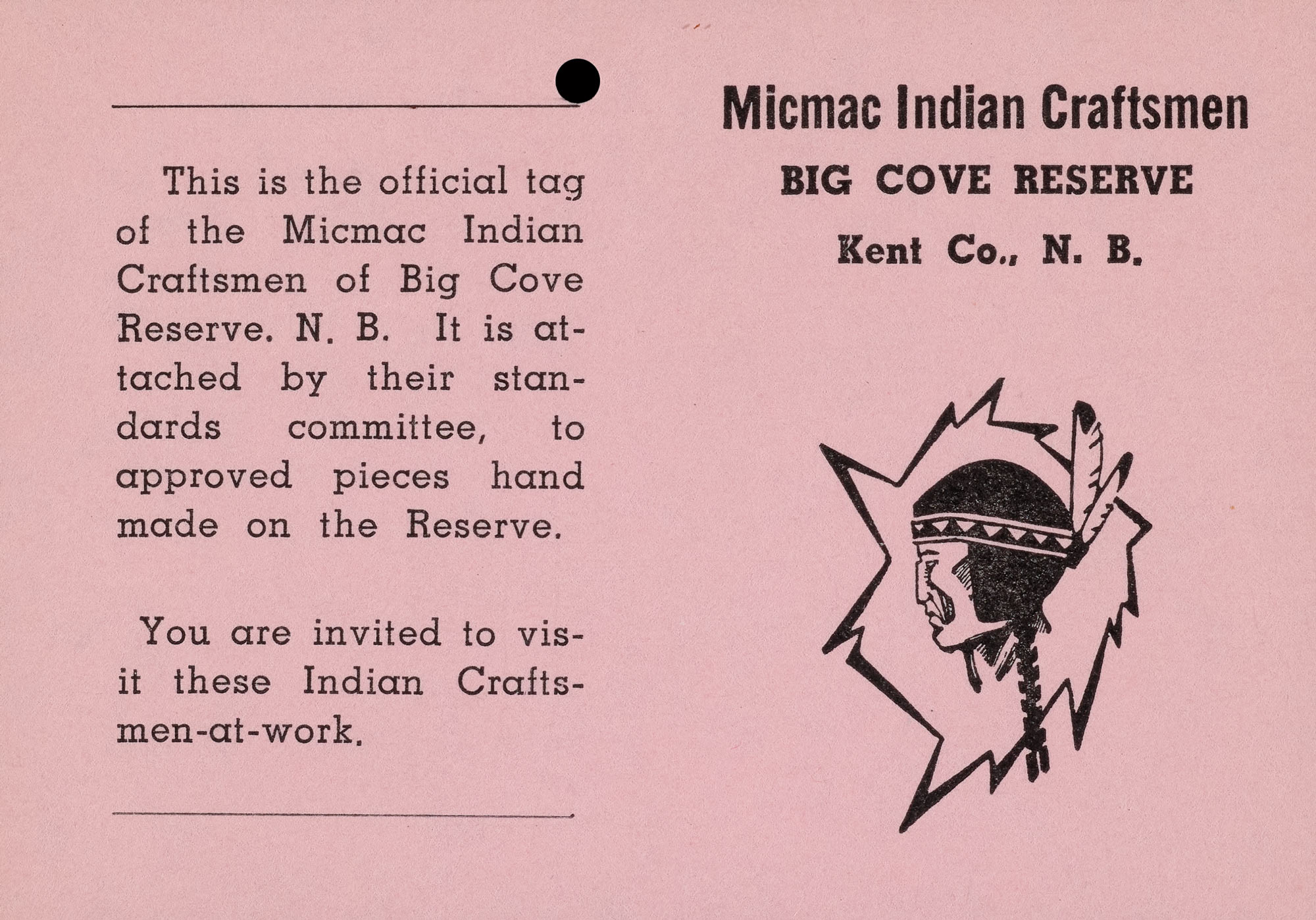
The call for participants spread by word of mouth around the community and generated growing enthusiasm. The provincial government would take on the marketing, mainly through publications and existing networks established through the Handicraft Branch. By November 1962, they had decided on the name “Micmac Indian Craftsmen” with a logo/trademark created by Stephen Dedam.
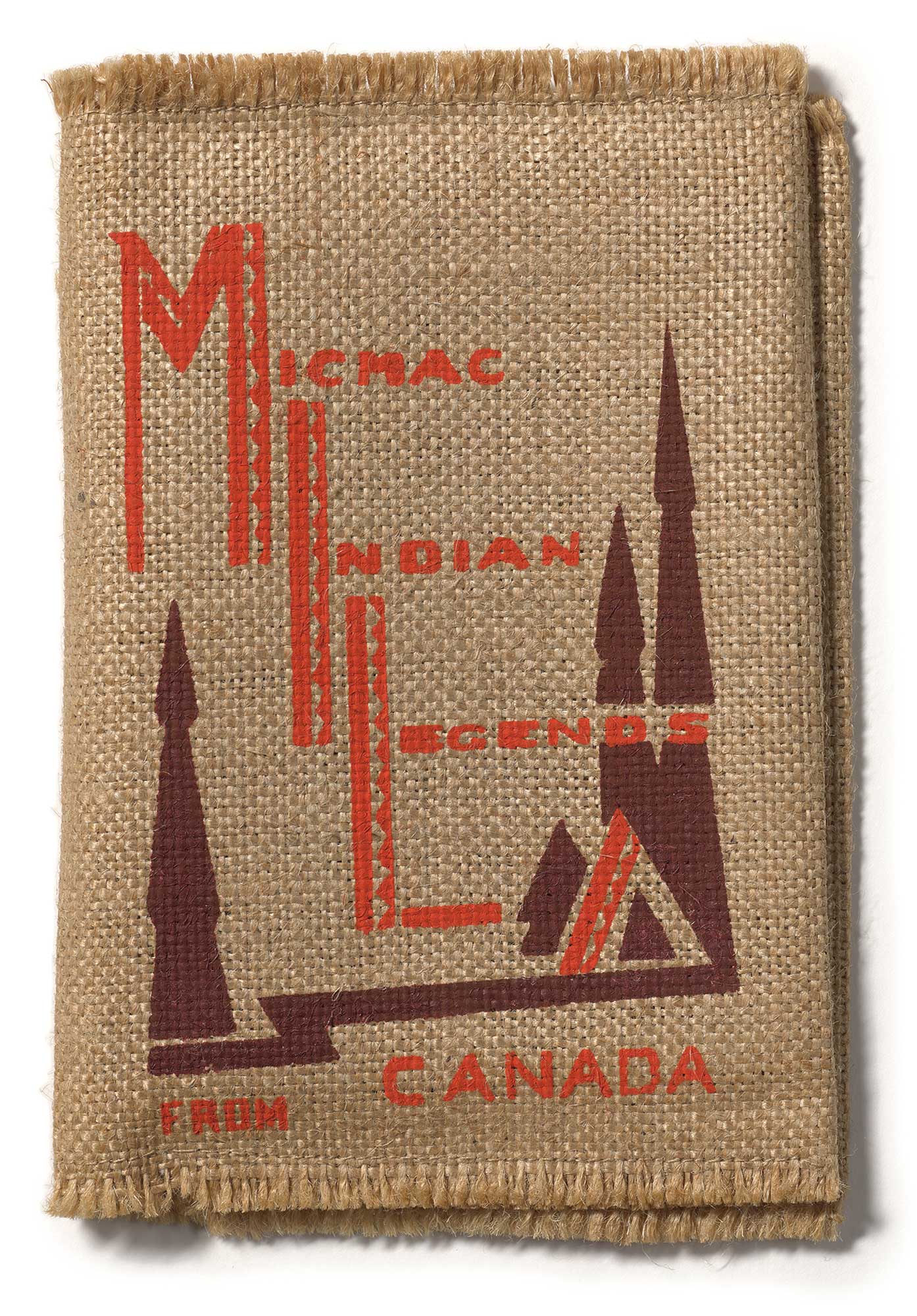
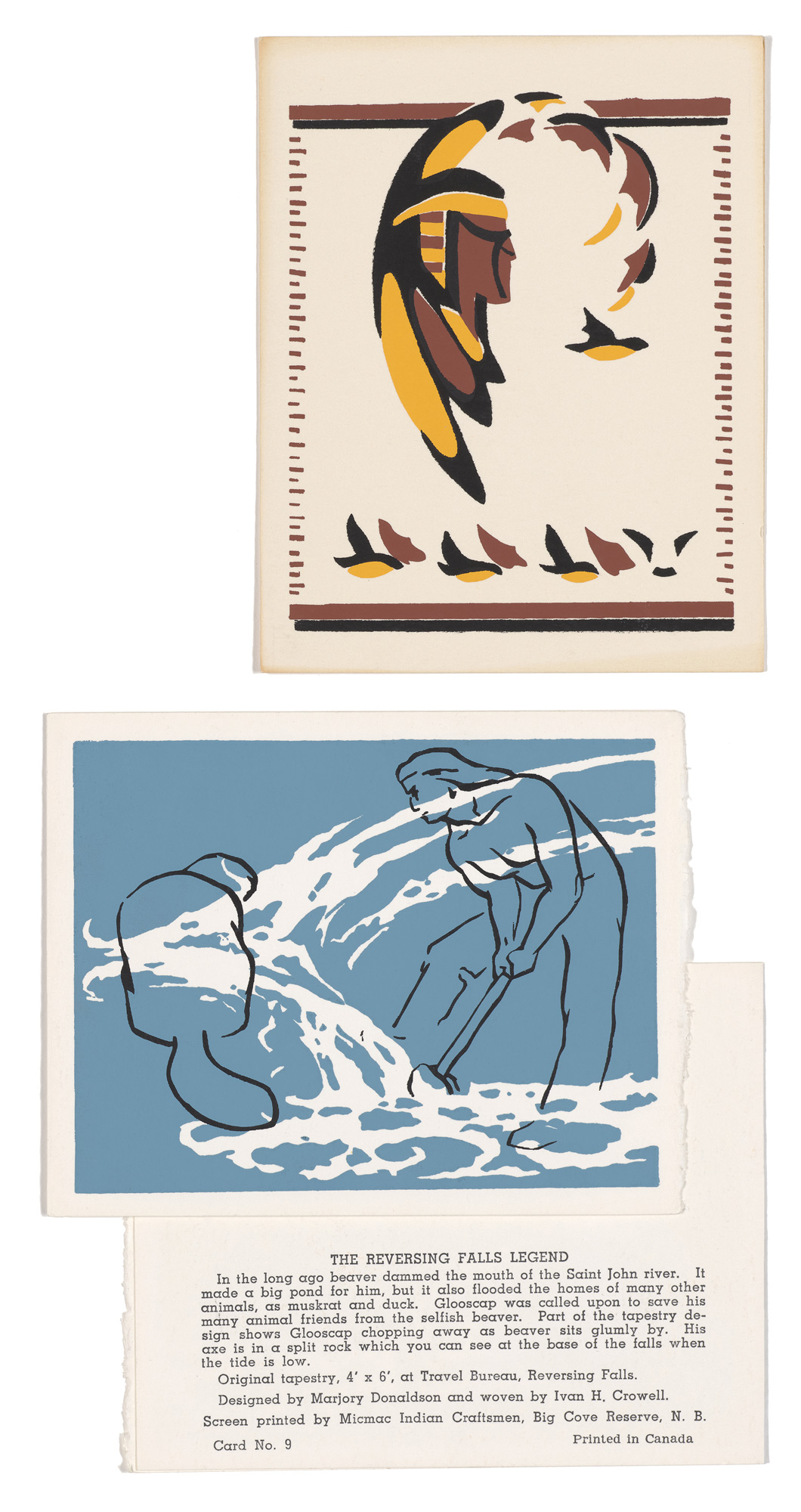
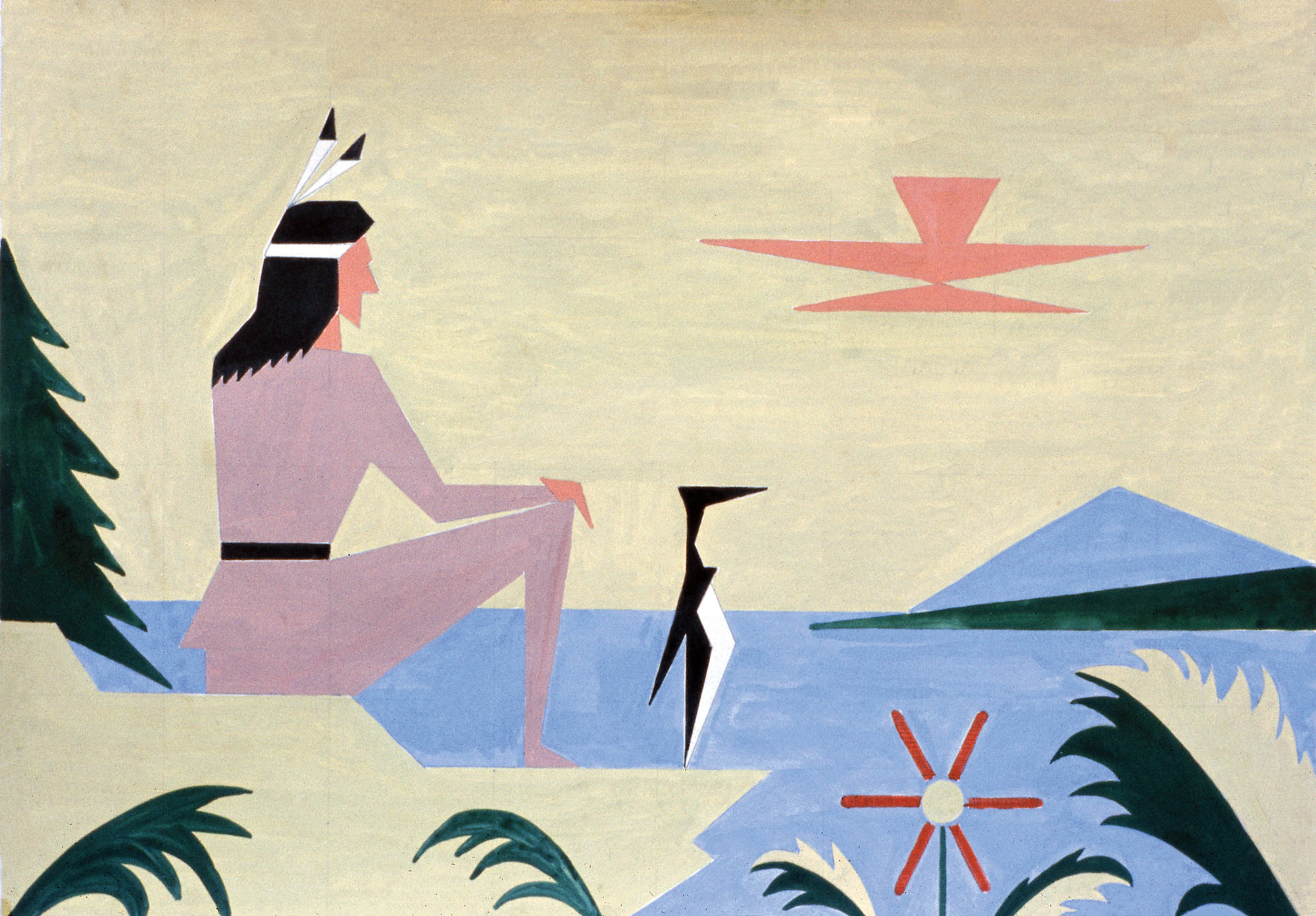
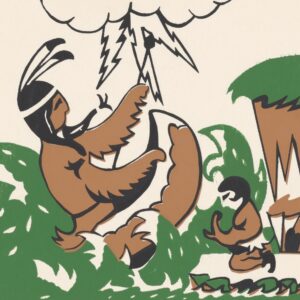
The MIC soon focused on the design and production of silkscreened cards on thick paper, called “Hasti-Notes.” These were packaged by the dozen in hand-sewn burlap bags that featured a silkscreened cover label. Rendered in a clean, abstract style using bold line, colour, and dramatic composition, along with accounts of traditional Mi’kmaw stories printed on the back that explained the image, these cards would be the MIC’s bread and butter. An unproven quantity, fresh on the scene, they nevertheless sold an astonishing 10,000 copies at the National Gift Show in Toronto in September 1962, with a further 3,000 ordered in the following two months.
By the end of 1962, the MIC workshop could turn out about one thousand cards per day. Nine people were employed making cards, cutting and sewing the burlap holders, and packaging the contents. The initial wholesale price for a twelve-pack of cards was sixty cents (with a production cost of thirty-six cents per pack), but it was far from lucrative for the makers, who made only three-quarters of a cent per card.
Institutional Influence and Indigenous Agency
Plains Cree artist and curator Gerald McMaster suggests that the rapid shift to modern artistic business practices, new materials, and technological expansion were often imposed uncomfortably on Indigenous makers and artists—aspects that were front and centre in the MIC narrative. He noted that: “Indian people… lacked the experience and money needed for the active organization or cultural development of market-oriented artifacts.”
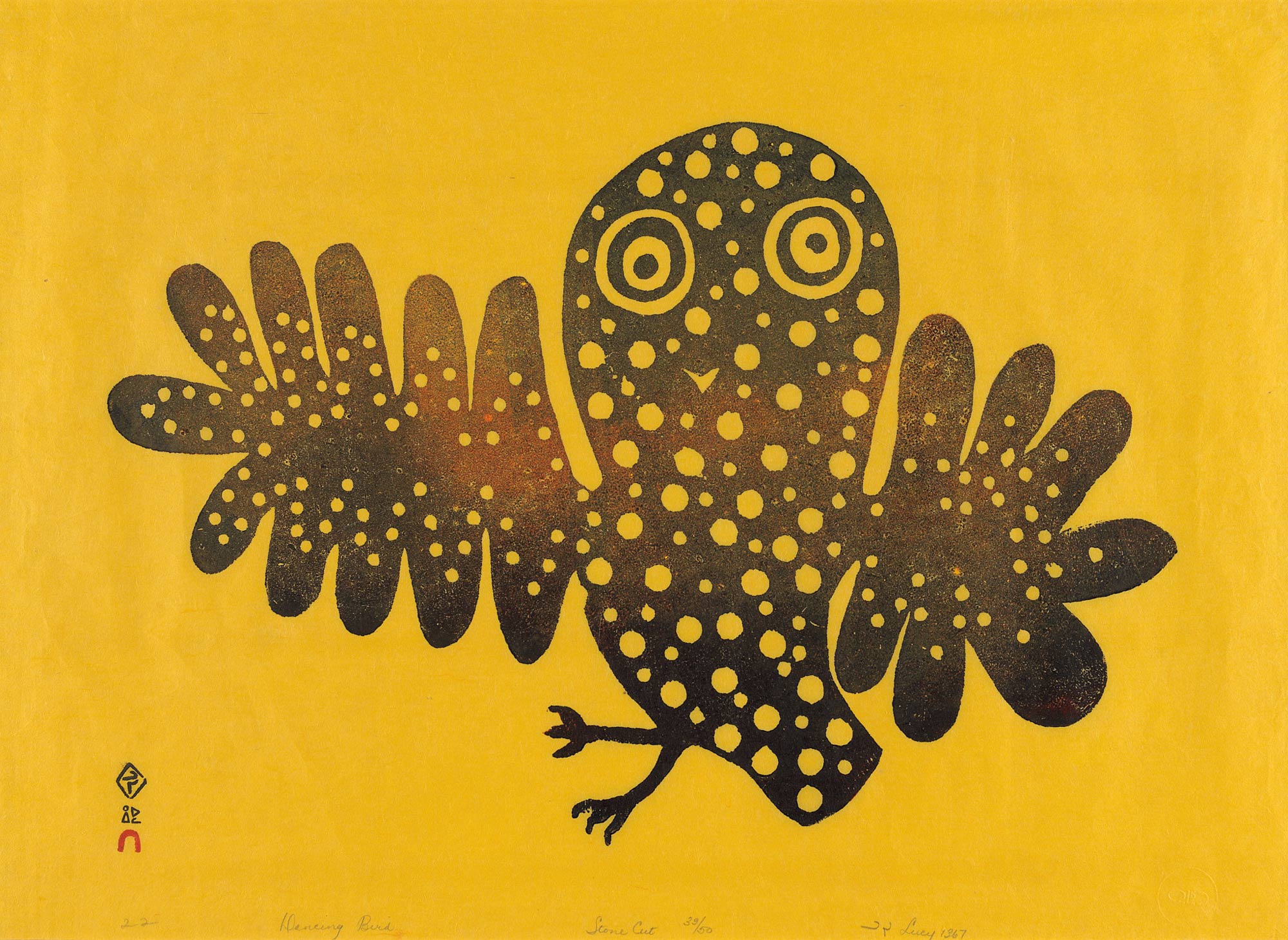
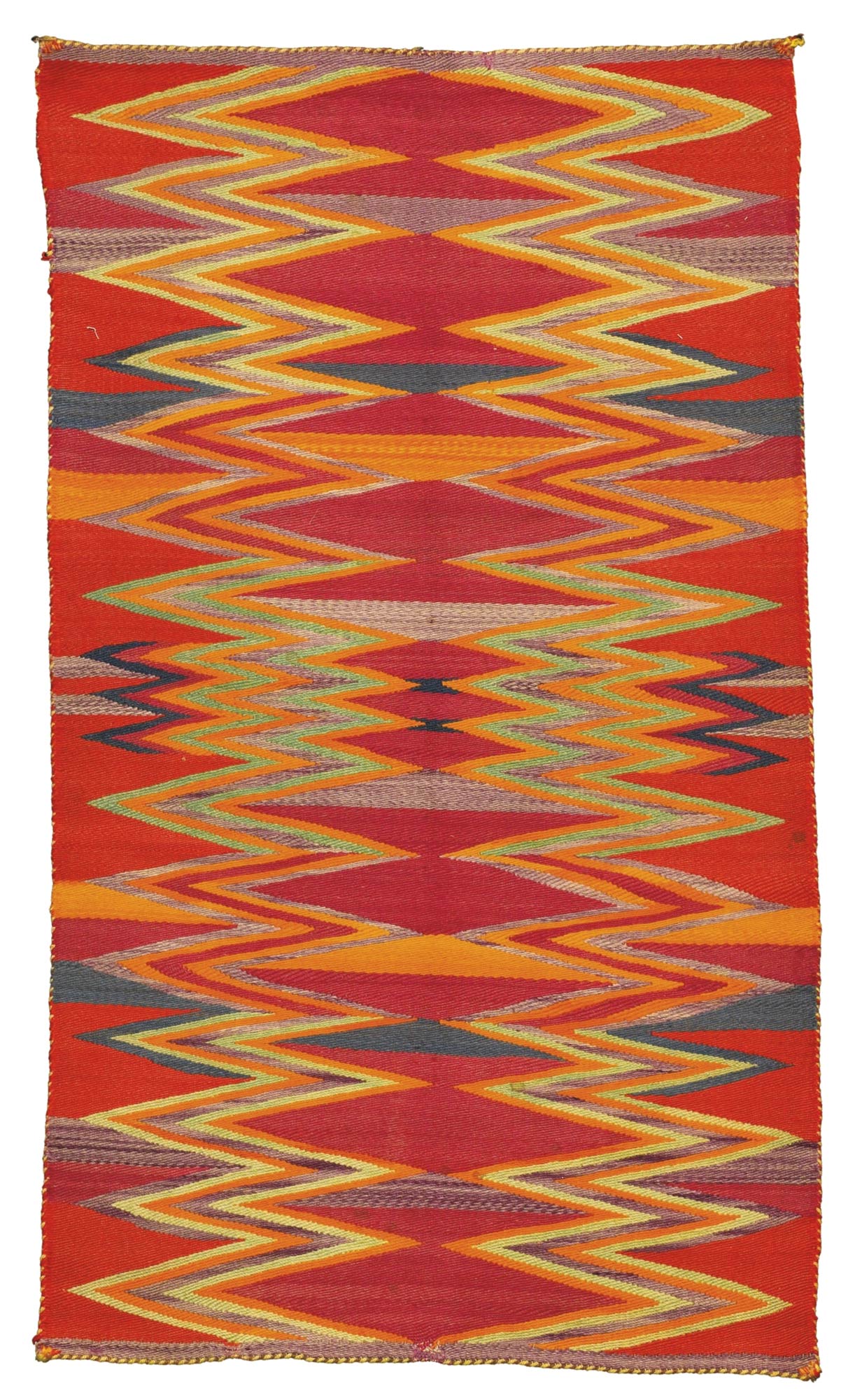
This is why it seemed like a good idea for an outside party like the Canadian Handicrafts Guild or the New Brunswick Handicraft Branch to enter Indigenous or Inuit communities and teach the artists there the ins and outs of Western craft while someone other than the community also handled the company finances. The problem was that this system often did not support Indigenous agency over their own financial affairs once they became successful. That said, contemporary Inuit do have agency over their art co-operatives should they decide to place trust in the art market system. Work generated at these co-operatives replaced ways of surviving that were (perhaps) no longer feasible once Inuit were placed in modern communities.
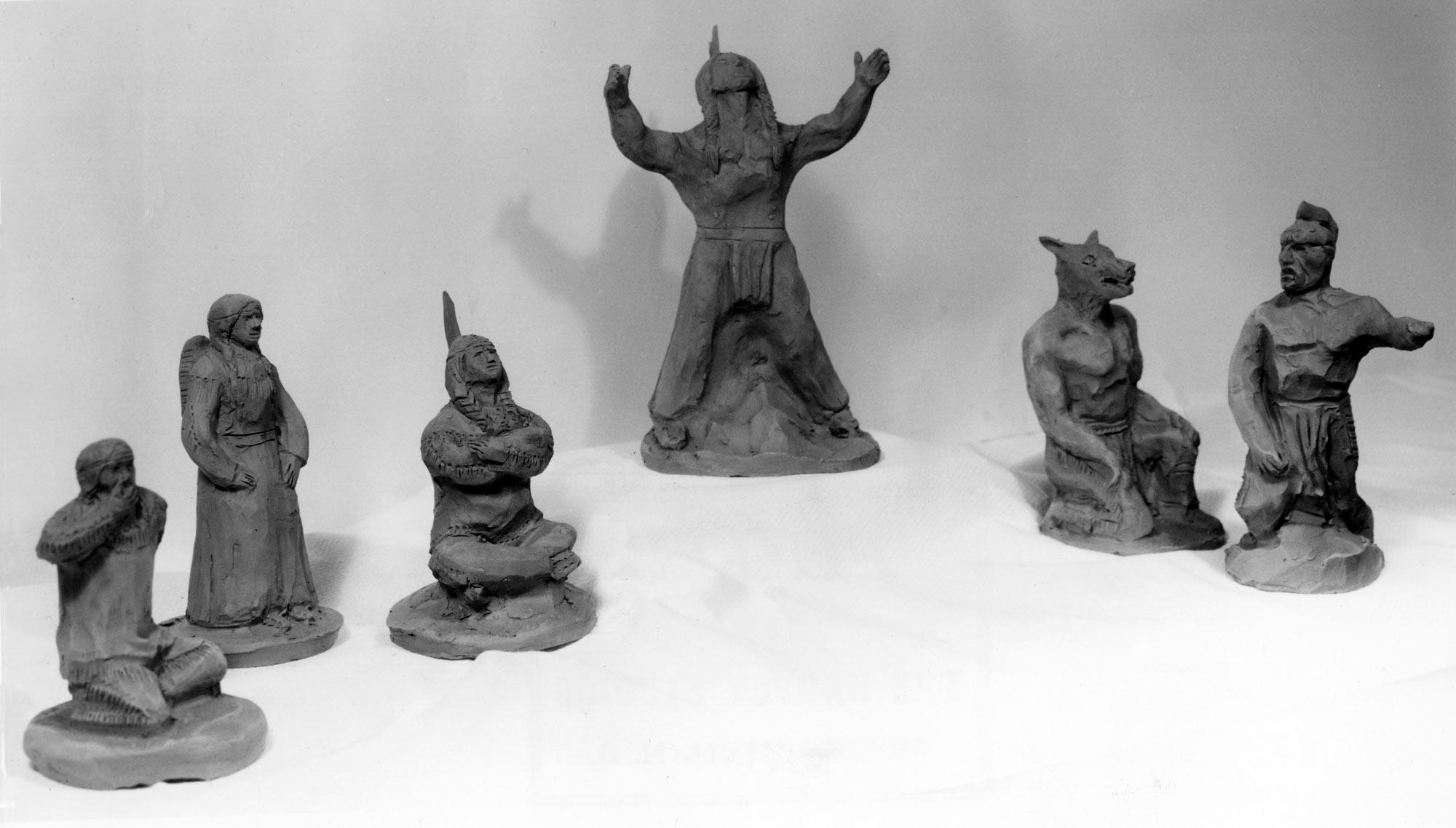
The MIC project was inspired by these co-operatives. On December 5, 1962, Ivan H. Crowell held a meeting with officers of the federal Northern Affairs department to discuss the national success of silkscreen printing by the “Eskimo” co-operatives. Crowell sought information on successful Inuit art production and distribution, and the copyrighting of sculptures and prints coming out of the North. He was also looking for information on the optimum number of copies artist Stephen Dedam should be making of his clay figurines.
However, Cree-Métis-Saulteaux scholar Jas M. Morgan points out that Inuit did not profit most from art co-operatives in their communities. Despite a booming multi-million-dollar arts industry, Inuit artists often remained poor. Morgan claims that James Houston (1921–2005) started the first co-op with the intention of exploiting Inuit makers for a growing industry dominated by “the desires of settler collectors.” Much like the Diné (Navajo) rugs in the southwestern United States, the exploitation of Indigenous art happened through lax regulation of copyright laws (or none at all) and control by non-Indigenous middle managers.
The MIC was a government-sponsored economic initiative in one of the largest and poorest reserves in New Brunswick. The co-operative started as a request for help from Crowell by the then-Chief of Big Cove, Anthony Francis, who said his people did not know how to capitalize on their handicrafts and needed help marketing themselves. Once Crowell decided the community possessed artistic merit, he agreed to help. The future of the MIC was under the control of the Handicraft Branch of the provincial government and Indian Affairs once grant monies and funding were secured. However good their intentions may have been in promoting Indigenous art and culture, the efforts of non-Indigenous arts professionals and government branches after 1950 to do so were fraught with contradictions.
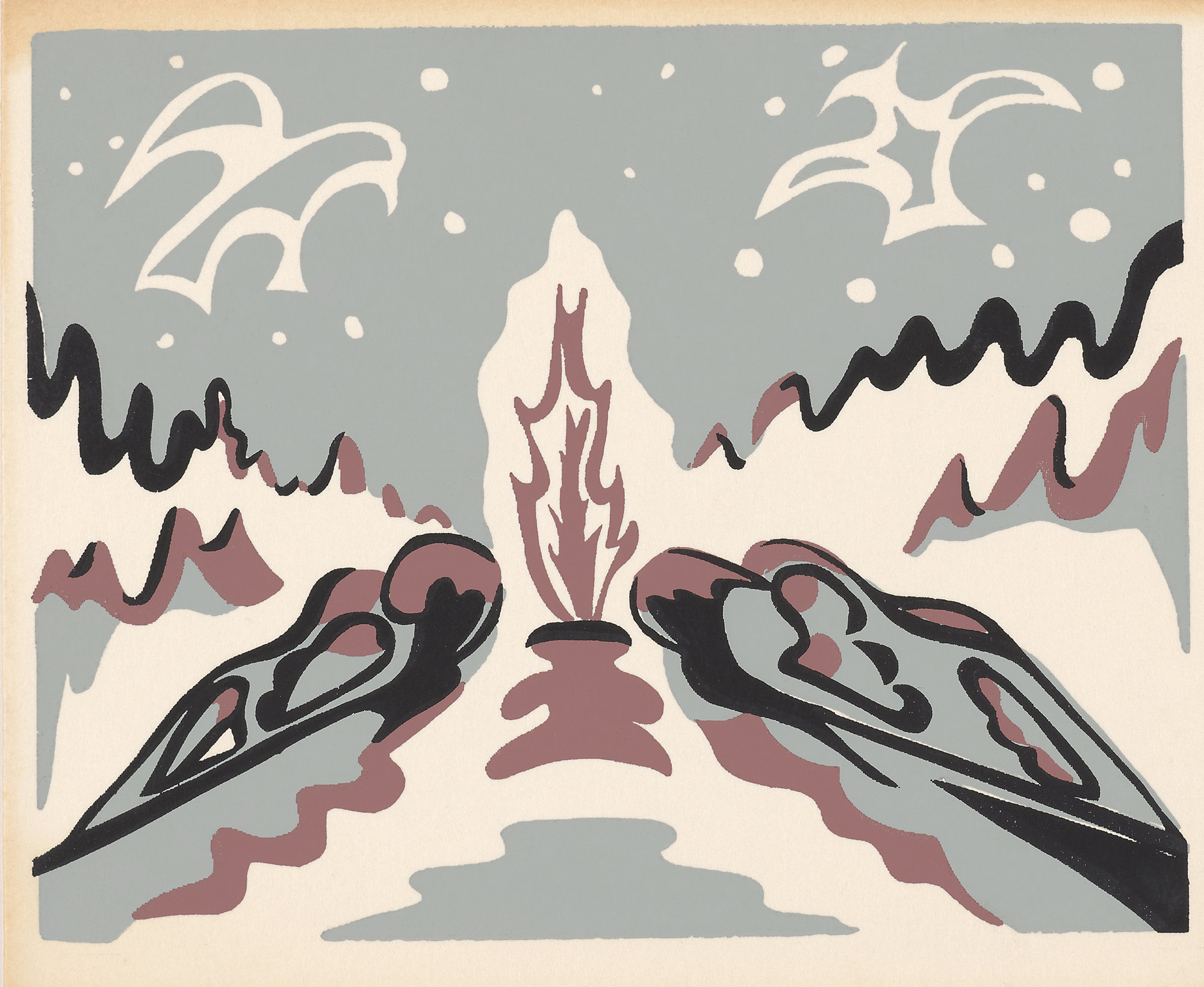
After the Second World War, Indigenous Peoples sought fair treatment and fought to preserve rights they were entitled to in- and outside the Indian Act. The assumption that “Indians were going extinct” was still present but slowly diminishing into the 1960s. On one hand, the Canadian state forcefully assimilated Indigenous Peoples into mainstream society. At the same time, government organizations asked them to perform their indigeneity for non-Indigenous people’s entertainment and desires. Collecting their stories and art to preserve the “other” became a sort of hobby. The MIC straddled this divide.
Reclaiming a Place in Canadian Art
The fact that in 1960s New Brunswick, Indigenous stories were fused with sophisticated graphics and superior production, and found a wide North American commercial audience, is incredibly significant. Many individuals are still living who worked for the MIC, and each carries fond memories from their experience. While the MIC story was contemporary, it was part of a continuum of Indigenous material ingenuity from pre-contact up to the present.
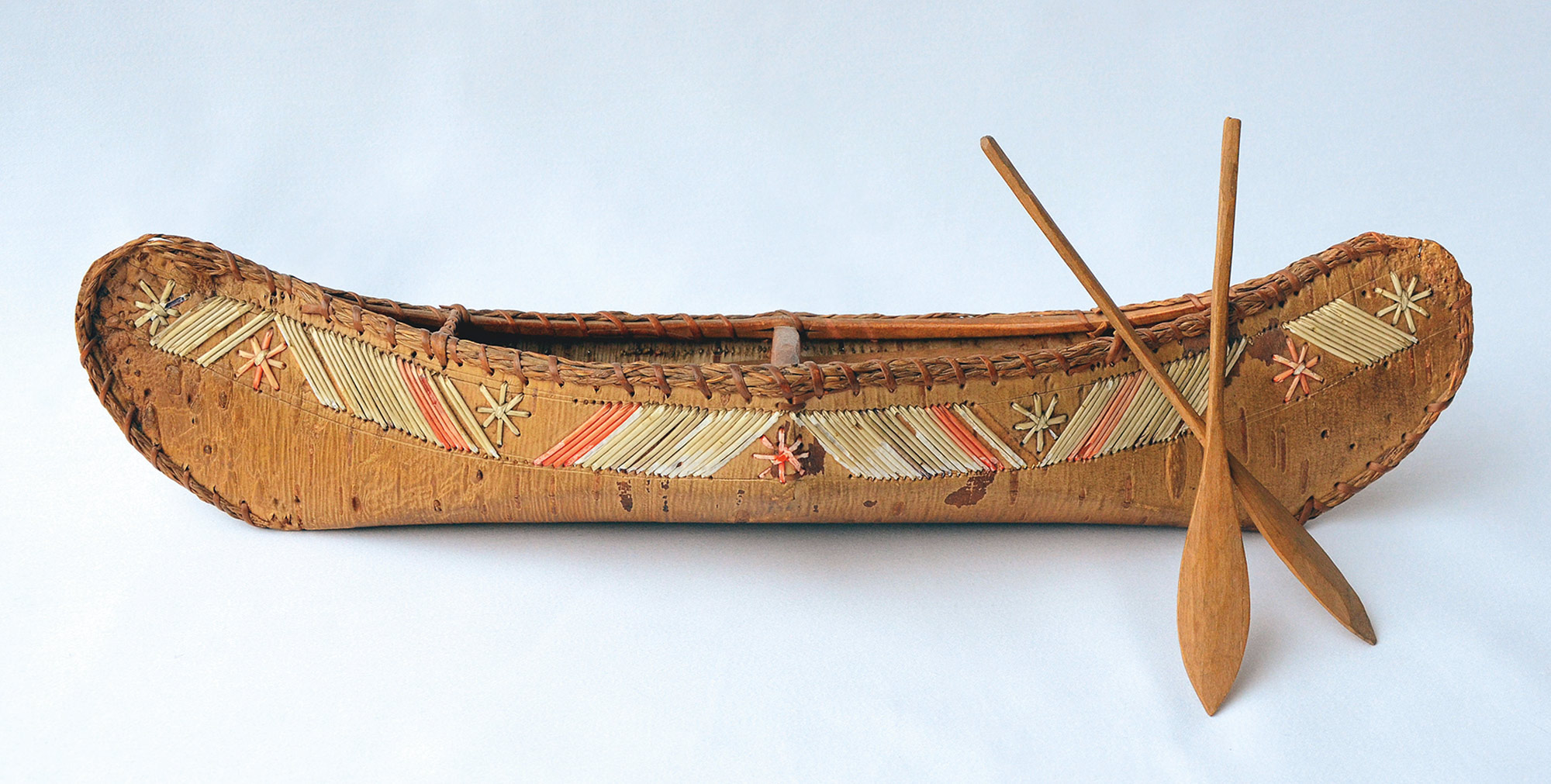
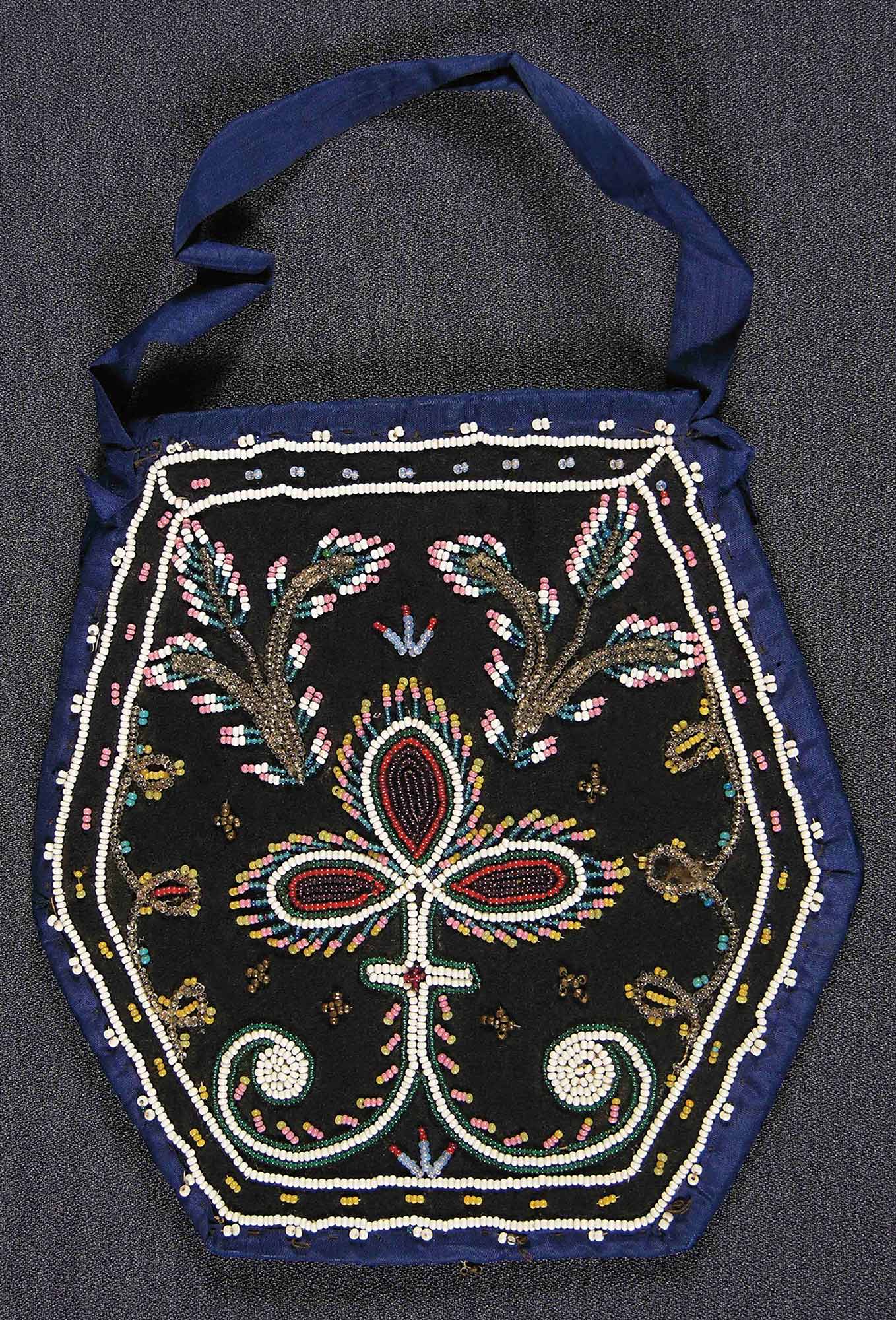
Accounts by early European explorers abound with descriptions of skillful Wabanaki makers and their beautiful handiwork. Author and lawyer Marc Lescarbot witnessed the impressive porcupine quillwork of the Mi’kmaq at Port Royal in 1606–07: “Coloured with red, black, white, and blue, which be the colours that they make, so lively that ours seem in nothing to be comparable to them.” In 1691, Récollet missionary Chrestien Le Clercq wrote of Mi’kmaw wigwams “ornamented, as a rule, with a thousand different pictures of birds, moose, otters and beavers, which the women sketch there themselves with their paints.” European travellers and explorers were inclined to collect objects from foreign lands, especially souvenirs. Through this, the art entered into European public and private collections. Over the ensuing centuries, waves of settlers in the Maritimes would continue to purchase Indigenous beadwork, basketry, canoes, and snowshoes that were second to none in quality and attractiveness.
The years between 1870 and 1950 are known as the “Reservation Period,” and mark some of the most aggressive assimilation policies ever practiced in this country. Indigenous sovereignty stood in the way of colonial progress and Canadian nationhood. First Nations “bands” or “reserves” were created, and the Indian Act was used to enforce the taking of Indigenous children from their families to residential schools. The relationship between Indigenous Nations and the Canadian state has been defined by the Act ever since. Wabanaki’k / Atlantic Canada was not exempt from these iniquitous decisions that would alter what had been a “nation-to-nation relationship” forever.
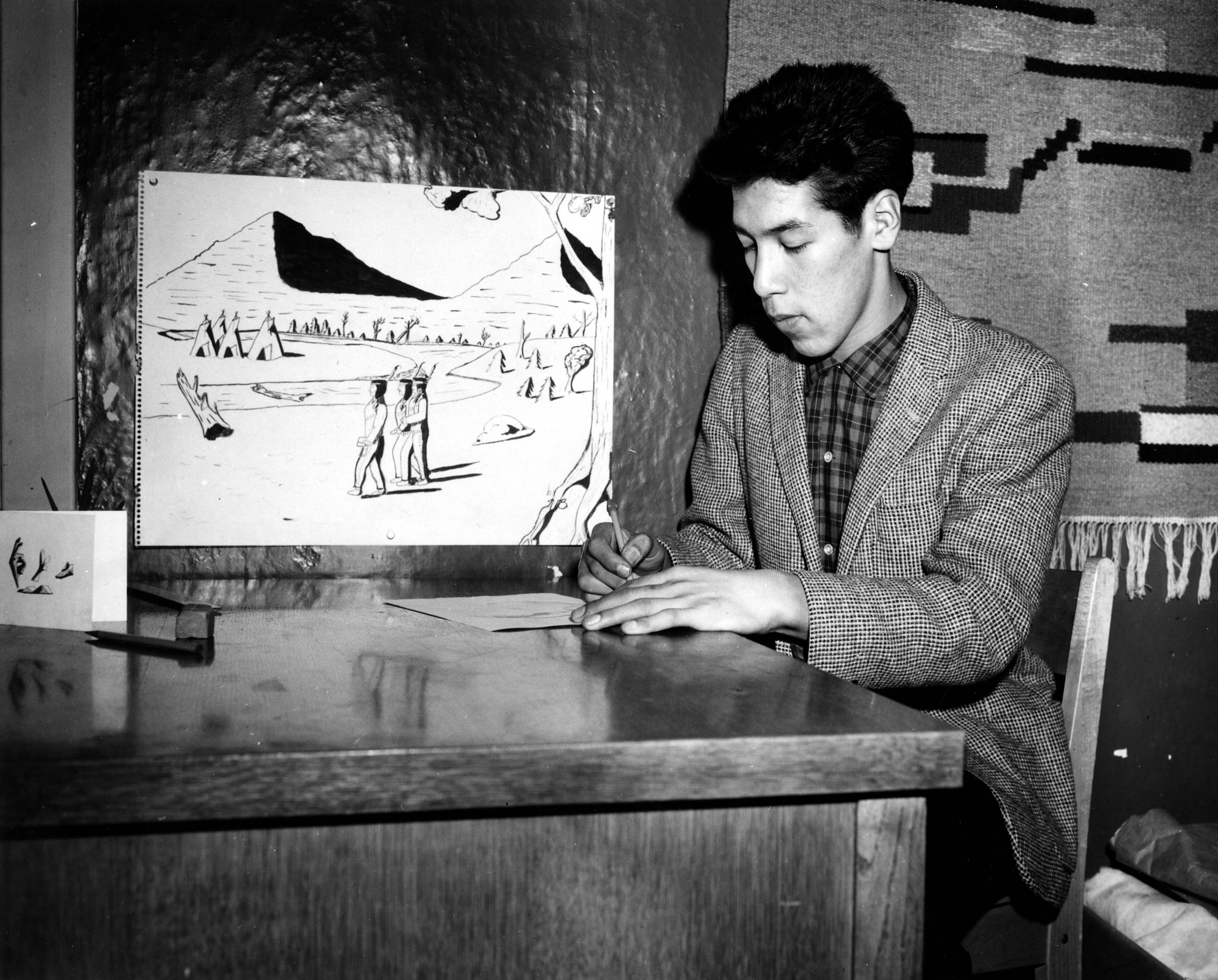
The 1960s were a pivotal era of social activism on Turtle Island, with the civil rights movement, Red Power, and feminism leading the way. Oppressive systems were widely challenged. The community members of Big Cove faced the same widespread challenges as other Indigenous communities in the province and across the country: poverty, racism, control from Indian agents, and high unemployment rates. Early MIC artist Vincent Barlow recalls few employers in the neighbouring towns of Rexton and Richibucto hiring Indigenous Peoples, forcing dozens of community members to find work in Maine’s potato or blueberry fields across the American border. As a purely economic enterprise, one can assume that introducing the proposed MIC handicraft studio at a public meeting in 1962 created excitement and optimism. Jobs would be created, and workers could stay in their own community, dependency on social welfare would lessen, and tourism would blossom.
This created tensions, of course. Gerald McMaster argues that our relationships to cultural objects start to change as they enter trade economics. Indigenous Peoples moved from being dependent on the land and water (their resources) to a foreign economic system founded upon concepts of possession, profit, and achievement that inevitably undermined Indigenous customs and values.
As well, “high art,” as reflected by Western standards of visual art, fine craft, and architectural traditions, does not readily embrace Indigenous art forms. The categorization of Indigenous art in Euro-American and Western art traditions is steeped in racism, with a classification built upon an image of the “primitive other.” It is as if to say: Indigenous art must be something else because Indigenous Peoples are “something else.” This outdated theory is still present in art history canons and sometimes blocks the artistic interpretation of art produced by BIPOC communities. Classifying Indigenous art as solely “craft” or “souvenir art” is deeply ethnocentric.
Allowing for all that, the artwork of the MIC (which was often dubbed “handicraft”) could potentially be considered fine art based on its modernist aesthetic. Individuals within the fine art world could appreciate it. It could also be appreciated by the community of Big Cove and the entire Mi’kmaq Nation, who held the work to its highest standards, and could relate it to petroglyphs, cartoons, scribbles in notebooks, and even Yahtzee cards. It is art in its own right, not because it fits into the modernist tradition but because it belongs to the visual language of the Mi’kmaq. Their artistic evolution should be appreciated and celebrated.
 About the Authors
 More Online Art Books
 Acknowledgements