
The story of the Micmac Indian Craftsmen (MIC) endures as a powerful symbol of creativity, survival, and return. What began as a local workshop in Big Cove / Elsipogtog became a cornerstone of Wabanaki artistic identity, linking tradition to modern expression. Born from resilience and collaboration, their art continues to shape how Indigenous stories are told and remembered. As Elder Stephen Dedam reflected toward the end of his life, “They didn’t destroy my mind or my soul… I’m still here.” That defiance, that creative spirit, lives on in every artist who follows. The MIC’s legacy reminds us that art is not only a means of survival but of resurgence—restoring memory, language, and belonging to a people who were never lost, only waiting to be seen again.
Dissolution
By the end of 1966, the government would pull the plug on the MIC for what, in retrospect, reads as bureaucratic impatience combined with indifference to the success the MIC had achieved with a marginal financial investment. In his 1966 Annual Report, Crowell stated: “The Indian Affairs Branch felt that the Micmac Indians had reached a stage where they could continue on their own. Also, it is their policy to help the Indian to integrate and to manage their own affairs—the step taken was in line with their established policy.”
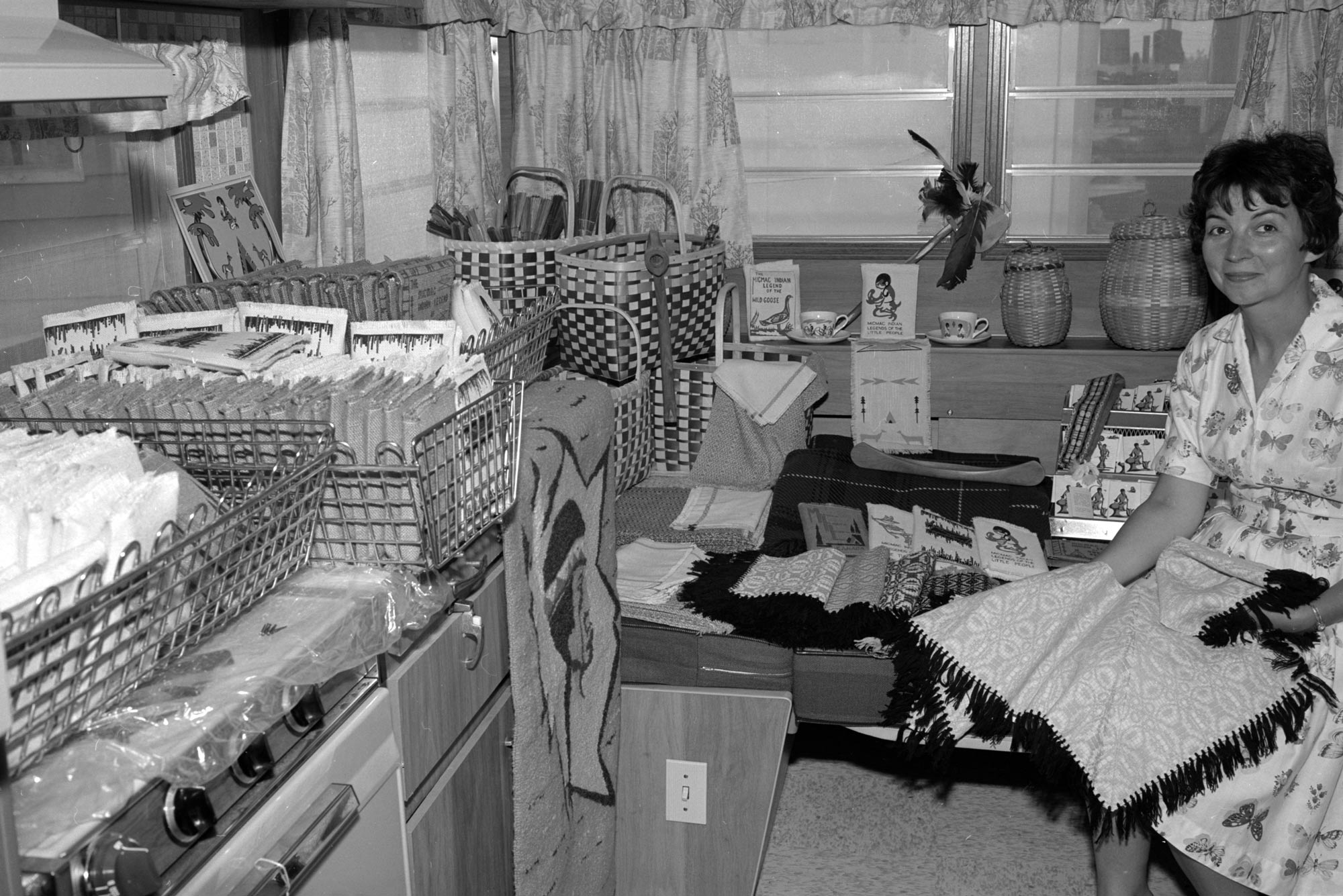
The exact sequence leading to the MIC’s dissolution is hard to work out, as it was more of a slow erosion than an overnight closure. Stephen Dedam was asked in 2019 about the events surrounding the end of the MIC. Although he did not recall the specifics, he did speak to it being victim to a palpable decay once the funding was cut: “There were people working on there pretty good and then all of the sudden they just start falling apart, falling apart, and just one guy was working. And finally nobody.”
The handicraft shop was still running in the late 1960s under the direction of the Big Cove Band Council, although its contents and sales appear to have been handled erratically. In July 1967, a Moncton chapter of the Imperial Order Daughters of the Empire (IODE) was selling MIC products out of a camping trailer parked next to the Trans-Canada Highway tourist bureau. Proceeds were admittedly going to Big Cove’s school, but the authenticity and the artisan-to-buyer connection was absent. As the MIC operations gradually fractured and fizzled out, it is astonishing how fast media and government mentions of the studio vanished. There were no newspaper or magazine mentions of the MIC after 1967, even as a model of past success. The organization didn’t exist long enough to hold its place in the public memory, or for their wares to become the artistic prizes they deserved to be.
Rise of Wabanaki Modern
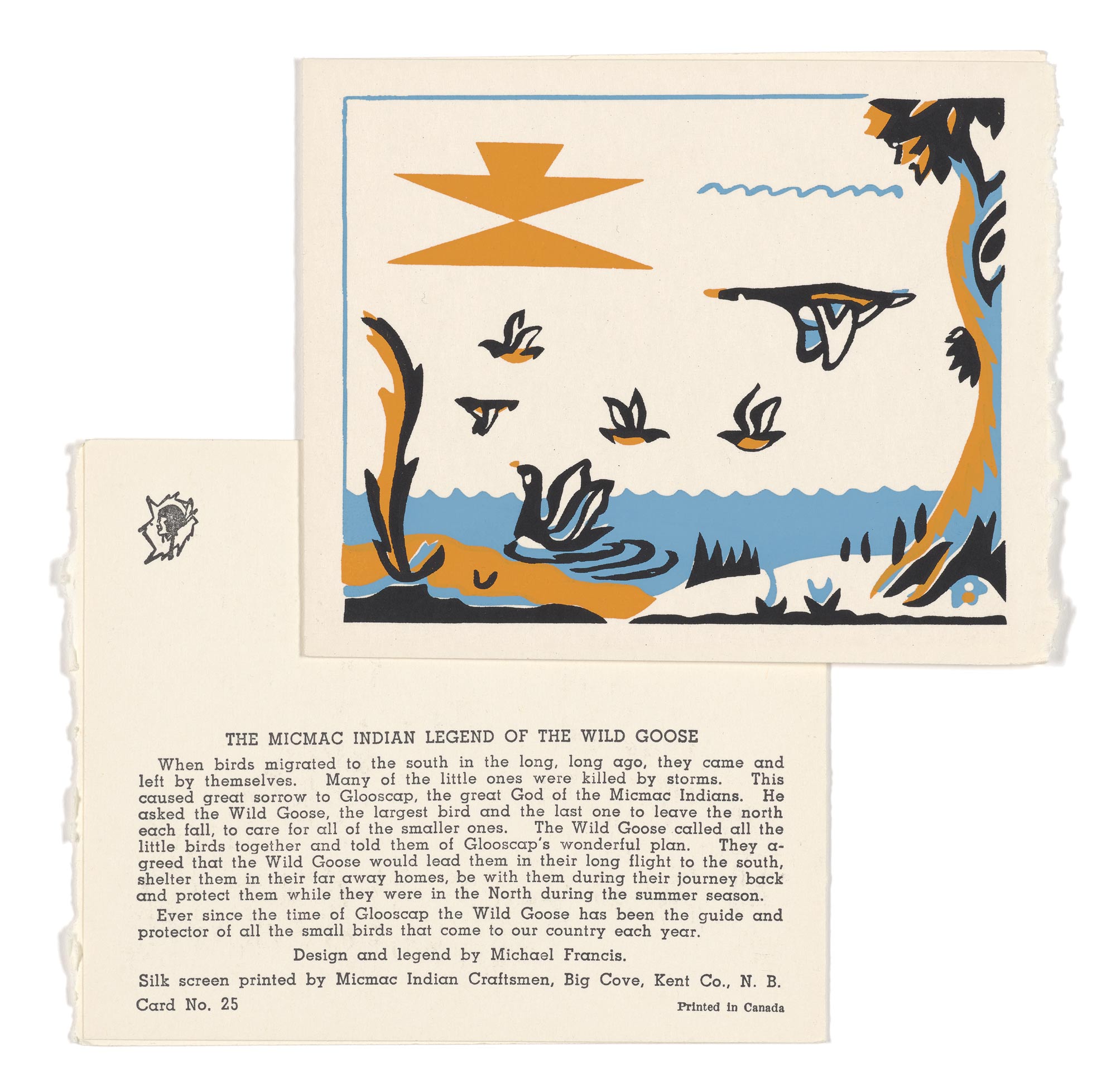
The MIC was a model for how the Indigenous arts in 1960s and 1970s Canada could flourish, one that created a bridge between the old and the new. As a hybrid of modern and traditional visual forms aligned with Mi’kmaw stories, their work spoke with a voice that was tangibly creative and innovative but had a respect of tradition at its heart.
Gerald McMaster notes that “modernism became a conscious, forward-looking movement that wanted little to do with tradition, and it was characterized by always thinking in terms of the future, a tomorrow that is forever on its way.” However, Indigenous artists in North America were “attempting to merge the legacy of individualism with the dynamic and affirming bond of community. They no longer see the appeal of being marginalized iconoclasts but prefer to become active participants, where community and individual growth are not incompatible but complimentary goals.”
The MIC were an important instance of cultural celebration in a province that had, up until the mid-1960s, rarely treated the Indigenous population with much more than disdain and ignorance. The MIC were one of the most potent tools in the Maritimes for fighting the racism and public bias that existed in 1960s Canada. At that time, many considered Indigenous groups as remnants of the past. The MIC did not deny the cultural or ethnographic context of their art; they expanded it into the language of modernism so everyone could understand its value.
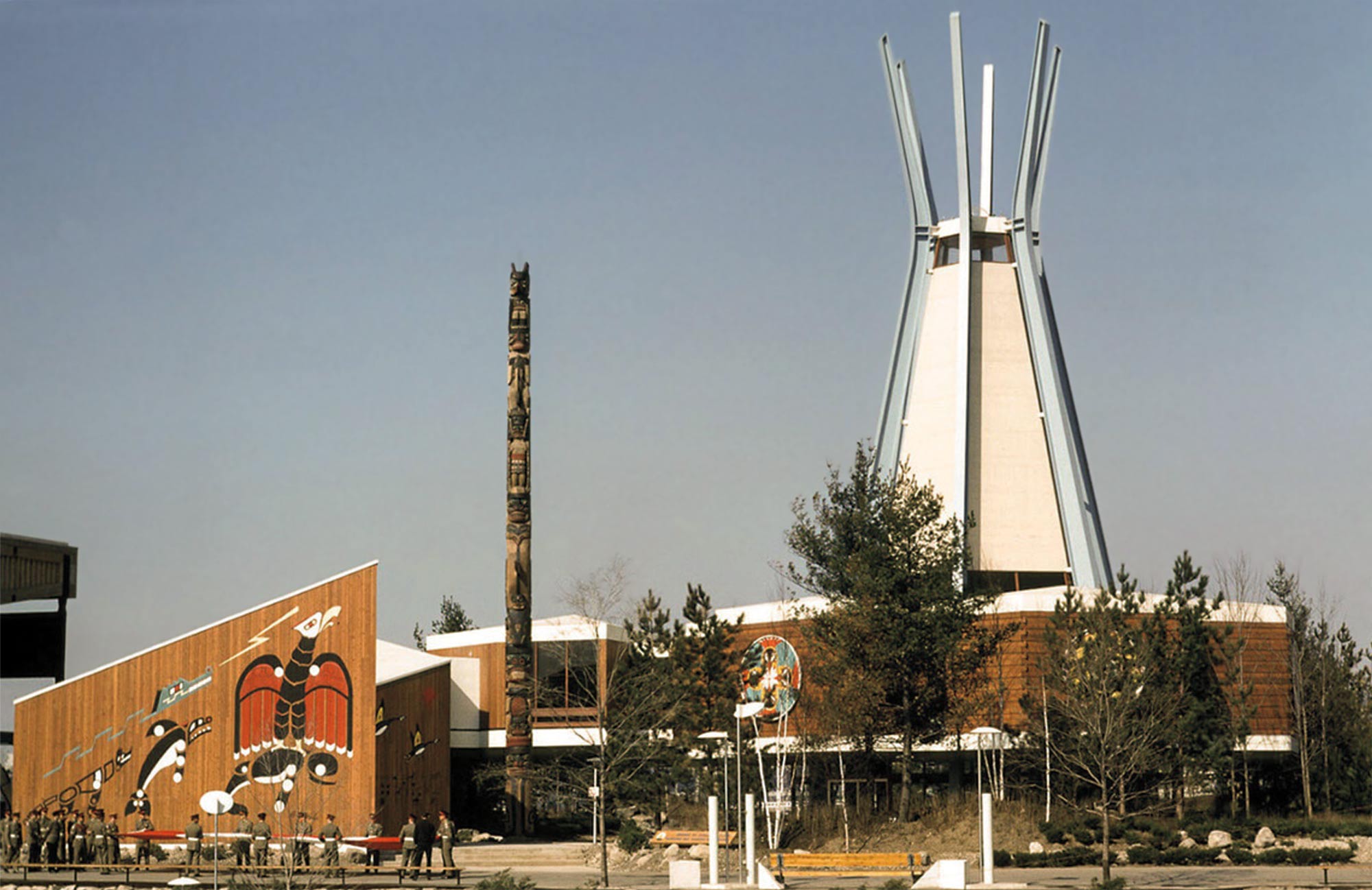
Michael Francis was asked to be a part of the Indians of Canada pavilion at Expo 67, which was curated by a nationwide consortium of First Nations and pulled no punches when it came to telling the story of Canada’s colonization. Though Francis declined to participate, for unknown reasons, an image of him creating one of his paintings was used in an immersive passage of black and white photos of Indigenous occupations and workers that visitors walked through in the pavilion. Francis had taken part as an invited artist in the groundbreaking exhibition in Ottawa the year before that helped assemble the pavilion’s contemporary art. Here, his work was featured along with that of Norval Morrisseau (1931–2007), George Clutesi (1905–1988), Francis Kagige (1929–2014), and others.
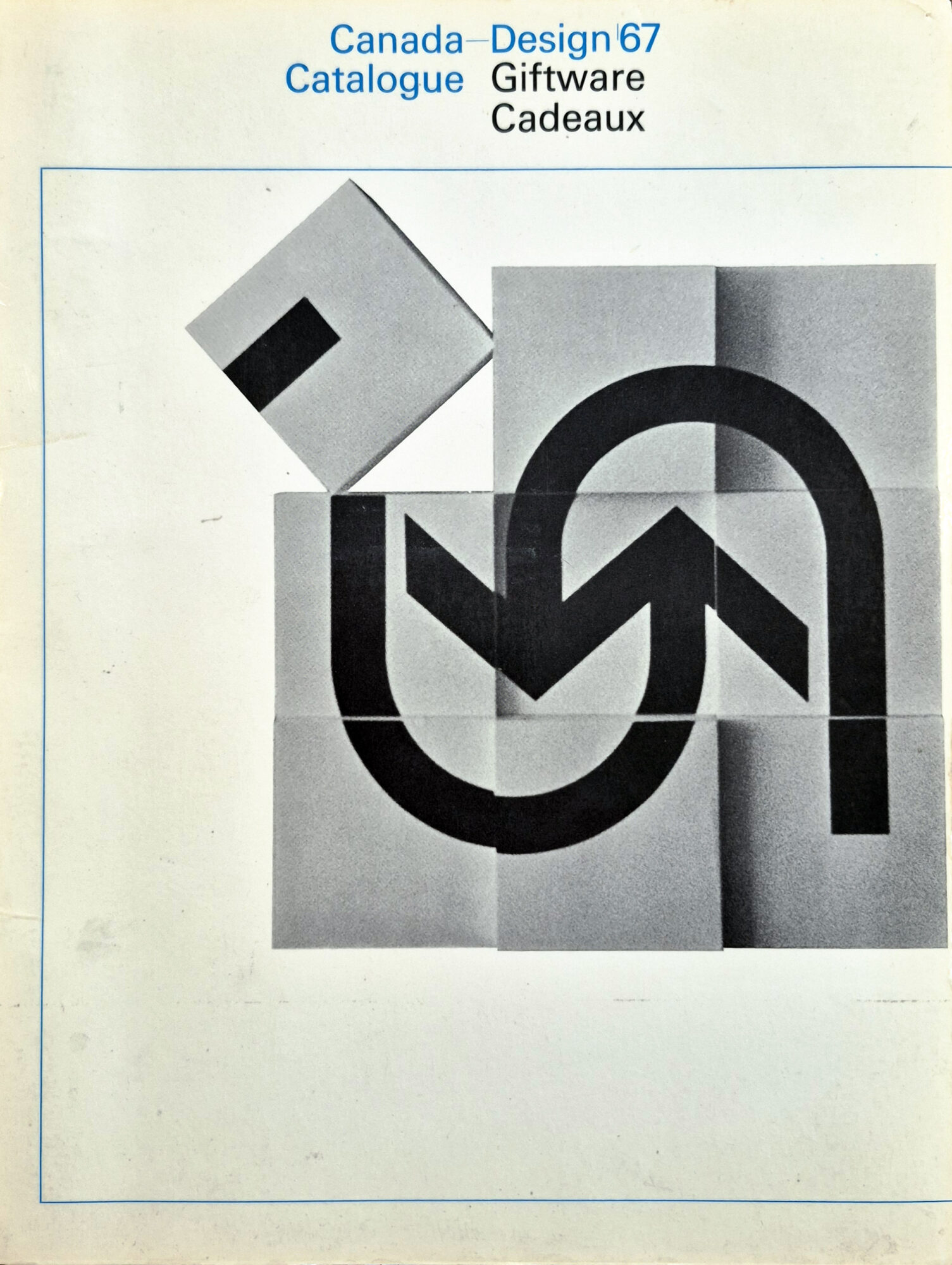
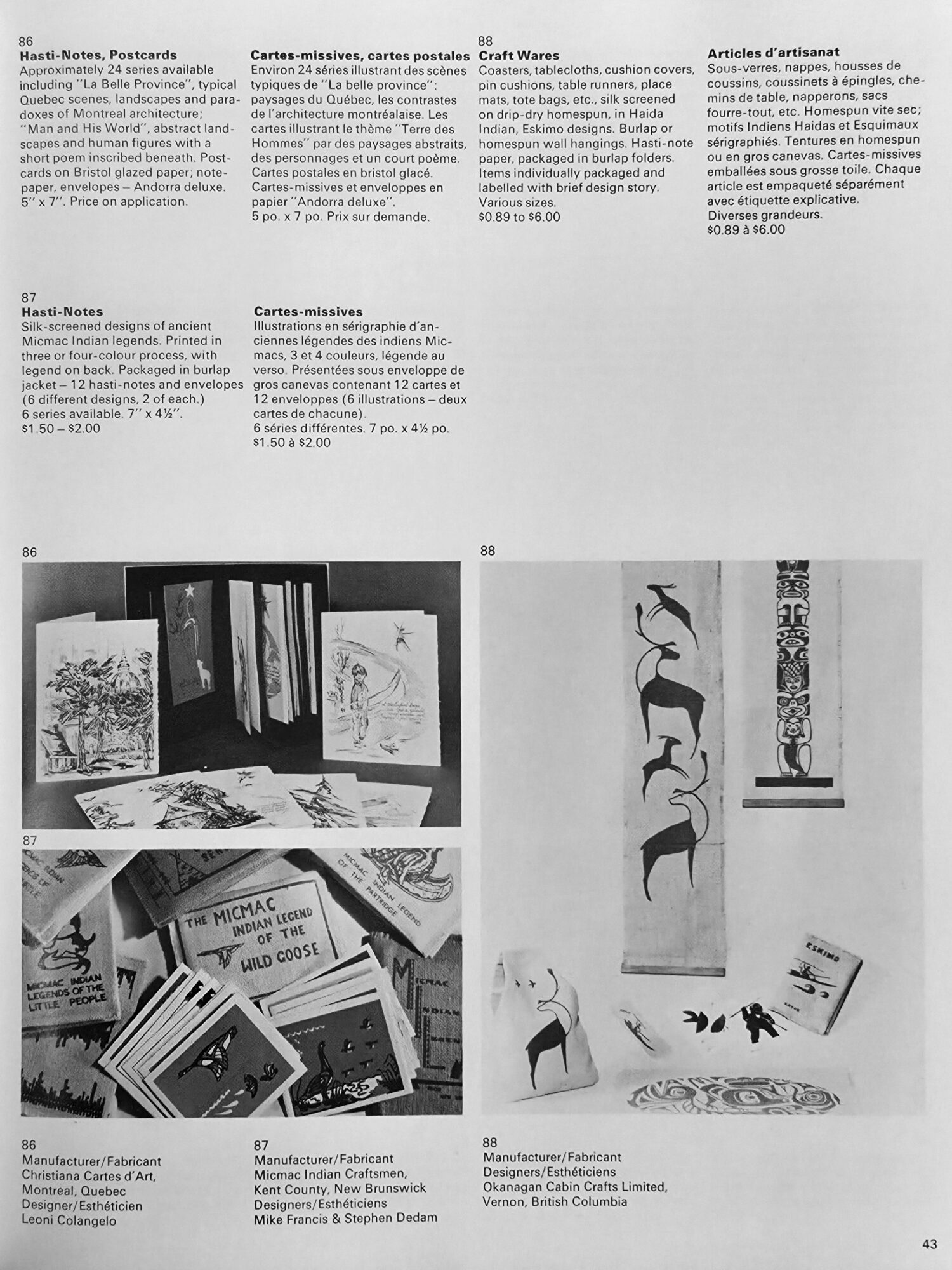
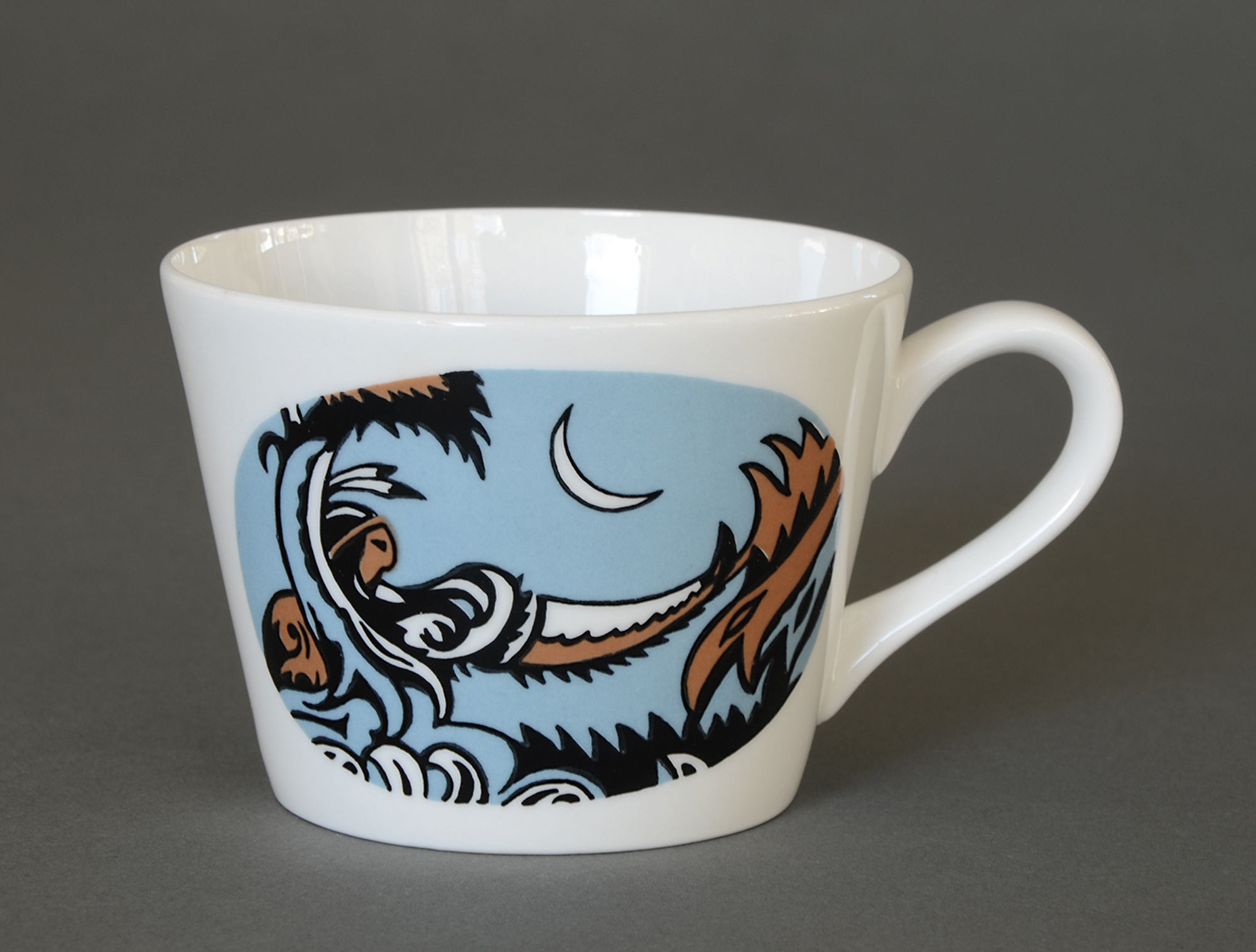
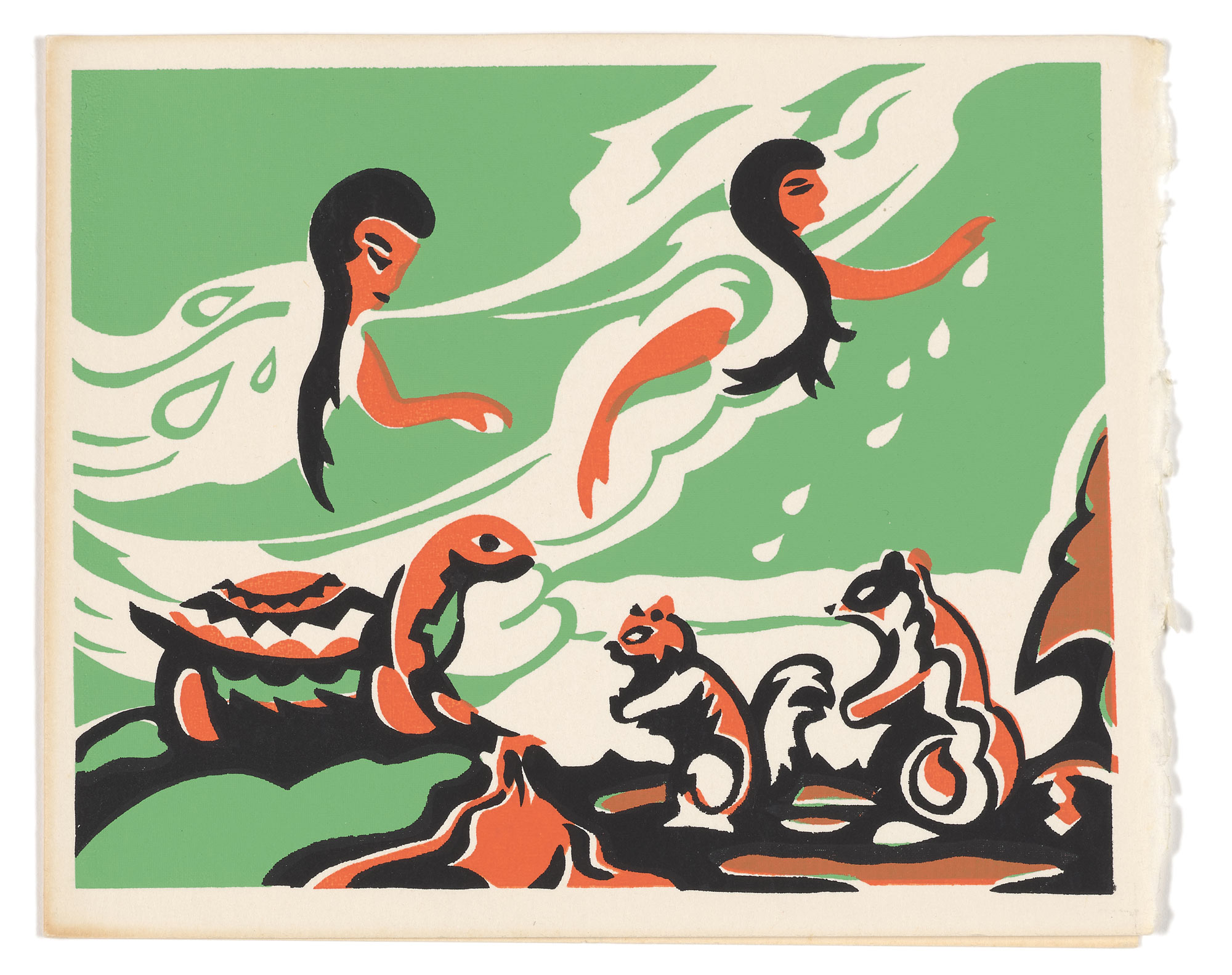
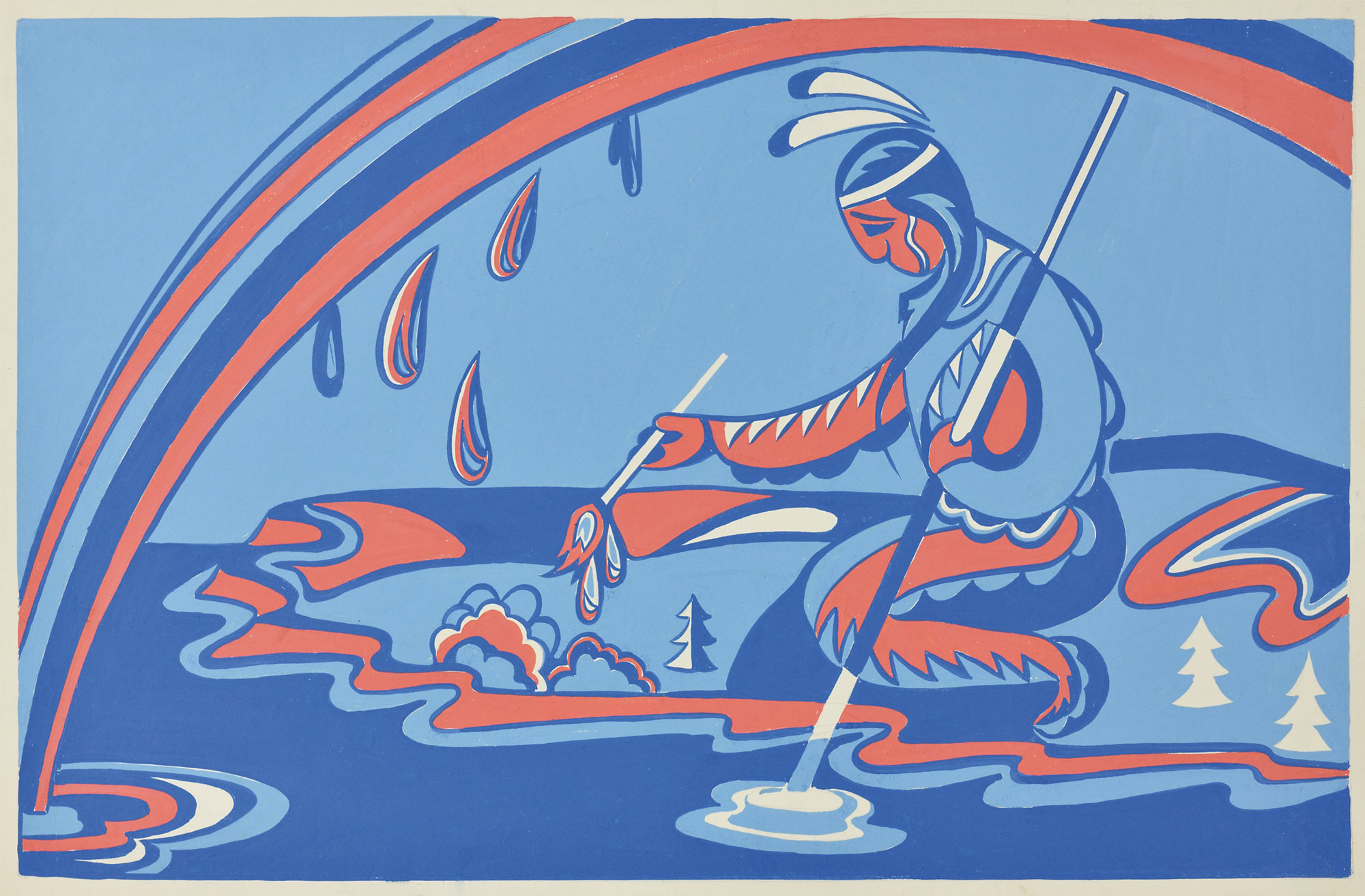
In 1966, the MIC won a prestigious Canada-Design ’67 Award of Excellence from the National Design Council for their Hasti-Note card sets. The awards were a major initiative supported by the Department of Industry and the National Design Council, aimed to promote Canadian-manufactured products and celebrate design excellence leading up to the Centennial year. From thousands of submissions, a select few received awards for their innovative designs and were published in the most extensive catalogue assembled up to that time of Canadian-designed products.
The elegant and modern Canada-Design ’67 Catalogue: Giftware/Cadeaux was widely distributed, sharing the MIC Hasti-Notes and other fine craft and giftware products to domestic and international markets. The award-winning objects were displayed at Expo 67 within a Canadian Design ’67 section, as well as at the Design Centre on Bloor Street West, Toronto in 1966 and 1967.
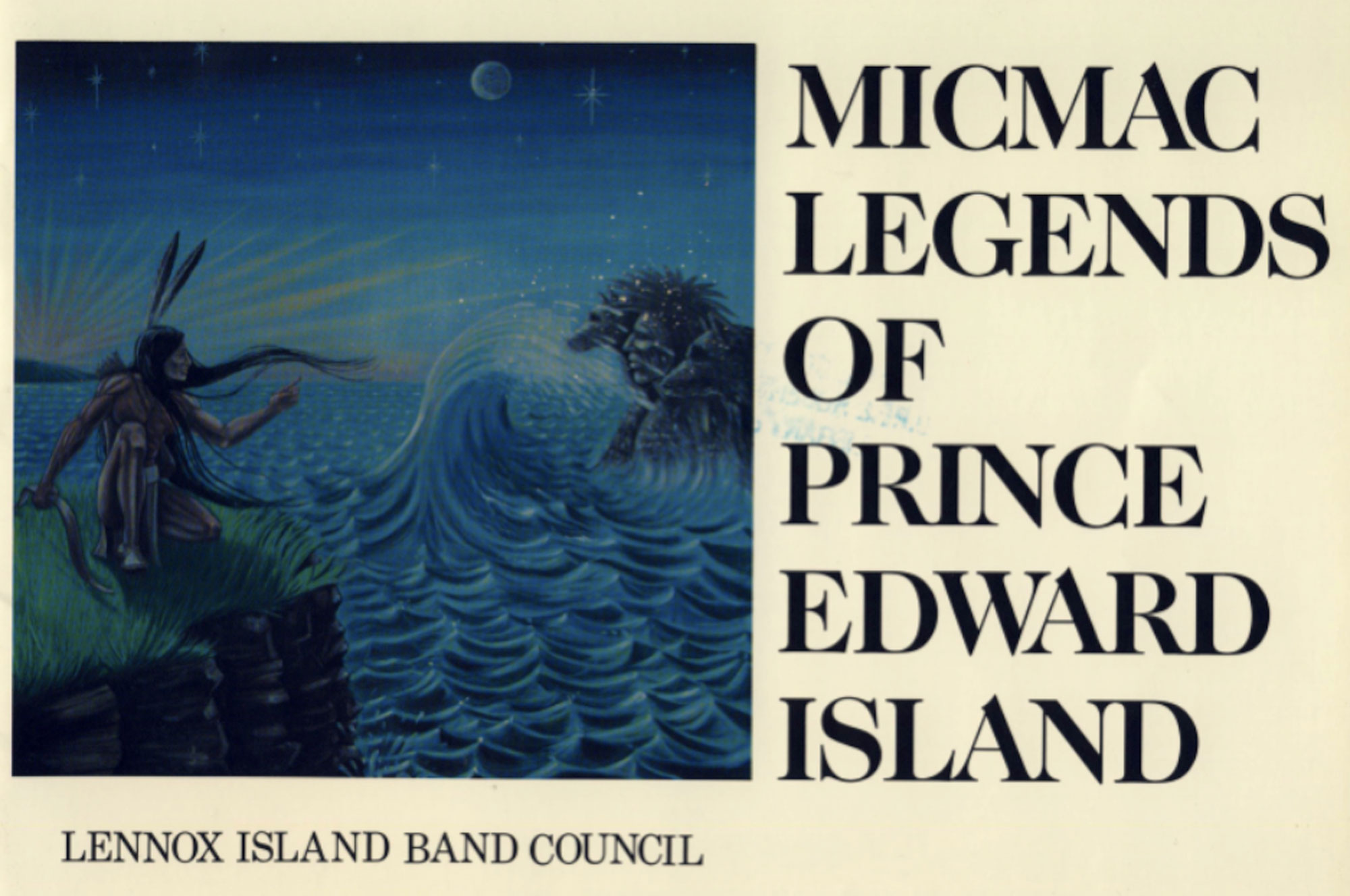
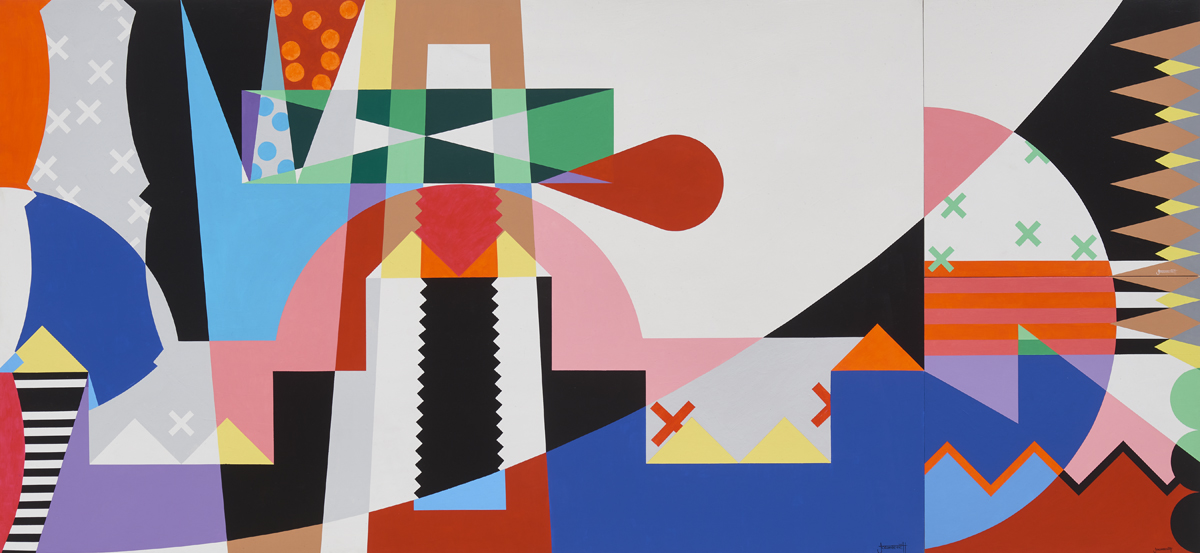
The MIC studio burned to the ground in the early 1970s, the final blow to the co-operative studio’s production. But even though the MIC was no more, Big Cove’s artistic spirit manifested itself in other ways. In 1972, PEI’s Lennox Island First Nation invited Michael Francis to paint a series of Glooscap murals on the walls of their Parochial House and museum. These later formed part of the illustrations for the book Micmac Legends of Prince Edward Island by John Joe Sark. Francis would later paint several large panels for the Big Cove band office in the late 1970s, as well as a large war memorial mural in northern Maine.
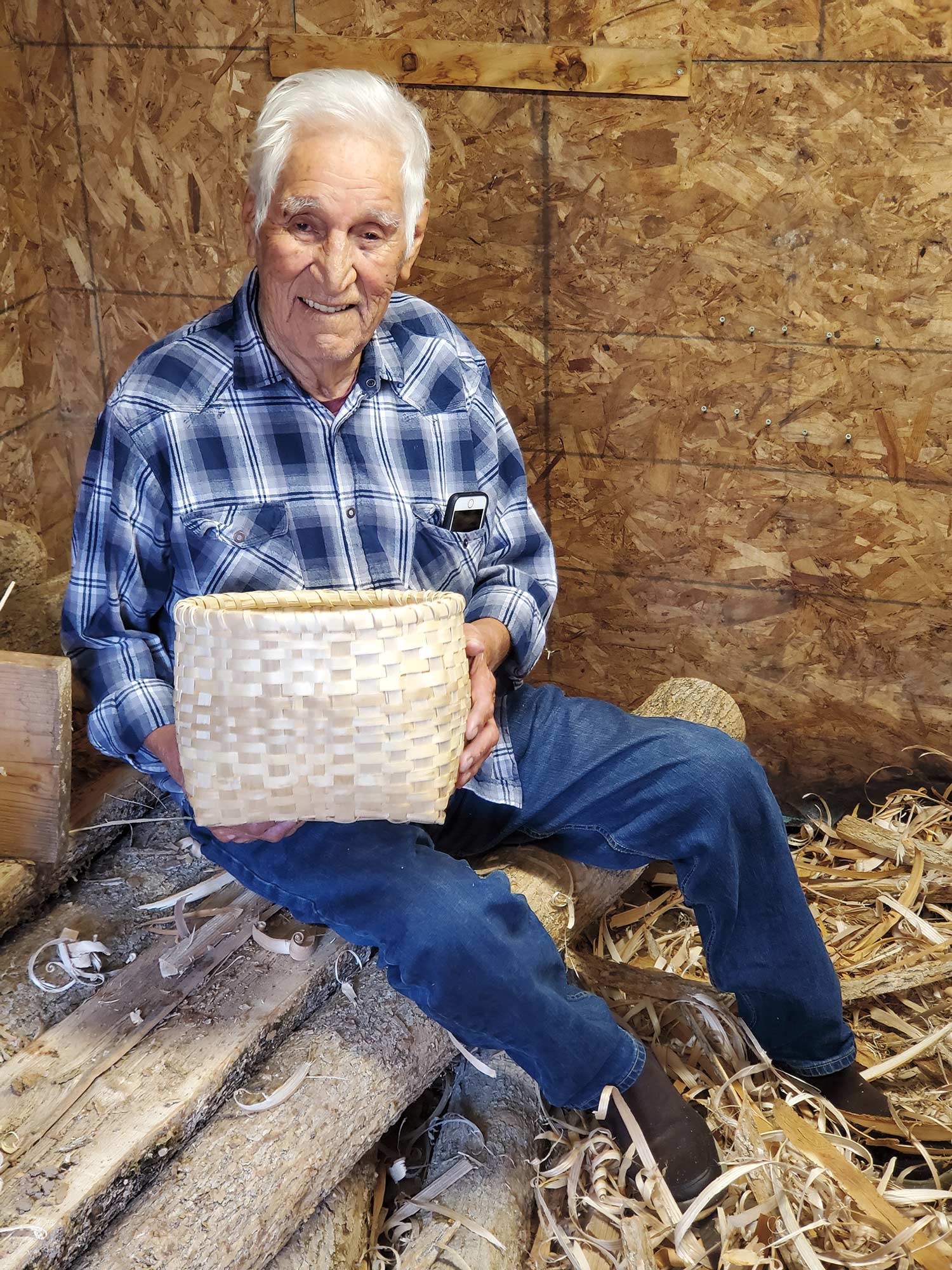
Inspired by the precedent of the MIC, a younger generation of Big Cove artists found widespread success in the 1980s and 1990s. Brothers Roger and Luke Simon both became accomplished artists recognized in Canada and the United States. Some former MIC artisans garnered accolades decades after it closed. Joe John Sanipass worked at the MIC and subsequently became one of the most respected basket makers and teachers in Elsipogtog. He won the Pioneer Award from the Tourism Industry Association of New Brunswick in 2017.
With the need to bring his stories to a new generation, in 1991 Michael Francis and Ontario filmmaker-ethnographer Franziska von Rosen made the film Micmac Storyteller: River of Fire. Recorded around Big Cove / Elsipogtog, Francis talked about his childhood and the importance of stories and recounts the tale of the Mi’kmaw Sacred Fire. That same year, artist Shirley Bear (1936–2022) affirmed in the NFB film Kwa’nu’te’: Micmac and Maliseet Artists, “When we look at history through all time, we don’t always remember the politics of people. But what we do see of history is the artwork, carvings, writings, the songs that are left… It’s important for the people who are in power to start respecting that.”
The MIC’s efforts gained national and international attention during the 1960s, while never losing sight of their communal Mi’kmaw identity. They deserve to be highlighted as historically significant and framed within the canon of Canadian visual art, fine craft, and culture. Their shaping of a Wabanaki artistic foundation at a time of rapid cultural change has been overlooked for too long, but there is little doubt that the recent wealth of successful Indigenous visual artists in Atlantic Canada—such as Ursula Johnson (b.1980), Alan Syliboy (b.1952), Jordan Bennett (b.1986), Emily Critch, Meagan Musseau (b.1990), Percy Sacobie (b.1972), Ned Bear (1954–2019), Tara Audibert, Shane Perley-Dutcher (b.1976), Francine Francis (b.1965), let alone Jeremy Dutcher (b.1990) in music—continue their legacy.
The Women of the MIC
The MIC narrative focuses intently on the artistic contributions of Michael Francis, Stephen Dedam, Michael Dedam, and Vincent Barlow. It would be wrong, however, not to acknowledge the women who helped make the MIC a national success story behind the scenes. Sherry Farrell Racette’s iconic text I Call Their Names in Resistance: Writing Aboriginal Women in Canadian Art History 1880–1970, inspires critical questions, such as “Where are the women in the MIC storyline?”
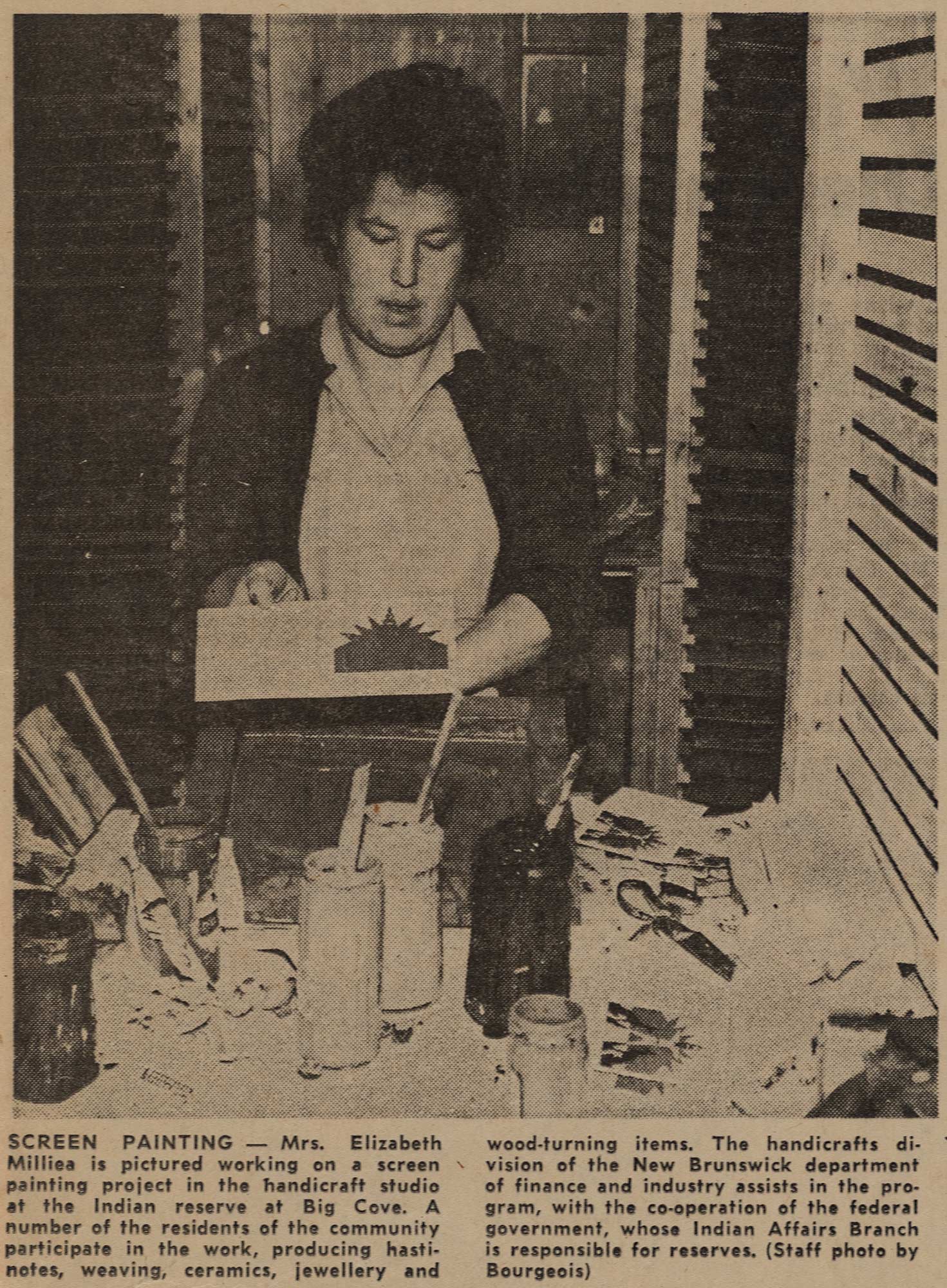
Too often, recognition of Indigenous women as artists in this period becomes lost thanks to the “faceless” categories of “craft” and “ethnographic material culture” that their work falls into. Women makers are too often missing from museum labels, and their voices drowned out by men’s. The MIC men became “designers” of the artwork and the public face of the art cooperative. The MIC studio women were not considered artists so much as labourers in the handicraft operation. Similarly, the efforts of Irene Long (employed by the Handicrafts Branch as the day-to-day MIC manager, instructor, and bookkeeper) go virtually unnoticed compared to Dr. Crowell’s. He was frequently interviewed in the press and asked for his take on the MIC, whereas Long, who lived in the community, was relegated to a footnote.
Instead, we need to see the labour of those Mi’kmaw women in the MIC who produced those thousands of Hasti-Note cards as a form of activism and resistance to white-dominated art market spaces. Mi’kmaw women in the MIC also produced jewellery, regalia, and copperwork; pulled the silkscreen prints; and hand-made the packaging for the cards. As their work was intertwined with difficulties securing childcare, they sometimes worked from home.
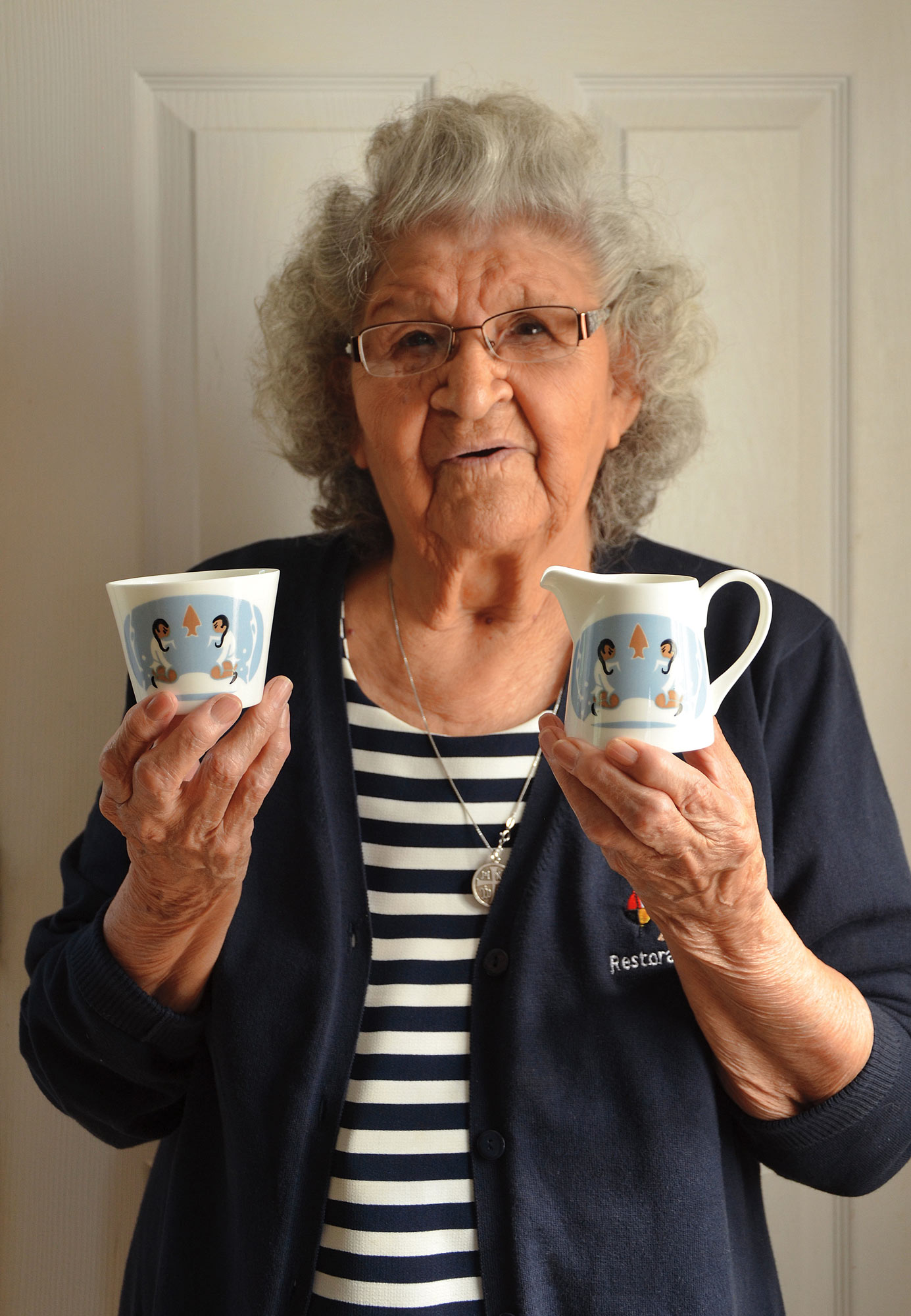
Consider Jane Dedam. The sister of Eva Milliea and Michael and Stephen Dedam, and cousin to Michael Francis, she took the initial training provided after the first long-ago community meeting at Big Cove and worked for the MIC from its inception. When the MIC started, there were eleven local people involved. She began in jewellery and copperware then moved to painting and sketching. She enjoyed the workshops and thought they were rewarding and fun. Soon, jewellery was put aside to focus on the success of the Hasti-Note cards, which Dedam helped to print. Her sister Eva and sister-in-law Elizabeth Milliea cut the stencils to produce silkscreens by hand. Then they would mix the paint for each colour on the card. Dedam says she was the one making burlap cases for each pack of cards, sewing thousands of them and silk-screening the designs. She was permitted to work on them from home so that she could take care of her children. Jane Dedam’s contributions to the MIC do not go unnoticed. Her work within the MIC benefitted her community’s storytelling on a national stage.
An Enduring Story
The story of the MIC matters because it lives on through community members, their families, and memories. The values and worldviews embedded in the art of the MIC bring community members closer to their spirit and authentic selves. These stories are not only part of the collective identity of Elsipogtog, but all of Wabnaki’k.
Now Elders, there are still several MIC artists living in the community. Their descendants may only know pieces of this story, but knowing it in its entirety will have an impact on future generations. When Stephen Dedam was asked in a recent CBC interview what he wanted young artists to take from his art, he answered, “Pure mind and heart. That’s one thing they did not destroy. They didn’t destroy my mind or my soul. They tried, but I hang on to something that’s mine … And I’m still here.”
By retelling the story of the MIC artists, it will become ingrained in the art history of New Brunswick and the communal history of Elsipogtog. The national and international attention the MIC gained is an influential piece of history. Perhaps few of the MIC artists knew they would be leaving such a legacy. Most of them were simply working to make ends meet. It is hard not to be critical of the time in which the MIC were completing their work, because of the contradiction that Indigenous art and culture in 1960s Canada were becoming valued in the mainstream while paradoxically, Indian residential schools still existed and the Sixties Scoop was in full effect. The MIC co-operative existed, in part, as a government operation seeking to extract intellectual property and to capitalize on it. Yet that should not erase the agency of Indigenous artisans trying to make a living through art and creativity in an art world and industry that discriminated against them.
 About the Authors
 More Online Art Books
 Acknowledgements