
The Micmac Indian Legend of Our Seasons 1963

Michael Francis, The Micmac Indian Legend of Our Seasons, 1963
Six-card silkscreened Hasti-Note set, 10 x 13 cm (each)
Private collection
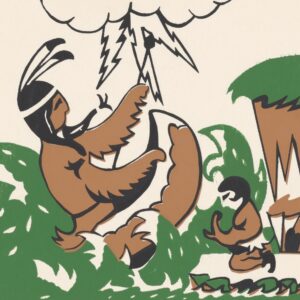
One of the first outputs of the Micmac Indian Craftsmen (MIC) was the design and production of “Hasti-Notes”—folded silkscreen cards on thick paper. The cards were packaged by the dozen in hand-sewn burlap bags with silkscreened cover labels. Rendered in an abstracted style using bold lines, colours, and dramatic compositions, and accompanied by short texts printed on the back, the cards depicted Mi’kmaq stories and legends that had been passed down through many generations. These cards would become the MIC’s primary source of income for the duration of the co-operative.
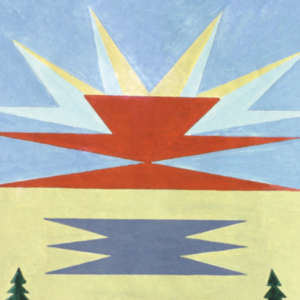
The first series of cards fully conceived and designed by Michael Francis was The Micmac Indian Legend of Our Seasons. The Seasons cards depicted Mi’kmaq cultural figures Glooscap and Tatler the Loon facilitating the arrival of the Summer Queen to their territory. These seasonal narratives, told to Francis by his grandfather, link the cycles of nature to Mi’kmaq knowledge and values. Mimicking popular graphic styles of the late 1950s and early 1960s, Francis’s early Hasti-Note images were set against a consistent blue background, where screens of white, black, green, brown, and grey animated each scene.
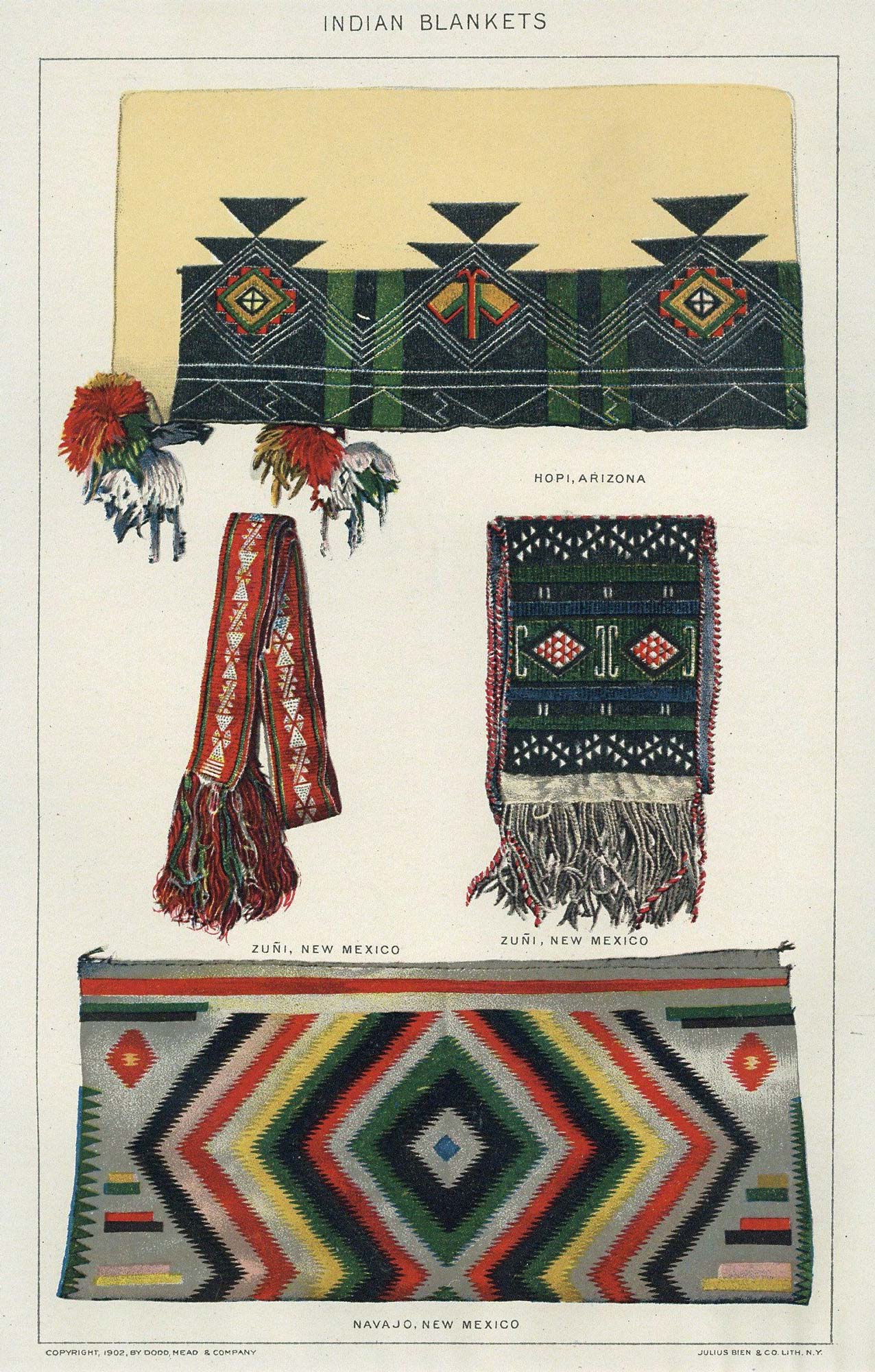
The shapes and contrasting colours of the cards seem influenced by American Southwest geometric patterns, like those of the Diné (Navajo) and Hopi Nations. Southwestern-inspired prints and blankets could have resonated with Francis as being representative of Indigenous Peoples, a sensitivity that was gaining ground with the Pan-Indian movement. In later cards, and in a calendar designed by the MIC for the Imperial Order Daughters of the Empire, Francis’s designs evolved to be more organic, curvilinear, and detailed with a varied colour palette.
The first series of Hasti-Notes sold an astonishing 10,000 units at the National Gift Show in Toronto in September 1962. While the initial sets were hand-painted, the strong commercial demand at the outset led the MIC to quickly adjust their process for designing and printing Hasti-Notes—adopting a commercial printing process using photo-sensitive film and silkscreens. The initial 1962 cards were made by the artisans of the MIC studio at Big Cove, but with designs by non-Indigenous artists. It was quickly understood that they could sell many more if the artwork itself was designed by Mi’kmaq artists—enter Michael Francis and Stephen Dedam. As MIC works gained recognition, Francis’s designs on Hasti-Notes were soon translated into other decorative objects, including handwoven placements, table runners, and ceramics.
 About the Authors
 More Online Art Books
 Acknowledgements