
The Legend of the Tidal Bore 1963
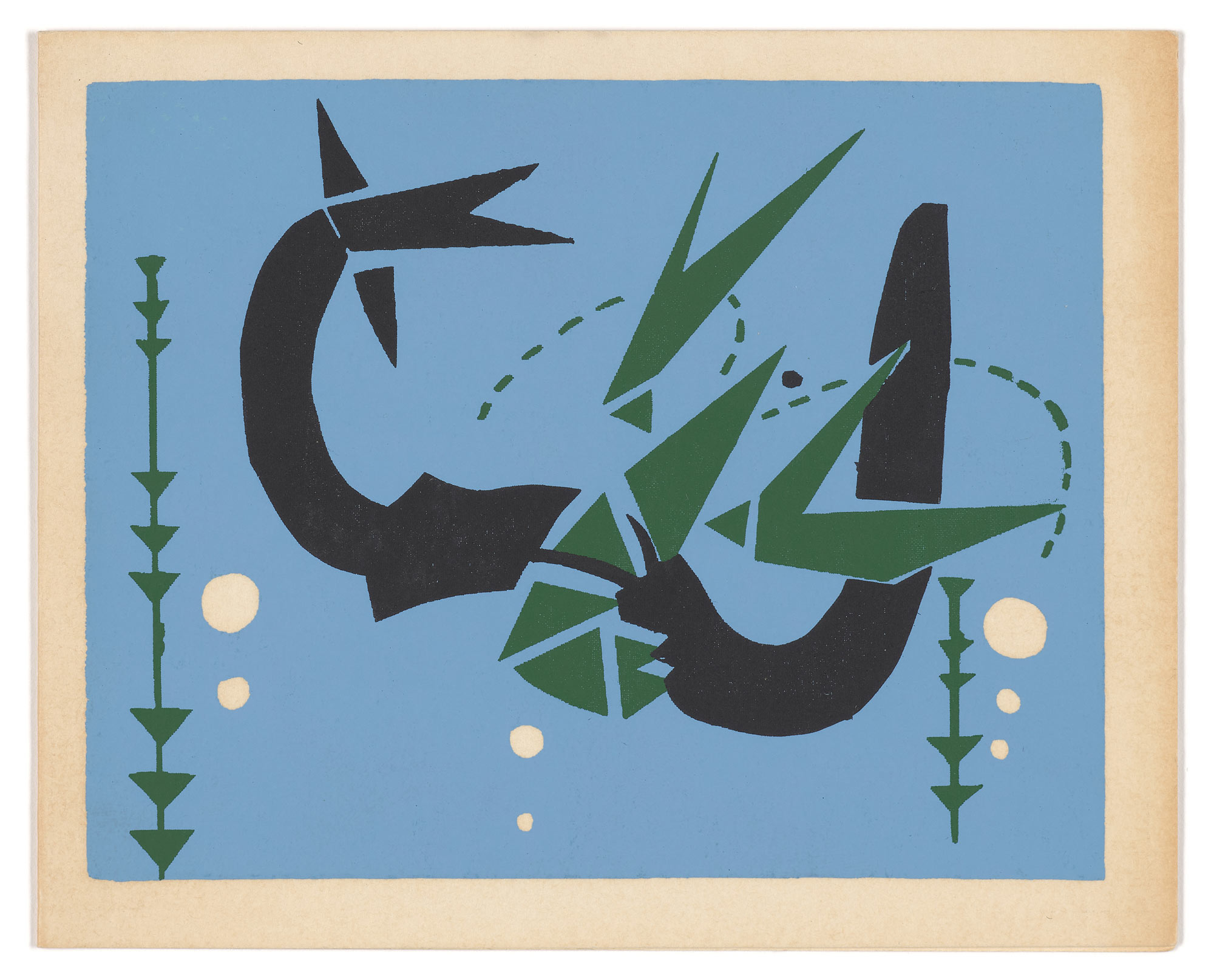
Michael Francis, The Legend of the Tidal Bore, 1963
Silkscreened Hasti-Note card, 10 x 13 cm
Beaverbrook Art Gallery, Fredericton
From the outset, the Hasti-Note cards functioned as more than just illustrated products: they translated Mi’kmaq teachings into modern visual form. Stories guided design choices—and many are rooted in Mi’kmaq relationships with the natural world, where animals, waters, and land act as agents within living systems of knowledge.
Sea creatures make several appearances in Michael Francis’s Hasti-Note designs and stories. For example, his The Legend of the Tidal Bore image depicts two stark graphic figures, an eel and lobster, entangled in conflict. Their brawling creates the muddy tidal bore of the Petitcodiac River, that runs through southeastern New Brunswick. The artwork’s blue background, white circles and tall green markings resembling bubbles and water plants, respectively, suggest the figures are underwater, and the accompanying story reveals the animals’ battle:
In the days of Glooscap, the water was clear and fresh. Until a monster Eel swam down the river and pushed all of the fishes and all the freshwater into the salty bay. Turtle told Glooscap of the cruel hardships that resulted. Glooscap gave great powers to Lobster, who grew much in size and strength and fought the evil Eel. The long battle stirred up much mud and many waves far up the river until the Eel was killed. And even today in Glooscap’s bay and on the muddy river, with an elbow bend, the battle scene takes place twice a day.
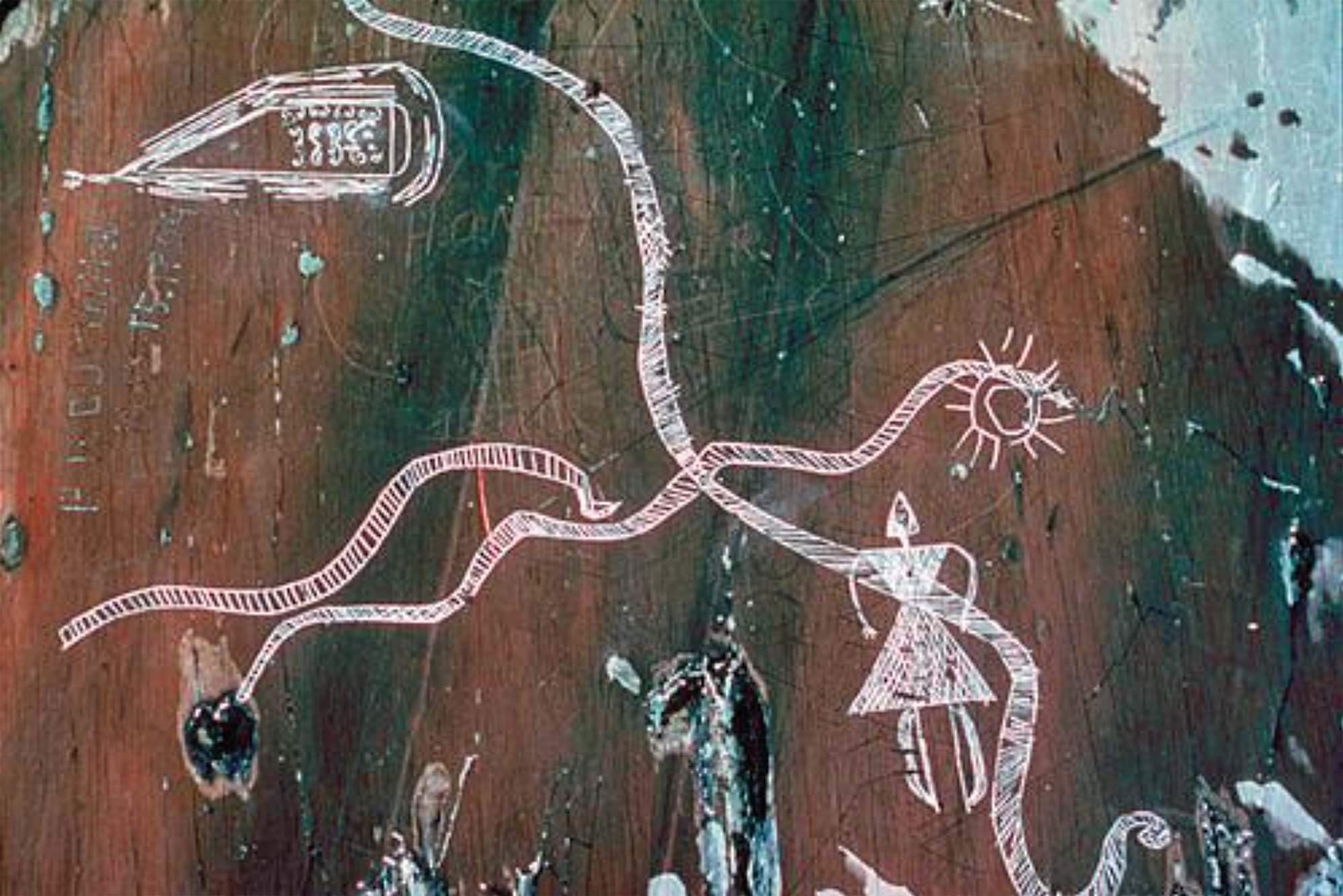
Mi’kmaw spirituality and worldview affirms their relationality to Katew (American eel in the Mi’kmaw language). Katew is a revered spiritual being as well as a vital food source and medicine. In traditional stories, the animal represents a special gift offered to Glooscap in exchange for a successful hunt or fishing trip. Images of eels show up in petroglyph iconography at Kejimkujik National Park in Nova Scotia. In Francis’s image, the lobster has severed the eel and won the battle. The severed eel takes a shape similar to a Wabanaki Double-Curve motif.
Seen in this light, Francis’s use of the Double-Curve aligns his Hasti-Note designs with a much longer history of Wabanaki visual expression. The flowing contours of the eel and the looping movement of the water echo forms found in Wabanaki cultural objects, including the petroglyphs at Kejimkujik. The cards, while modern in medium and circulation, remain connected to enduring visual languages through which Mi’kmaq and Wabanaki peoples have long conveyed interconnected relationships between the animal and spiritual worlds.
 About the Authors
 More Online Art Books
 Acknowledgements